Every Grenada citizenship by investment applicant faces the same fork early on: give money to the National Transformation Fund (NTF) and walk away, or buy into a government-approved real estate project and hold it for at least five years. On paper the property route looks like getting citizenship and keeping your money. In practice the comparison is closer than brochures suggest, and for many families the donation ends up cheaper.
The headline figures at the time of writing are US$235,000 for the NTF route covering up to four people, and US$270,000 (shared interest) or US$350,000 (sole ownership) for approved real estate, plus a government contribution widely quoted at US$50,000. This page sets out how each route really works, what happens at the five-year mark, and the questions that separate a sound project from a risky one.
What you are really comparing
Start with cash out of pocket. On the NTF route, a family of four pays the contribution plus government and due diligence fees, and that is the end of it. On the real estate route, the same family pays the purchase price, the government contribution, the same application and due diligence fees, and the purchase costs set by the developer and the lawyers. The upfront outlay is therefore higher on the property route, often by well over US$100,000.
The argument for real estate rests on getting part of that money back. If you could sell the unit after five years for what you paid, the true cost would be the government contribution, the fees and the time value of the money. If you sell at a discount, or cannot sell at all, the property route can cost as much as the donation or more.
So the comparison is not "donation versus free citizenship". It is a certain, known cost against an uncertain one that depends on a project you do not control, in a small market, five years from now.
A rough illustration makes the point. Suppose a couple pays US$270,000 for a shared interest plus the US$50,000 contribution, against US$235,000 on the NTF route. If they later sell for 70% of the purchase price, they recover about US$189,000, so the property route has cost them around US$131,000 plus five years of tied-up capital, less any rental income received. That beats the donation on paper, but only if a buyer appears at that price. At 40% recovery, the gap all but closes.
The case for the donation
Certainty. The amount is fixed and published. Once paid, there is nothing to monitor, no management company to chase and no resale to plan.
Speed after approval. Paying a contribution is a bank transfer. Completing a property purchase involves contracts, share or unit transfers and confirmation from the developer, which can add weeks.
Better value for small families. For a single applicant or a couple, the gap between the NTF cost and the property route plus government contribution is large, and the realistic chance of recovering enough at resale to close it is limited.
No exposure to the property cycle. Hurricane damage, a weak tourism season or a project running behind schedule are not your problem.
The drawback. The money is gone, and you hold no asset in Grenada afterwards. If you want a base on the island, you would have to buy separately, and as an ordinary purchase that means applying for an Alien Landholding Licence only if you are not yet a citizen. Once you are a citizen, you buy as a Grenadian without that licence.
How the real estate route actually works
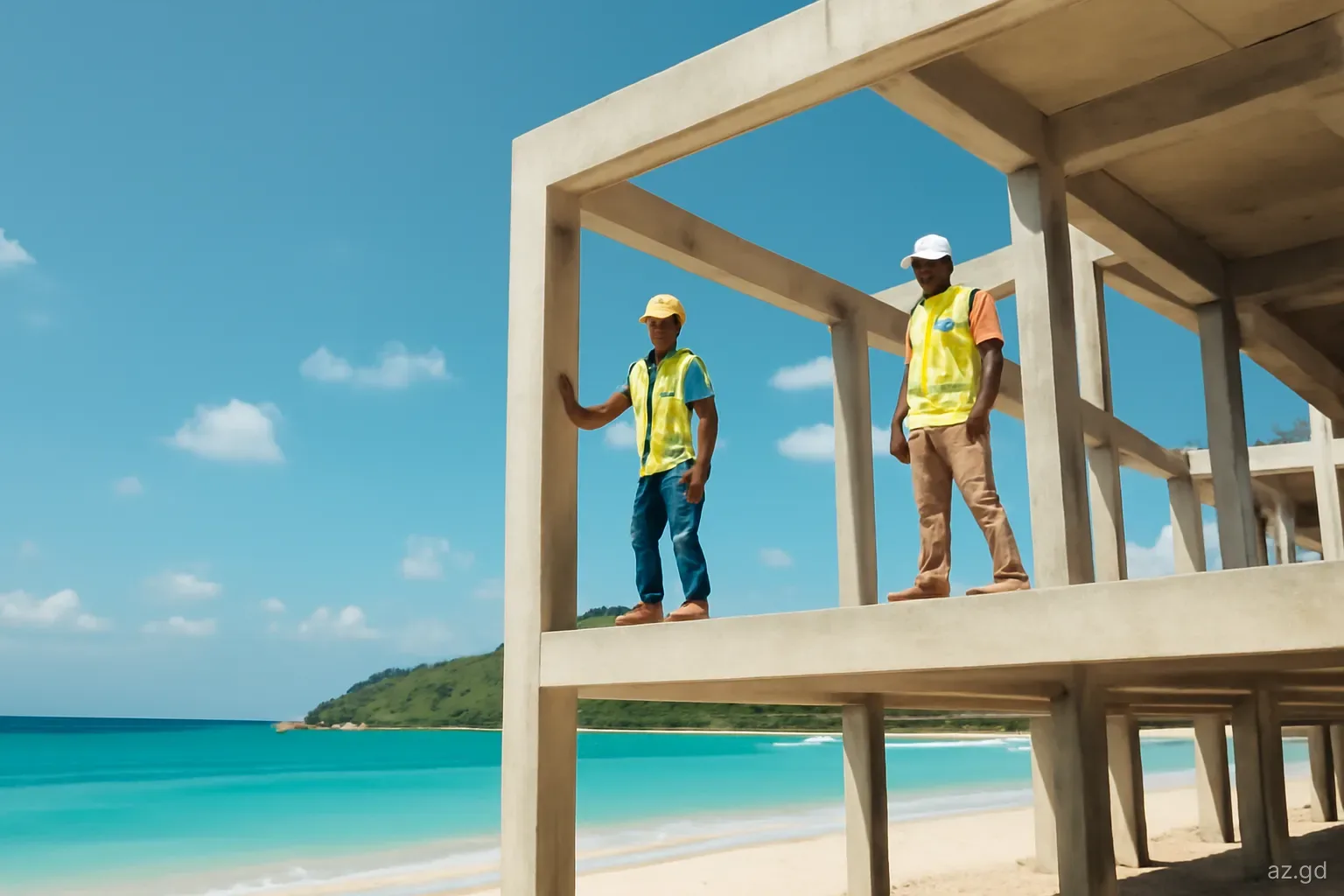
Approved projects are mostly hotels, resorts and branded residences, many on the south coast around Grand Anse, Point Salines and La Sagesse. Several resort developments in Grenada have been financed partly by programme investors. You typically buy a share in the project company or a fractional interest in a unit rather than a house you can move into, and the property is run by the hotel operator as part of its room stock.
Investors are usually offered a projected annual return from the hotel's rental pool and a number of free nights each year. Returns depend on occupancy and the operator's accounts, not on a promise from the government. Units in approved projects are exempt from the Alien Landholding Licence, which saves the 10% licence fee that a foreign buyer of ordinary property would pay.
The investment must be held for at least five years from the grant of citizenship. Selling earlier can put the citizenship itself at risk. During those five years your agent and the developer should provide evidence that the holding is still in place if asked.
The exit after five years: the part brochures skip
Many approved units are resold to a new programme applicant, because that buyer also gets citizenship from the purchase. Whether such a resale counts for the new investor depends on the programme rules in force at the time, which can change. If the resale route narrows, your realistic buyers are ordinary purchasers, who will pay what a hotel share is worth as an investment, often far below the programme price.
Some developers offer buy-back arrangements. Read them closely: who guarantees the buy-back, at what price, from what funds, and what happens if the developer's company has no money in year five. A promise from a single-purpose project company is only as good as that company's balance sheet.
On any sale, Grenada's property transfer tax, paid by the seller, applies to real property transfers, and rates for non-nationals are higher than for citizens. Ask your lawyer how the tax will apply to your particular interest, whether a share, a fraction or a freehold unit, before you buy, not when you sell.
Questions to ask before choosing a project
If the real estate route still appeals, put these to the developer and to your own lawyer, not to the person selling you the unit:
- Is the project currently on the government's approved list, and is the approval specific to the unit type you are buying?
- How far has construction progressed, and what are the completion dates for the hotel and for your unit?
- Who is the hotel operator, and is there a signed management agreement?
- What exactly do you own: a share, a fraction, a strata unit or a lease? How is it registered?
- How are rental returns calculated, and have past investors in this developer's projects been paid as projected?
- What are the annual costs charged to owners, including maintenance, insurance and management fees?
- Is there a buy-back or resale programme in writing, and who stands behind it?
- What happens to your investment and your citizenship if the project fails or is never completed?
Which route suits whom
Choose the NTF if you are a single applicant or a small family, you want the lowest certain cost, you have no plans to spend time in Grenada, or you simply do not want five years of exposure to one hotel project.
Consider approved real estate if you have a large family where the government contribution and fees spread across more people, you want a tangible asset, you are comfortable with illiquid investments and you have checked the developer's track record yourself.
Think twice about either if you need the money back within five years, or your plan depends on a resale price that no one can guarantee.
If you actually want to spend time in Grenada, neither route gives you a home. A practical pattern is to take the NTF route, become a citizen, and then buy an ordinary house or apartment as a Grenadian, without the 10% Alien Landholding Licence fee that a foreign buyer would pay. That keeps the citizenship decision and the property decision separate, each judged on its own merits.
Frequently asked questions
Can you live in a CBI real estate unit in Grenada?
Usually only for a limited number of nights each year. Most approved units sit in hotel rental pools run by an operator, so they are let to guests the rest of the time. If you want a home to live in, a separate ordinary purchase is normally the better route.
Can you sell a Grenada CBI property before five years?
The investment must be held for at least five years from the grant of citizenship. Selling early can put the citizenship at risk, so any early exit must be discussed with your licensed agent and lawyer before you agree anything with a buyer.
Is the real estate route cheaper than the NTF in the long run?
Only if you recover most of the purchase price when you sell. Once the government contribution, fees, owners' charges and a resale discount are counted, many families find the donation costs about the same or less.
Do CBI property buyers need an Alien Landholding Licence?
No. Units in government-approved programme projects are exempt from the Alien Landholding Licence. Ordinary property bought outside the programme by a foreigner still needs one, with a fee of 10% of the value.
Are rental returns from CBI projects guaranteed?
Returns depend on the hotel's occupancy and accounts. Some developers offer a fixed return for a period, but that is a contractual promise from the developer, not the government. Check who backs it and whether earlier investors were paid.
What happens if the CBI project is never finished?
That risk sits with the investor and depends on the contract and escrow arrangements. Ask how your funds are held until completion, whether they are released in stages and what remedies you have before choosing a project.