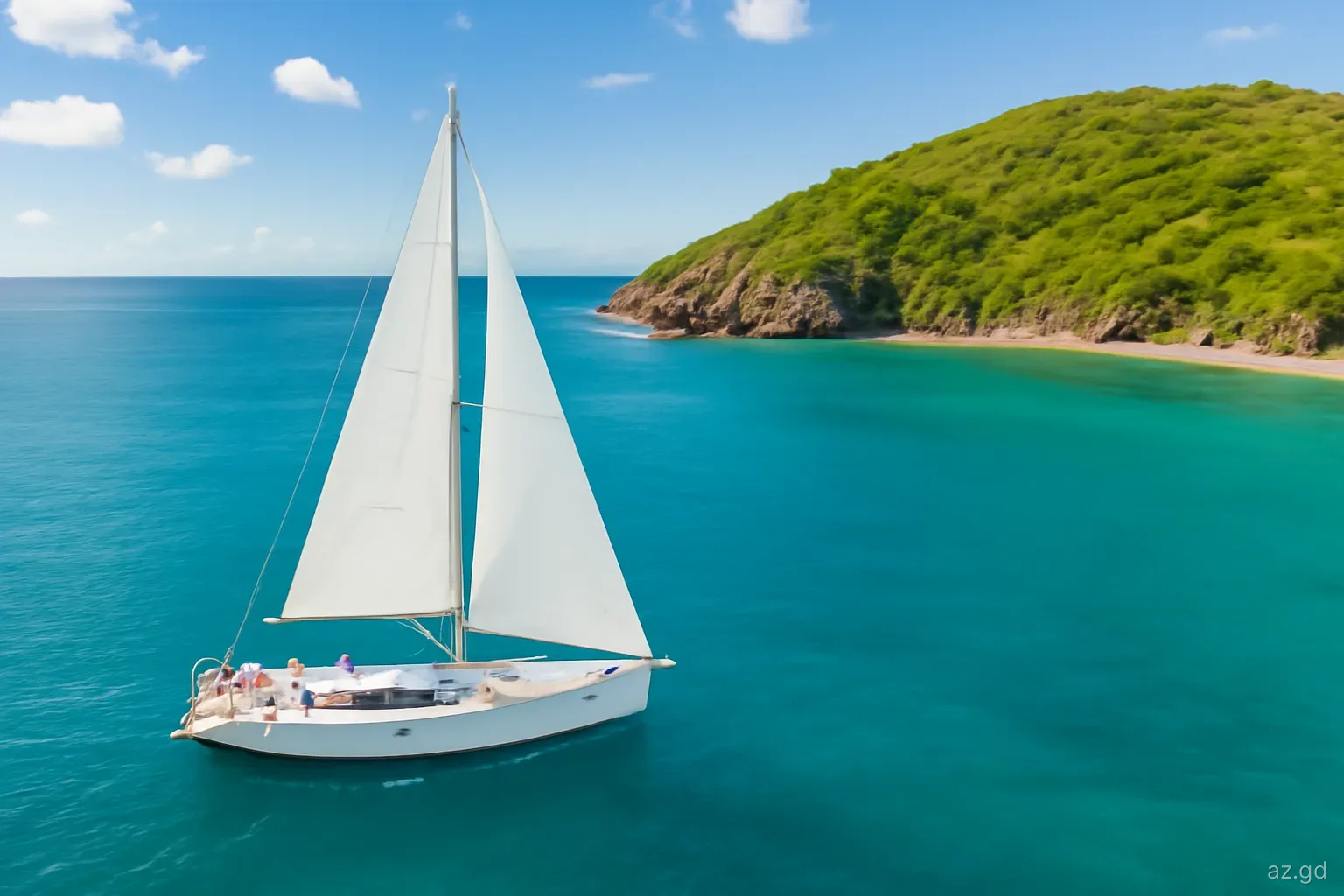
Grenada is a natural landfall for yachts. It sits at the southern end of the Windward Islands chain, a day sail from the Grenadines to the north and an overnight passage from Trinidad and Tobago to the south. Many cruisers arrive here once and stay for months, partly because the south coast is cut by deep, sheltered bays and partly because the island lies near the southern edge of the main hurricane belt.
Arriving by sea brings a different set of practicalities from arriving by air: choosing where to make landfall, finding the right office to clear in, organising crew who fly in to join the boat, and making sure any animals on board are covered. This page covers the arrival itself. Marina facilities, anchorages and boatyard services are covered in the sailing and marinas section of this site.
Choosing your landfall
Yachts coming south through the Grenadines usually make their first Grenadian landfall in Carriacou. The passage from Union Island in St Vincent and the Grenadines is short, and both Hillsborough, the main town, and Tyrrel Bay on the south-west coast have been used as clearance points. Clearing in at Carriacou means you are legally in Grenada for the onward sail to the main island, so you can stop at Sandy Island, Petite Martinique or the Grenada west coast without returning to an office.
Boats coming north from Trinidad or Tobago usually head for the south coast of the main island, a passage of roughly eighty to ninety nautical miles that many skippers sail overnight so they arrive in daylight. Prickly Bay, with its marina and boatyard, is the classic first stop, and the bays further east are close by.
Transatlantic boats sometimes aim for Grenada directly. Whichever way you come, plan to enter a south-coast bay in good light: reefs fringe much of the coast, and some entrances are narrow and best taken with the sun high or behind you.
Up-to-date cruising guides and recent reports from other sailors are the best sources for current entrance conditions, marks and moorings. Channel markers and moorings can be damaged by storms and are not always replaced promptly.
Hazards between Carriacou and Grenada
Kick 'em Jenny. An active submarine volcano lies north of Grenada's main island, off its north-west coast towards the Grenadines. An exclusion zone around it is enforced according to the alert level set by the island's disaster management agency, and it is widened when the volcano shows unrest. Check the current alert level and plan your route around it.
Currents and wind acceleration. Between the islands the Atlantic swell and equatorial current funnel through the channels, and the wind can accelerate around headlands. The passage south from Carriacou is often a fast reach, but northbound can be wet.
Fishing gear. Fish pots and lines are set off the coast, especially on the leeward side. Keep a lookout, particularly near the west coast villages of Gouyave and Victoria.
Night arrivals. Lights on shore can be confusing, some navigation marks are unlit, and the reefs off the south coast are unforgiving. If you arrive after dark, it is often wiser to stand off or anchor in an open, well-charted spot until morning.
The clearance sequence
The exact office, hours and fees change over time, so confirm current arrangements before arrival. The broad sequence has been consistent for years.
- Before arrival, submit the advance notice online through SailClear, the pre-arrival system used by Grenada and much of the Eastern Caribbean, with boat details, crew list and last port.
- On arrival, fly the yellow Q flag and anchor or berth at a port of entry. Crew other than the skipper should stay on board until clearance is complete.
- The skipper takes passports, the boat's registration papers and the clearance document from the last port to the customs and immigration office.
- Complete the immigration formalities for everyone on board and the customs entry for the vessel. Fees include port and customs charges and a cruising permit based on the boat's length and the length of stay.
- Expect overtime charges for clearing outside normal office hours, at weekends and on public holidays.
- Before leaving Grenadian waters, return to a port of entry to clear out. Clearance is usually valid for a short window, so time it to your departure.
Ports of entry and where to clear
On the main island, yachts have generally cleared at Port Louis Marina in the lagoon at St George's and at Prickly Bay on the south coast. Some other south-coast marinas and boatyards have offered clearance with limited or seasonal hours. Grenville on the east coast and St David's Harbour are formal ports of entry but less commonly used by visiting yachts. In Carriacou, Hillsborough and Tyrrel Bay have been the clearance points.
Opening hours vary, and offices sometimes close for lunch or during public holidays. Arriving late on a Friday means either paying overtime or waiting until Monday on board, which is allowed but frustrating after a long passage.
Fees are paid in Eastern Caribbean dollars, with US dollars sometimes accepted. Carry enough cash in case card machines are down. Keep all receipts and the clearance papers aboard, as patrols by the Coast Guard can ask to see them.
If you plan to leave the boat in Grenada and fly home, tell customs when you clear in or before you leave. Leaving a vessel unattended in the country normally means placing it in a marina or boatyard, with the arrangement recorded by customs, and rules differ for long stays.
What to have ready before you arrive
A tidy set of papers turns clearance into a short visit to the office rather than an afternoon. Skippers who arrive regularly keep a folder with the following, plus several printed copies of the crew list, because some offices still prefer paper.
- Passports for everyone on board, valid well beyond the planned stay.
- The vessel's registration certificate and proof of insurance.
- The outward clearance from the last port, stamped and dated.
- A crew and passenger list with full names, nationalities, passport numbers and dates of birth.
- Confirmation that the SailClear pre-arrival notice has been submitted.
- Details of any firearms, ammunition or prescription medicines that need declaring.
- Veterinary documents and the import permit for any animals on board.
- Cash in Eastern Caribbean dollars for fees, in case card payment is unavailable.
Crew flying in, pets and hurricane season
Crew joining or leaving by air. A crew member flying in to join a yacht often holds a one-way ticket, which can prompt questions at the airport. Carry a letter from the skipper, the boat's details and where it is berthed. When crew leave, the skipper must sign them off the crew list with immigration.
Pets on board. Animals need a veterinary import permit arranged in advance through the Ministry of Agriculture, along with up-to-date health and rabies documentation. Without it, pets must stay on board and may not land, and penalties can be severe.
Hurricane season. The official Atlantic season runs from 1 June to 30 November. Grenada is south of the most frequently hit islands, which is why many boats spend the summer here, but it is not immune: Ivan in 2004 caused severe damage, and Beryl in July 2024 devastated Carriacou and Petite Martinique. Check what your insurer requires during the season.
Firearms and drones. Firearms must be declared on arrival and are normally held by the authorities until departure. Drones need prior permission before being flown.
Frequently asked questions
Where can a yacht clear in to Grenada?
Common clearance points have been Port Louis Marina in St George's and Prickly Bay on the main island, and Hillsborough and Tyrrel Bay in Carriacou. Hours and locations change, so check current arrangements with Grenada Customs or the marina before arrival.
Do you need to clear in again when sailing from Carriacou to Grenada?
No. Carriacou, Petite Martinique and the main island are one country. Once cleared in at Carriacou, you can sail on to Grenada without further entry formalities, but you must clear out before leaving Grenadian waters for another country.
What is SailClear?
SailClear is an online pre-arrival notification system used by Grenada and several other Eastern Caribbean countries. You enter vessel and crew details in advance, which speeds up the paperwork when the skipper reports to customs and immigration on arrival.
How far is Grenada from Trinidad by boat?
Roughly eighty to ninety nautical miles from the north coast of Trinidad to the south coast of Grenada. Most yachts sail it overnight, leaving in the evening so they arrive off Grenada in daylight.
Is Grenada a safe place to keep a boat in hurricane season?
Grenada lies south of the islands most often hit, so many yachts spend the season here, either afloat or hauled out. The risk is lower, not zero; storms have struck in the past. Check your insurance terms and storm plans before the season starts.