In Grenada the school year begins in early September, only a couple of weeks after Carnival, and August is when families shift from fetes to fabric shops. Uniforms are measured and sewn, book lists are taken to shops in St George's and Grenville, shoes are bought, and every household works out how children will get to school and what it will all cost. For families with several children, back-to-school is often the single biggest household expense of the year.
This guide walks through the calendar from August to the end of the first term, the main costs to budget for, the daily routine, and the help available. It is aimed at parents in Grenada, families who have just arrived and those planning a move. Exact term dates are set by the Ministry of Education each year, so check the official calendar for your year.
The school calendar
The academic year runs from early September to July in three terms. The first term runs from September to mid-December, broken by a short mid-term break and by Thanksgiving Day on 25 October, which marks the 1983 intervention. The second term runs from January to around Easter and includes Independence Day on 7 February, when schools take part in celebrations and parades. The third term runs from after Easter to July and is dominated by CSEC and CAPE exams for older students in May and June.
Primary pupils in Grades 5 and 6 complete continuous assessment for the Caribbean Primary Exit Assessment, and results and secondary placements are released in June. CSEC and CAPE results arrive in August, which means many families are handling placement decisions, college applications and uniform purchases all in the same few weeks before term.
The first term also falls within the Atlantic hurricane season, which runs until 30 November. Schools close when a storm threatens, and announcements come from the Ministry of Education and the National Disaster Management Agency through radio, television and official social media.
Many families plan holidays and travel around the long summer break from July to early September, when flights to North America and the United Kingdom are busiest. Booking early and avoiding the first week of term keeps children from missing the start of the year.
What to budget for
Costs vary by school, level and number of children. These are the usual categories, and prices change, so get quotes early in August.
- Uniforms: usually two or more sets of the school's own uniform, sometimes a separate physical education kit, and in some schools a house shirt. Uniforms are commonly made by local seamstresses and tailors from the school's specified fabric, which is sold in fabric shops.
- Shoes and socks: plain black or brown school shoes and, for PE, plain trainers. Shoes are often the most expensive single item for growing children.
- Books: the school's textbook list, which can be costly at secondary level. Second-hand books, book swaps between families and school book schemes reduce the bill, but check that editions match.
- Supplies: exercise books, pens, mathematical sets, calculators for secondary students, art materials and a sturdy bag.
- School contributions: some schools ask for annual contributions towards activities, maintenance or exam preparation, alongside fees for trips and events.
- Transport and lunch: daily bus fares or fuel and lunch money, which over a term add up to more than many parents expect.
The daily routine
Early starts. Schools typically start between about 8 and 8.30 in the morning, and many children leave home well before seven to catch a route bus, especially in rural parishes such as St Patrick, St Andrew and St John, or when travelling into St George's.
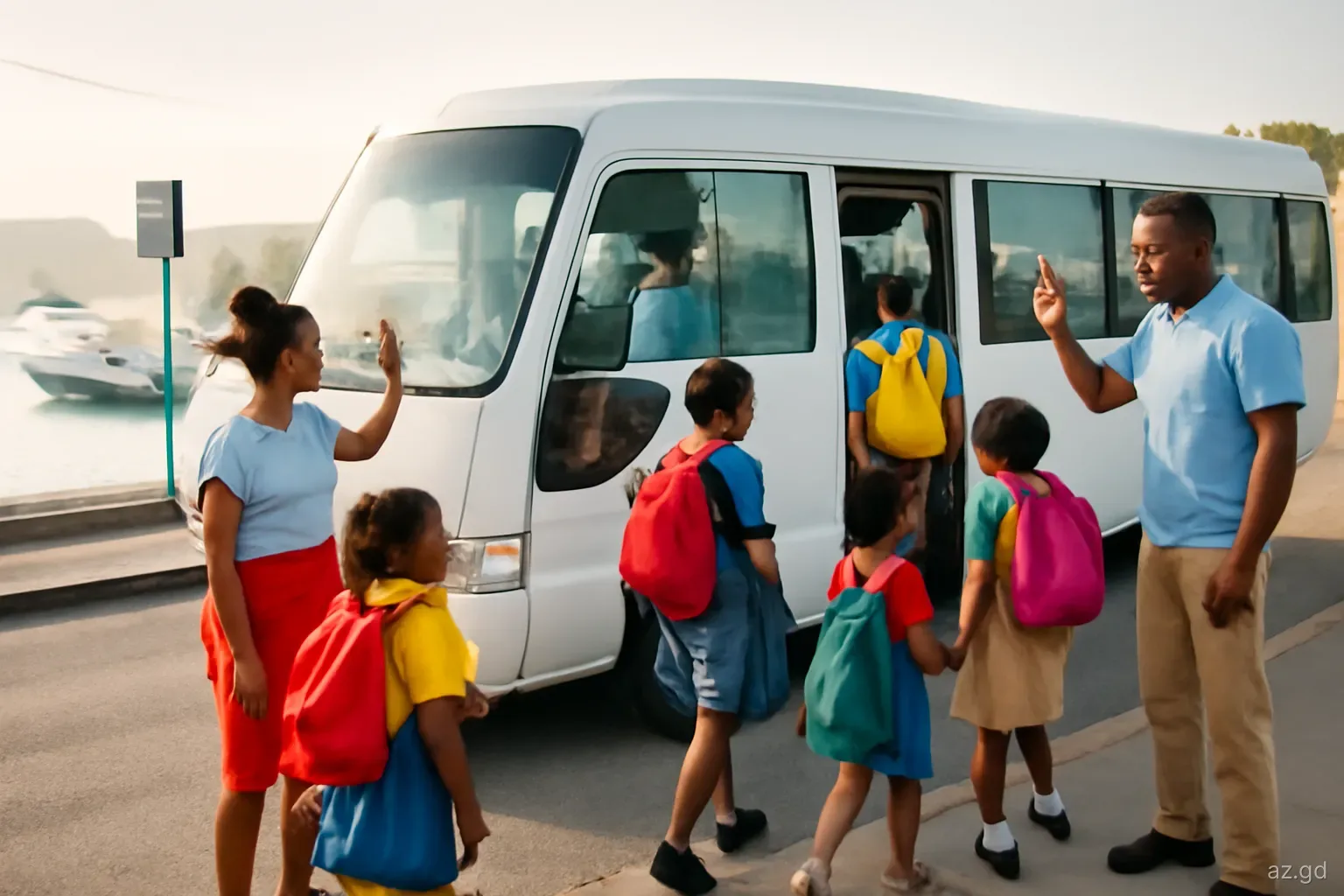
Route buses. Many secondary students travel on the privately operated minibuses that run the numbered routes. Schoolchildren in uniform are a familiar sight at bus stops, and families should agree with children on safe routes and what to do if a bus does not come.
Lunch. The government school feeding programme provides meals in many primary schools, and secondary schools usually have canteens or vendors outside the gate. Some parents prefer to send a packed lunch.
After school. Extra lessons, sports practice, church groups and homework fill the afternoons. Extra lessons with private tutors are common in exam years and add to the cost.
Grooming checks. Schools inspect uniforms, hair and shoes, particularly in the first weeks. A child sent home for a wrong detail loses learning time, so check the rules at the start of the year.
Rainy mornings. Heavy showers in the rainy season can slow traffic, flood low roads and leave children waiting longer at bus stops. A compact umbrella and a spare pair of socks in the school bag make a real difference.
Help with the costs
Support for families who struggle with back-to-school costs comes from several directions. Government has run programmes over the years providing uniform, book or transport assistance to families in need, often through the Ministry of Education and the ministry responsible for social development, and the school feeding programme helps with lunch. Churches, service clubs, credit unions, businesses and diaspora groups commonly organise back-to-school drives with donated supplies, particularly in August.
School principals and guidance counsellors usually know what help is available and can discreetly connect families with it. Families affected by disasters, such as households on Carriacou and Petite Martinique after Hurricane Beryl in 2024, have received additional support through relief programmes. Ask early, since assistance is often limited and allocated before term starts.
Families who can afford to help others often donate outgrown uniforms, school shoes and books through their child's school or church at the end of the year. Many schools welcome these donations and pass them quietly to families who need them, and the habit keeps good items in use for several more years.
An August checklist for parents
Working through these tasks in order keeps the last week before term calm.
- Confirm the school placement and the first day of term, including any orientation for new students.
- Get the uniform specification and book list from the school, and order uniforms from a seamstress or supplier straight away.
- Check last year's shoes, bags and uniforms for what still fits, and swap or pass on what does not.
- Buy or source textbooks, checking editions, and label everything with the child's name.
- Plan transport: test the bus route or arrange a lift, and agree a backup plan for rainy days.
- Update the school with emergency contacts, medical information and any allergies.
- Prepare a waterproof folder for school documents and agree what the family will do if a storm closes schools.
Mistakes parents make at the start of the year
Leaving uniforms to the last week is the classic error. Tailors and seamstresses are fully booked by mid-August, fabric for particular schools can sell out, and children start term in borrowed or ill-fitting clothes. Order as soon as the placement is known.
Another is buying every book on the list new without checking whether the school, older students or other families have copies. Equally, buying old editions to save money can backfire when page numbers and exercises differ. Ask the school which editions are acceptable.
Finally, many parents underestimate the running costs of a term, focusing on the one-off August expenses. Bus fares, lunch, extra lessons and contributions continue every week. Setting aside a monthly amount from January makes the next September much easier.
Frequently asked questions
When does the school year start in Grenada?
The school year normally starts in early September and runs to July in three terms. The Ministry of Education publishes the exact calendar each year, including mid-term breaks, so check the official dates for the year your child is attending.
How much does back to school cost in Grenada?
It depends on the school, level and number of children. Uniforms, shoes, textbooks, supplies, transport and lunch are the main costs, with secondary textbooks and shoes often the largest items. Get prices early in August and look for second-hand books.
Do schools in Grenada close for hurricanes?
Yes. Schools close when a storm or hurricane threatens, on the advice of the Ministry of Education and the National Disaster Management Agency. Some school buildings serve as emergency shelters, which can delay reopening after a storm.
Is there free lunch at schools in Grenada?
Many primary schools take part in the government school feeding programme, which provides meals. Secondary schools usually have canteens or vendors. Ask your child's school what is provided and whether any costs apply.
How do children get to school in Grenada?
Many children, especially at secondary level, travel on the privately operated route buses. Others walk, are driven by parents or use arranged transport. Allow plenty of time for morning traffic, particularly on roads into St George's.