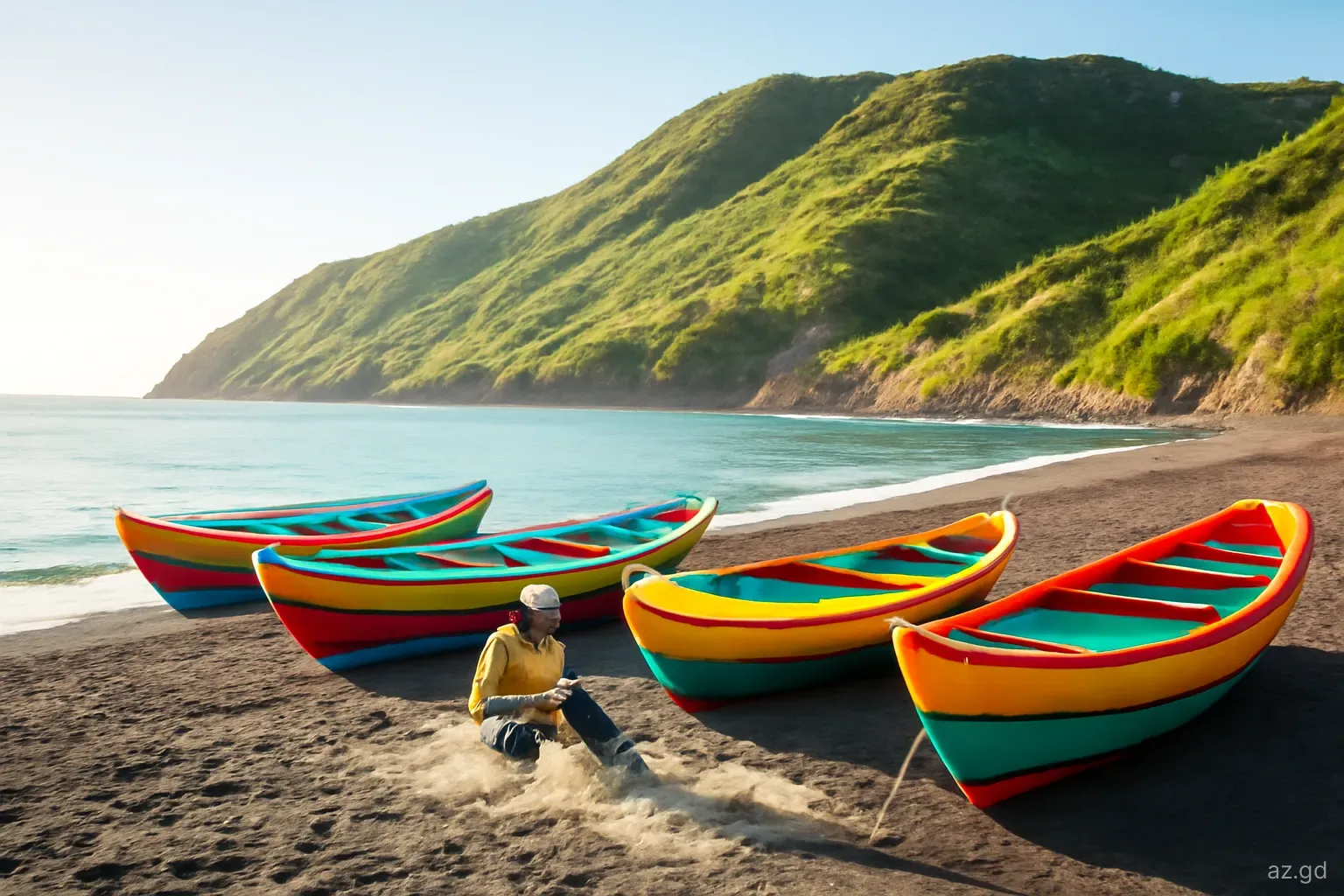
North of St George's, the west coast road winds through St John and St Mark parishes to Sauteurs on the northern tip, past a string of small bays most visitors only glimpse from a car window. These are not resort beaches. They are fishing beaches, village swimming spots and rocky coves, many with grey or black volcanic sand, and they show a side of Grenada that the south-west tip does not.
The coast is in the lee of the mountains, so the water is often calm, and the sunsets are some of the best on the island. What it lacks is infrastructure: few beach bars, almost no chair rental and limited parking. This guide covers the main stops and how to make the most of them.
Grand Mal Bay and the coast just north of town
Grand Mal Bay is the first sizeable beach north of St George's, a few minutes' drive up the west coast road. It is a long, calm stretch used by local swimmers and families, with fishing boats pulled up on the sand and an industrial backdrop in places, including fuel storage near the shore. It does not look like a brochure beach, but the water is usually gentle and it is quick to reach, making it a practical after-work swim for people living in and around town.
Just beyond lies the Molinere–Beausejour Marine Protected Area, which covers the coast and reefs from roughly Molinere Point to Beausejour Bay. The coves within it, such as Dragon Bay and Flamingo Bay, are best known as snorkelling and diving spots, and most visitors reach them by boat on an organised trip. The protected area has rules against anchoring on reef, fishing and collecting, and a user fee applies to visitors on snorkel and dive trips, so ask your operator what is included.
If you prefer to explore by road, the best clue to a swimmable bay along this stretch is local use. Where you see cars pulled off the road on a weekend afternoon and families in the water, the bay is likely to be calm and the access path established. A bay with nobody in it on a sunny Sunday may have a steep drop, stones underfoot or a current that residents know about, so treat empty bays with more caution, not less.
Gouyave and the fishing beaches of St John
Gouyave. The main town of St John parish and the heart of Grenada's fishing industry. The town's shoreline is a working beach, with boats, nets and fish landings. Swimming here is mostly a local affair; come for the atmosphere, especially on a Friday evening when the town's well-known fish fry draws crowds, rather than for a long beach day.
Small bays on the way. Between Grand Mal and Gouyave there are several small bays at the mouths of rivers and below villages, including stretches of dark volcanic sand. They can be calm and almost empty, but some are steep, stony or close to river outflows. After heavy rain, rivers carry sediment and debris into the sea, so visibility drops and swimming near the outflows is best avoided.
Sand temperature. Dark sand absorbs heat far more than the pale coral sand of Grand Anse. By late morning it can be uncomfortably hot underfoot, so keep sandals on until you are at the water's edge.
Respect fishing activity. If a seine net is being hauled in, keep out of the water and give the crew room. Do not swim near boats that are coming in or leaving.
Victoria, Duquesne and the far north
Victoria, the main town of St Mark, the smallest parish, has a waterfront and a small beach used by residents, with the slopes of Mount St Catherine rising behind. It is a good place for a short break on the drive north and a quieter version of Gouyave's fishing-town life.
Further on, Duquesne Bay in the north-west has a dark-sand beach and is also notable for Amerindian petroglyphs carved into rocks nearby, a reminder of the island's pre-colonial history. The bay is quiet, with river access and village life rather than visitor facilities.
At the northern tip, Sauteurs Bay is a broad beach in front of the town of Sauteurs, used by fishing boats and local swimmers, with views north towards the Grenadines. The famous cliff at Leapers Hill, associated with the Kalinago people's last stand in the 1650s, overlooks the town. From Sauteurs, the road continues east towards Bathway and Levera on the Atlantic side, which makes a coast-to-coast loop easy to arrange.
Why the west coast is worth the drive
For many residents the leeward coast is where they swim when they want to avoid the south-coast crowds. Its advantages:
- Calm, sheltered water on most days, particularly from April to October.
- Sunsets across open sea, with no hotels or headlands in the way.
- A glimpse of everyday Grenadian coastal life: fish landings, children swimming after school, boatbuilding and nets drying on the sand.
- Easy combination with inland stops such as Concord Falls in St John, nutmeg processing in Gouyave or a cocoa estate visit further north.
- Bus access, since route buses run the length of the west coast road between St George's, Gouyave, Victoria and Sauteurs.
- Fewer vendors and almost no hard selling.
- Cheaper food in the towns, where local cook shops and snackettes serve roti, fish and bakes at local prices.
- Time to stop at viewpoints along the cliffs between bays, which give some of the best coastal views on the island.
A sample day up the leeward coast
This outline works by car or taxi and, with patience, by route bus. Adjust it to the weather and your pace.
- Leave St George's early and stop at Grand Mal Bay for a morning swim while the water is glassy and the sand is still cool.
- Continue north to Concord in St John for a short inland detour to the first Concord waterfall, a few minutes' walk from the road.
- Drive on to Gouyave and visit the nutmeg processing station if it is open to visitors, then buy lunch in town.
- Head through Victoria to one of the quieter dark-sand bays of St Mark for an early afternoon swim, checking for river outflows and swell first.
- Reach Sauteurs by mid-afternoon, walk up to Leapers Hill for the view, and decide whether to return the way you came or loop back down the east coast.
- Time the drive back to watch the sunset from a west-coast bay. Remember that darkness falls quickly, and the winding coast road is harder to drive at night.
Pitfalls and what to check
The west coast rewards a relaxed attitude, but a few precautions help:
- Ground swells in the winter months, roughly November to March, can make west-facing bays rough and steep, even when the weather is fine.
- River outflows bring brown water, debris and sometimes sewage after heavy rain; wait a day or two before swimming near them.
- Some beaches shelve steeply, with a sudden drop close to shore. Children should stay in their depth.
- Parking on the narrow coast road is difficult. Pull fully off the road and never block driveways or bus stops.
- Food and toilets are mostly in the towns rather than at the beaches. Plan stops in Gouyave, Victoria or Sauteurs.
- Theft from parked cars at isolated bays is possible. Take valuables with you.
Frequently asked questions
Are there good swimming beaches north of St George's?
Yes, though they are village and fishing beaches rather than resort strips. Grand Mal Bay is closest and usually calm. Further north, small bays in St John and St Mark offer quiet swimming on calm days. Avoid river mouths after rain and check for winter ground swell.
Why is the sand dark on Grenada's west coast?
Much of the west-coast sand comes from eroded volcanic rock, which gives it a grey or black colour. The pale beaches of the south-west are built largely from coral and shell fragments. Dark sand heats up quickly, so wear sandals in the middle of the day.
Can you snorkel at Dragon Bay and Flamingo Bay?
Yes. Both lie within the Molinere–Beausejour Marine Protected Area and are popular snorkelling spots, usually reached by boat on an organised trip. A user fee applies, anchoring on reefs is prohibited, and you should not stand on coral or collect anything.
Is Gouyave a good place for a beach day?
Gouyave is a working fishing town, so its shoreline is busy with boats and fish landings. It is better for atmosphere than for a long swim, especially on Friday evenings when the fish fry takes over the town. Quieter bays for swimming lie along the coast nearby.
How do you get to the west coast beaches without a car?
Route buses run along the west coast road from the St George's terminal through Gouyave and Victoria to Sauteurs. Tell the conductor where you want to stop. Buses become less frequent in the evening, so check the time of the last one back.