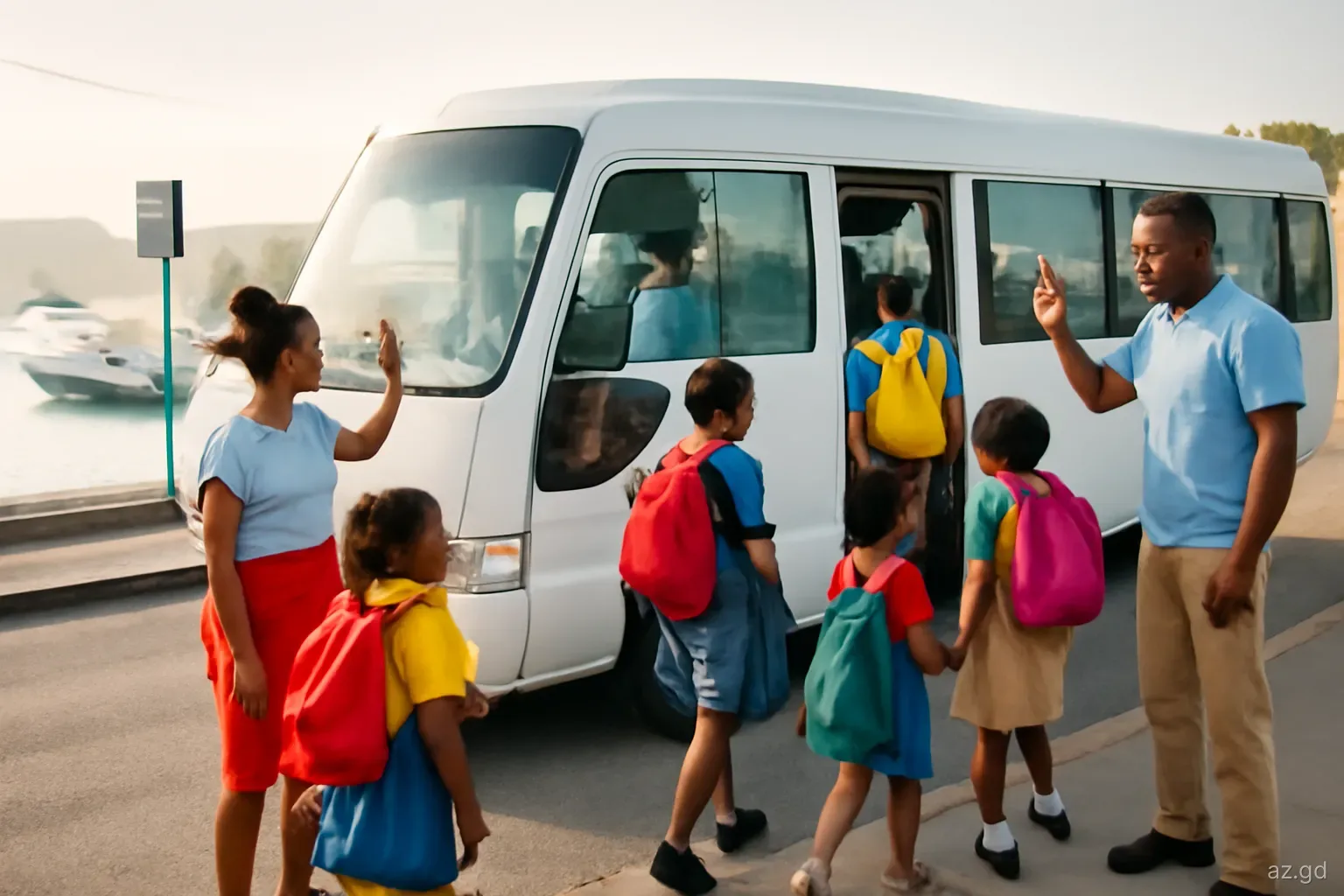
Moving to Grenada with school-age children, or returning home after years abroad, means getting a school place sorted before the first term starts, and that takes longer than most families expect. Schools want records the family may have packed away, the Ministry of Education may need to assess where a child fits, and the most popular schools are full well before September.
This checklist follows the process in the order that works: what to gather before you travel, who to contact and when, what happens at placement, and the final practical tasks before the first day. It applies mainly to government and government-assisted schools; private schools run their own admissions, though most ask for similar documents.
Documents to gather before you travel
Collect originals and keep two sets of copies. Records in languages other than English should be translated.
- Birth certificate for each child, and passports or other identification.
- Immunisation record. Schools in Grenada require proof of vaccinations, and the community health services can review a foreign record and give any vaccines that are missing under the national schedule.
- School reports and transcripts for at least the last two years, showing grades completed, subjects studied and attainment.
- A transfer or leaving letter from the previous school, if available.
- Any assessment reports for special educational needs, learning differences, speech and language support or giftedness. These help the school prepare rather than penalise the child.
- Medical information: allergies, asthma, medication and the name of the child's doctor abroad.
- Proof of address in Grenada, such as a lease or a utility bill, once you have one, since placement can take location into account.
- Parents' identification and immigration documents, particularly for non-national families.
If a document is missing, ask the previous school to email a signed copy before you leave; obtaining records from abroad once settled in Grenada can take months.
The enrolment process, step by step
Start three to six months before arrival if you can. The busiest period is June to August, when the Ministry and schools are handling CPEA placements and transfers.
- Contact the Ministry of Education to explain your child's age, previous schooling and the area where you will live. Ask which schools have places and what the process is for students joining from abroad.
- Approach shortlisted schools directly. Principals can tell you whether they have space in the relevant grade or form and what they need from you.
- Attend any assessment. Children joining mid-stream, especially at secondary level, may be assessed in English and mathematics so the school can place them in the right class.
- Complete the school's registration forms and provide copies of documents. Some schools ask for passport photographs.
- Clarify immigration requirements for non-national children with the Immigration Department; depending on the family's status, a student permit or other permission may be needed.
- Get the uniform, book and supply lists and the date of any orientation session.
How placement and grade levels are decided
Grenada organises primary schooling from kindergarten to Grade 6 and secondary schooling in Forms 1 to 5. A child's age is the starting point, but schools also consider previous schooling and how the child performs in any entry assessment. A child from the United States who has finished fifth grade, for example, might enter Grade 6 or Form 1 depending on age and attainment, and families should be open to the school's recommendation.
Timing matters most at secondary level. CSEC subject choices are made around the end of Form 3, and the two-year CSEC programme in Forms 4 and 5 includes School-Based Assessment coursework. A student arriving in Form 4 can usually catch up with support; a student arriving in Form 5 may struggle to complete SBAs in time and might be better entered for fewer subjects or held for an extra year. Discuss this frankly with the principal.
For younger children, the transition is mostly social and linguistic. The language of instruction is English, and children quickly pick up Grenadian expressions in the playground.
Children coming from systems where they were not taught in English may need extra support with reading and writing at first. Ask whether the school can provide it, or arrange a tutor for the first term.
Children with additional needs
If your child has a learning difference, a disability, a medical condition or needs support with speech or behaviour, raise it with the Ministry of Education and shortlisted schools at the very start of the process. Grenada has special education services and a small number of dedicated schools and units, but resources are limited and planning takes time. Being open about a child's needs helps the school arrange support rather than discovering difficulties after the child has started.
Bring recent assessment reports, individual education plans from previous schools and any letters from therapists or doctors. Ask each school directly how it supports children with similar needs, whether classroom assistants are available, and how it communicates with parents. Accessibility of buildings varies, with many older schools built on hillsides with steps, so visit if mobility is a concern.
Private therapists and tutors operate in the St George's area, and some families combine school with outside support. Costs can be significant, so factor them into your planning.
Practical tasks before the first day
Uniforms. Every school has its own uniform, often made to order by local seamstresses or sold through designated suppliers. Order as soon as placement is confirmed; August is the busiest month and good tailors are booked up.
Books and supplies. Schools issue book lists. Textbooks are sold in bookshops in St George's and Grenville and are sometimes passed between families or handled through school book schemes.
Shoes and grooming. Schools specify plain black or brown shoes and have rules on hair, jewellery and nails. Ask before you buy, because children are sent home over details that seem minor to newcomers.
Transport. Work out the journey in advance. Many children travel on route buses; others are driven or use arranged transport. Allow for morning traffic on the roads into St George's, which can double journey times.
Lunch. Some schools take part in the government school feeding programme; others have canteens or vendors. Ask what is available and whether children can bring food.
Health check. Register with a doctor or the local health centre, particularly if your child has asthma or allergies, and make sure the school has emergency contacts.
Name labels. Identical uniforms mean jumpers, water bottles and lunch boxes are easily mixed up. Label everything before the first day.
Mistakes newcomer families make
The most frequent mistake is arriving in late August expecting to find a place by asking around. By then most schools are full, and the family ends up taking whatever is available far from home. Making contact early, even before housing is fixed, gives far more choice.
Another is leaving records behind. Reports, immunisation cards and assessment reports are hard to obtain once you have left a country, and without them a child may be placed lower than necessary or vaccinated again. Scan everything before you pack.
A third is treating the uniform and rules lightly. Schools in Grenada take presentation seriously, and arriving in the wrong shade of shirt or with unapproved hair creates a difficult first week for a child who is already adjusting. Finally, some families do not plan for the hurricane season, which overlaps with the start of the school year: keep school documents in a waterproof folder and know which closures are announced and how.
Frequently asked questions
What documents do schools in Grenada ask for?
Schools usually ask for a birth certificate, immunisation record, previous school reports or transcripts, and parents' identification and contact details. Non-national families may also need immigration documents. Bring originals and copies, translated into English where necessary.
Can my child join a Grenadian school in the middle of the year?
Yes, if a school has space. Mid-year entry is easier at primary level. At secondary level, particularly Forms 4 and 5, CSEC coursework makes late entry harder, so discuss options carefully with the principal.
Does my child need vaccinations to attend school in Grenada?
Schools require proof of immunisation. If your child's record from abroad is incomplete compared with the national schedule, community health services can advise and provide missing vaccines. Bring the original immunisation card.
Who decides which school my child attends?
For government and assisted schools, placement is handled by the Ministry of Education together with the schools, taking account of age, records, available space and where you live. Private schools make their own admissions decisions.
Is there a cost to enrol in a public school?
Government and assisted schools do not charge tuition, but families pay for uniforms, books, supplies, transport and lunch, and some schools ask for contributions to school funds or activities. Private schools charge fees.