Grenada first sent athletes to the Olympic Games in 1984. By the end of Paris 2024 the country had won five Olympic medals, all in athletics, which by medals per head of population puts a nation of roughly 125,000 people among the most successful in the world. It started with a 19-year-old from Gouyave winning the 400 metres in London in 2012.
This is the story of the athletes behind those medals, the system that produced them and the places in Grenada where you can watch the next generation train and compete. If you are visiting during a big championship, expect the island to stop and watch together.
Kirani James: the boy from Gouyave
Kirani James was born in 1992 in Gouyave, the fishing town in St John. He first came to wider attention as a schoolboy at regional youth meets, then went to the University of Alabama. In 2011, still a teenager, he won the 400 metres world title in Daegu. A year later in London he won Olympic gold, Grenada's first Olympic medal of any colour.
Gold in London was followed by silver in Rio in 2016 and bronze in Tokyo, making him the first man to win all three Olympic medal colours in the 400 metres. He also won Commonwealth gold in Glasgow in 2014 and world championship medals in 2015 and 2022. His personal best of 43.74 seconds, set in 2014, is the Grenadian national record.
His career survived a serious health challenge: after Rio he was diagnosed with Graves' disease, a thyroid condition, and raced sparingly while it was treated, before returning to the podium. The national stadium in St George's was renamed the Kirani James Athletic Stadium in 2017, and a boulevard in St George also carries his name.
Anderson Peters: world champion with a javelin
Anderson Peters, born in 1997 in St Andrew, became Grenada's second global star in a very different event. He won the javelin at the 2019 Pan American Games in Lima, Grenada's first Pan Am gold, then the world title in Doha the same year. In 2022 in Eugene he retained the world title with a throw of more than 90 metres, and that season he set a personal best of 93.07 metres, a national, Commonwealth and area record.
Weeks after Eugene, in August 2022, Peters was assaulted on a party boat in Grenada, an attack that shocked the island and led to public anger and legal proceedings. He returned to competition and won bronze at the Paris Olympics in 2024, the 2024 Diamond League title, and silver at the 2025 World Championships in Tokyo.
Peters is one of several Grenadian throwers to come through a strong field-events tradition, and young Grenadians now see javelin as a realistic route to scholarships and international careers.
Lindon Victor and the wider team
Lindon Victor. The decathlete won bronze in Paris in 2024, Grenada's fifth Olympic medal, in one of the most demanding events in athletics: ten disciplines over two days. Grenada collected two athletics medals at a single Games for the first time.
The sprint and relay base. Behind the stars is a wider group of sprinters, hurdlers and jumpers who compete at regional and international level, many on scholarships in the United States.
Coaching. Grenadian coaches in schools and clubs, often working with limited facilities, identify talent early. Several stars credit a local coach from their primary or secondary school days.
Recognition at home. Medallists receive national honours and welcome-home motorcades. Thousands lined the streets when Kirani James returned in 2012, and medal celebrations are now an established ritual.
Why such a small country wins so much
There is no single secret, but several things work together. Primary and secondary schools hold annual sports days and inter-school championships that are taken very seriously, with large crowds and keen rivalries. Talented children are spotted early and steered into regional youth competitions such as the CARIFTA Games, the Caribbean junior championships that have launched many careers. Grenada hosted CARIFTA at the Kirani James Athletic Stadium in 2024.
From there, the strongest athletes win scholarships to universities in the United States, where they gain coaching, facilities and competition that would be impossible to fund at home. The Grenada Athletic Association, the Grenada Olympic Committee and the government help with travel, team selection and some financial support.
Success itself breeds success. After 2012, the idea that a Grenadian could be the best in the world became real to every schoolchild. Facilities remain limited and funding is a constant struggle, which makes the medal record more remarkable.
Where to watch athletics in Grenada
There is rarely a ticketed athletics event every week, but the sport is visible if you know where to look.
- Kirani James Athletic Stadium, St George's, home of national championships and major meets, also used for football. Watch for international meets and national trials.
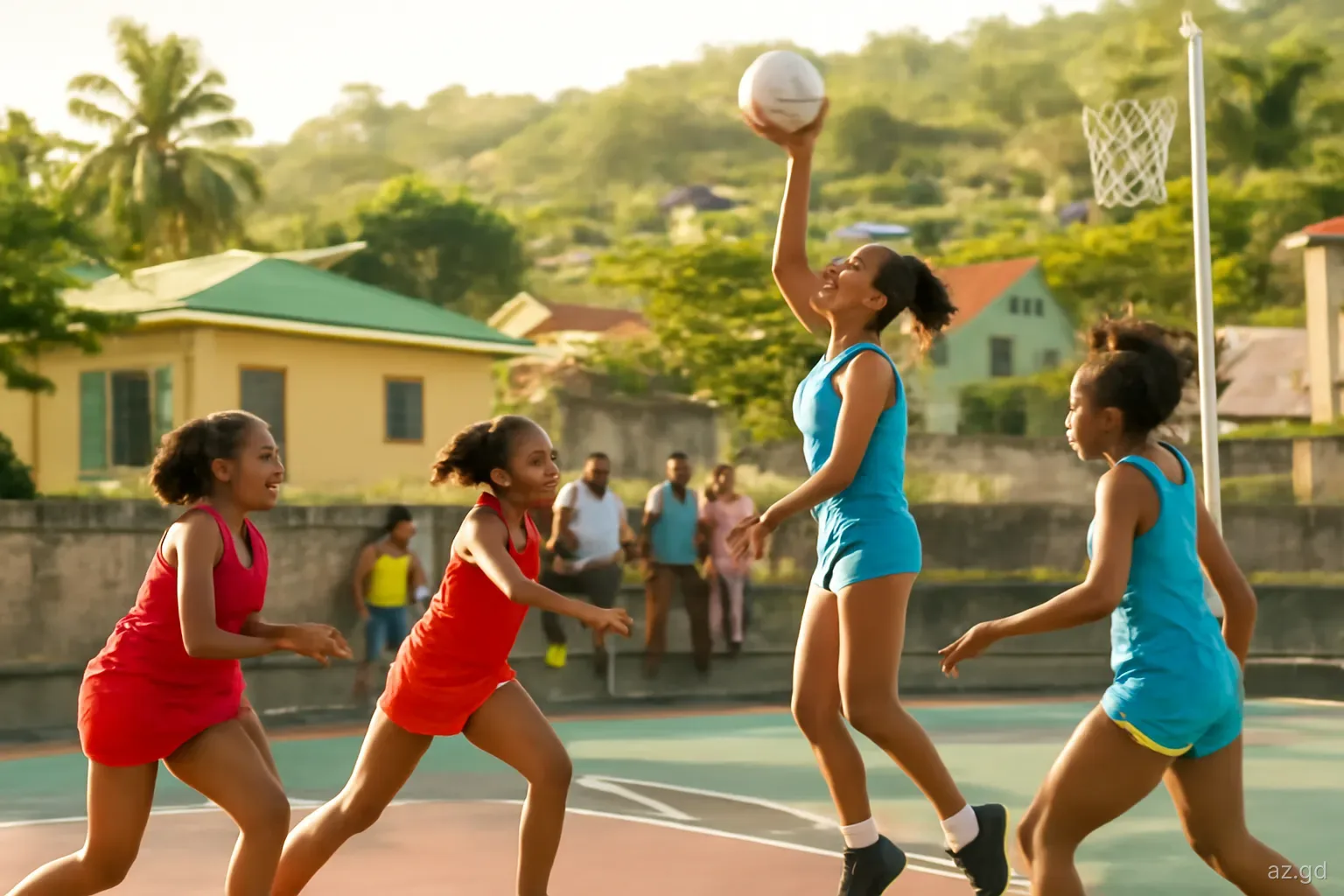
- Inter-secondary schools athletics championships, usually held in the first half of the year, where crowds and school bands create a carnival atmosphere.
- Primary school sports days across the parishes, community events where you see the youngest talent.
- Public viewing of major championships. When a Grenadian is in an Olympic or world final, bars, rum shops and community centres show the race and the island watches together.
- Early-morning training. Athletes often train before the heat, so a dawn walk past a track or school field may show a future medallist at work. Respect training sessions and ask before photographing anyone.
Following a championship from Grenada
During the Olympics or World Championships, Grenada follows its athletes closely. Local radio and television carry heats and finals, and the time difference matters: races in Europe often fall in the Grenadian afternoon, while those in Asia, as at Tokyo in 2021 and 2025, can land in the early morning or overnight. Bars, rum shops and community centres open specially for a Grenadian final, and the atmosphere when a Grenadian wins a medal is electric, with horns, music and impromptu street celebrations.
When medallists return home, the government and communities often organise a motorcade from Maurice Bishop International Airport through St George's and the athlete's home parish. If you are on the island at that time, expect traffic delays and a festive mood, and join the crowds along the road.
Between major championships, athletes post updates on social media, and local newspapers and sports programmes report on their results in Diamond League meetings and other events abroad.
What visitors and new residents get wrong
The most common mistake is assuming a big sporting nation has big sporting infrastructure. Grenada has one main stadium and modest school facilities. Many athletes train on grass fields and in borrowed spaces, and the national team relies on overseas bases before big championships.
Another is treating athletes as tourist attractions. Kirani James, Anderson Peters and others are national figures, but they are also private people who train and live quietly when at home. Approaching them politely in public is fine; turning up at their homes or training sessions uninvited is not.
Finally, people sometimes assume medals come easily now. Each one is the result of years of work, injury and sacrifice, often far from family. Grenadians know this, which is why medal celebrations are so emotional.
The best way for a visitor to support the sport is simple: go to a local meet, buy a ticket or a programme where there is one, and cheer for the young athletes. Schools and clubs raise money through these events, and crowds matter to teenagers who may be wearing Grenada's colours at CARIFTA a year or two later.
Frequently asked questions
How many Olympic medals has Grenada won?
Grenada has won five Olympic medals, all in athletics: Kirani James's gold in 2012, silver in 2016 and bronze in 2020 in the 400 metres, and two bronzes in Paris in 2024, won by Lindon Victor in the decathlon and Anderson Peters in the javelin.
Where is Kirani James from?
Kirani James was born in 1992 in Gouyave, the fishing town in St John on Grenada's west coast. He won the 2011 world title as a teenager and Olympic gold in London in 2012, and the national stadium in St George's was renamed in his honour in 2017.
What has Anderson Peters won?
Anderson Peters won world javelin titles in 2019 and 2022, Pan American gold in 2019, Olympic bronze in Paris in 2024, the 2024 Diamond League title and silver at the 2025 World Championships. His best throw of 93.07 metres is a Commonwealth record.
What is the Kirani James Athletic Stadium?
It is Grenada's main multi-purpose stadium in St George's, formerly the Grenada National Stadium, renamed after Kirani James in April 2017. It holds around 8,000 spectators and hosts athletics championships, regional meets such as CARIFTA in 2024 and national football matches.
Why is Grenada so good at athletics?
A mix of competitive school sport, early talent identification, regional youth meets like CARIFTA and US athletics scholarships has produced world-class athletes. The success of Kirani James after 2012 also inspired a generation of young Grenadians to believe they could reach the top.