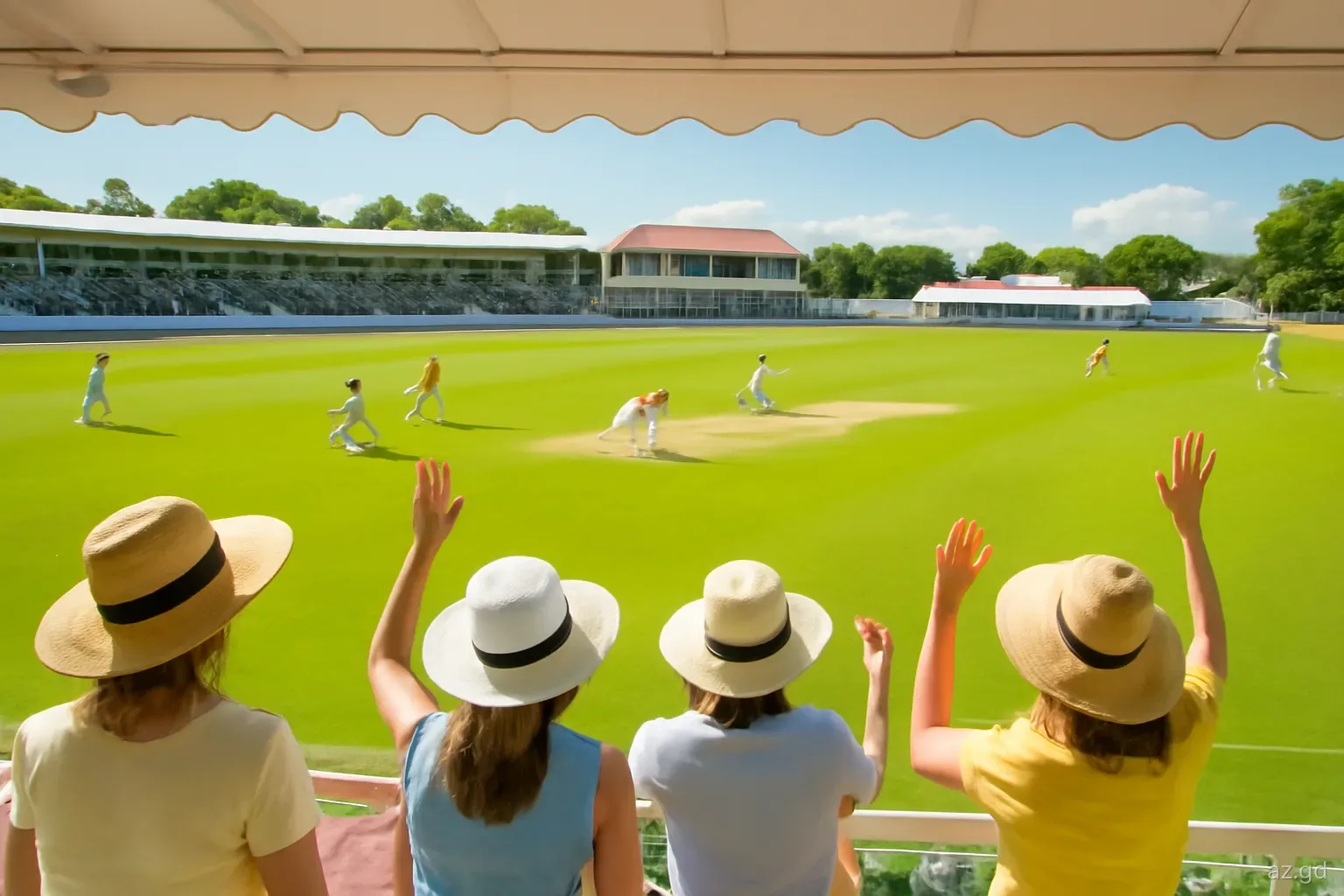
Cricket has been played at Queen's Park, on the northern edge of St George's beside the River Road, since the 1880s. The ground, rebuilt as the Grenada National Cricket Stadium, became a Test venue in 2002 when West Indies played New Zealand, hosted matches at the 2007 Cricket World Cup, and staged a West Indies Test against Australia as recently as July 2025. For a small island, it is a serious international ground.
International fixtures come round only every so often, but regional matches and local cricket fill the gaps, and the atmosphere on a big day is unlike any other sporting event on the island. This guide covers how to find out what is on, where to sit, what to bring and the history that makes the place matter to Grenadians.
A ground with a long memory
A Grenada side played the touring Gentlemen of America at the original Queen's Park in 1887, and in 1899 the first Grenadian cricketers appeared in first-class cricket. For most of the twentieth century the ground served club cricket, inter-island matches and athletics, with the hills of St George's rising behind it.
The modern stadium was rebuilt around 2000 and funded by the People's Republic of China. Hurricane Ivan badly damaged it in September 2004, only three years before the World Cup, and repairs had to be completed against the clock. The ground is owned by Cricket West Indies and operated with the Windward Islands, whose regional side plays home matches here alongside venues in St Lucia, St Vincent and Dominica.
The two ends are the River End and the D'Arbeau End. The playing area is noticeably elongated, which gives batsmen short boundaries square of the wicket and long ones straight, a quirk television commentators enjoy pointing out.
Grenadians who made the West Indies side
Junior Murray. The wicketkeeper-batsman from Grenada played Test and one-day cricket for West Indies in the 1990s and is remembered as one of the island's pioneers at the top level.
Rawl Lewis. The leg-spinner played for West Indies and captained the Windward Islands, a rare Grenadian presence in the regional spin attack.
Devon Smith. The left-handed opener from St Patrick played Tests and one-day internationals over many years and became one of the most prolific run-scorers in West Indies regional first-class cricket.
Nelon Pascal. The fast bowler represented West Indies in the late 2000s, following the same path through Grenada and Windward Islands cricket.
The next generation. Grenadian players continue to come through school cricket, the Grenada Cricket Association's competitions and the Windward Islands set-up. Local supporters follow them closely, and a home player in a West Indies side always fills the stands.
Finding fixtures and tickets
International matches in Grenada are scheduled by Cricket West Indies, often months in advance, and tickets are usually sold online through the board's official channels as well as at outlets in Grenada closer to the date. For a Test or a high-profile white-ball match, buy early; weekend days sell out first.
Regional matches, including Windward Islands fixtures in the four-day championship and the one-day competition, are far cheaper and sometimes free or close to it. They are the best way to see promising young Caribbean players at close range. The Grenada Cricket Association runs domestic competitions, from parish and club cricket to T10 and T20 tournaments that draw lively evening crowds when played under lights.
Listen to local radio and check the Grenada Cricket Association's announcements for fixture changes. Rain can wash out a day, and regional fixtures in particular are rescheduled at short notice.
What to bring on match day
A full day of cricket in Grenada is long, hot and sociable. Pack for comfort.
- A wide-brimmed hat, sunglasses and high-factor sunscreen. Uncovered seating is exposed from mid-morning onwards.
- Water, and plenty of it, unless the ground's rules restrict bringing your own; check the ticket conditions.
- Cash for food stalls and drinks, in EC dollars. Card machines are not guaranteed at every vendor.
- A light rain jacket or umbrella in the rainy season, roughly June to December, when short heavy showers interrupt play.
- Ear plugs if you are sensitive to noise. Music, conch shells and drums are part of a Caribbean cricket crowd.
- Patience at the gates. Security checks on big days take time; arrive at least an hour before the start.
- Your ticket on paper as well as on your phone, in case the phone battery fails in the heat.
Getting there and getting home
The stadium sits at Queen's Park on the northern side of St George's, a short drive from the Carenage along the coast road. Route buses heading north out of the city towards Grand Roy and Gouyave pass close by, and on match days extra buses and taxis gather near the gates. From the Grand Anse hotels, allow 20 to 40 minutes by taxi depending on traffic; the city bottlenecks around the Esplanade and the Sendall Tunnel can be slow.
Parking near the ground is limited on international days, and police often control the approach roads. Agree taxi fares in advance and arrange a pick-up time; at the close of play, hundreds of people leave at once, and waiting for a taxi on River Road can take a while.
If you are staying further out, in St David or on the east coast, consider leaving well before the final over to beat the crowd, or stay for the post-match atmosphere and travel later.
Mistakes visiting fans make
A few avoidable errors spoil many first visits to Queen's Park. Avoid them and the day is far more enjoyable.
- Underestimating the sun. Sunburn by lunchtime is common for visitors who sit in open stands without cover.
- Assuming every match is international standard. Check whether you are buying for a Test, a white-ball international or a regional fixture.
- Leaving transport home to chance after a big game, when taxis are scarce and buses are full.
- Buying from unofficial resellers outside the ground. Use official outlets to avoid fake or invalid tickets.
- Expecting play to start exactly on time after rain. Ground staff need time to dry the outfield, and inspections can take an hour or more.
- Forgetting that a Test lasts up to five days. If one day is rained off or sold out, another day of the same match may offer better seats and a quieter crowd.
- Bringing large bags or glass bottles. Security rules at international matches restrict what you can carry in, so travel light.
Cricket beyond the national stadium
Most Grenadian cricket happens far from the international ground. Village and parish teams play on community fields from Sauteurs to St David, and a Saturday or Sunday afternoon drive around the island will often pass a match in progress, with spectators under trees, music from a parked car and a rum shop nearby. Nobody minds a respectful visitor stopping to watch.
Tape-ball and softball cricket, played with a taped tennis ball and fewer rules, fills beaches, streets and schoolyards, especially during school holidays. It is fast, noisy and a good way to see the local passion for the game at its most informal.
School cricket is the main pathway into the Windward Islands and West Indies set-ups. Secondary school competitions attract keen crowds of former students and parents, and the best young players are watched closely by selectors and by the Grenada Cricket Association's development coaches. If you have a child keen on the game, ask at local clubs about junior coaching sessions, which often run in school holidays.
Frequently asked questions
Where is the cricket stadium in Grenada?
The Grenada National Cricket Stadium is at Queen's Park, on the northern edge of St George's beside the River Road. It is a short drive or bus ride from the city centre and about 20 to 40 minutes by taxi from Grand Anse, depending on traffic.
Has Grenada hosted Test cricket?
Yes. The ground became a Test venue in 2002 with West Indies against New Zealand, has staged further Tests since, and hosted West Indies against Australia in July 2025. It was also a venue for the 2007 Cricket World Cup.
How do you buy tickets for cricket in Grenada?
Tickets for international matches are sold through Cricket West Indies' official channels and local outlets announced before the series. Regional and domestic matches are much cheaper and often sold at the gate. Buy early for weekend days of a Test.
What is the capacity of the Grenada cricket ground?
The stadium is generally listed with a capacity of around 20,000. Actual numbers for a particular match depend on which stands are open and how the ground is configured, which can vary between international and regional fixtures.
Which famous cricketers come from Grenada?
Grenadians who played for West Indies include wicketkeeper Junior Murray, leg-spinner Rawl Lewis, opener Devon Smith and fast bowler Nelon Pascal. Many more have represented the Windward Islands in regional cricket, and young players continue to come through school competitions.