In Grenada the music changes with the calendar. From May the radio fills with the year's new soca, and by August every bus, bar and fete is playing the songs competing for Road March at Spicemas. In December the parang groups come out on Carriacou, and in spring the drums of the Maroon festival are heard in the villages. All year, church choirs and gospel groups are as much a part of the soundscape as sound systems.
This guide is for anyone who wants to understand what they are hearing: the main Grenadian genres, how they relate to Trinidad's, the competitions that drive new music each season, and where to hear each style live without guessing.
Calypso: the commentator's art
What it is. Calypso grew out of the songs of enslaved Africans and the French Creole chantwells of carnival, and became a vehicle for wit, satire and political commentary across the southern Caribbean. Lyrics carry the music; a good calypsonian is judged on what is said and how cleverly.
The Grenadian connection. The most famous calypsonian of all, the Mighty Sparrow, was born Slinger Francisco in Grand Roy, St John, in 1935, and moved to Trinidad as a small child. Grenadians claim him with pride, and he has been honoured at home.
Calypso Monarch. Grenada's own calypsonians compete each year in the Calypso Monarch competition, part of Spicemas. Tents and semi-finals in July lead to the final, where veteran and young singers deliver songs on government, scandals, social problems and national pride.
How to listen. Pay attention to the double meanings. Much calypso humour is wordplay rooted in local events, so a song that seems innocent may be pointed commentary on a recent controversy. Older calypsos are a running history of Grenadian politics, from the Gairy years through the revolution to the present, and many people can quote verses decades old.
Soca and the jab jab sound
Soca emerged in the 1970s as a faster, dance-driven offshoot of calypso, and it is now the soundtrack of Caribbean carnival. Grenadian artists record on Trinidadian and regional riddims, a riddim being the shared instrumental track over which many singers voice different songs, but Grenada has developed a sound of its own tied to Spicemas.
The most distinctive is jab jab music, sometimes called jab soca, built for J'ouvert morning when Jab Jab masqueraders cover themselves in oil, mud or paint and wear horns and chains. The rhythms are heavy and driving, the lyrics chanted, and songs often reference chains, oil and the devil mas itself. Separate competitions recognise groovy soca, the slower, melodic side of the genre, and power soca, the fast, high-energy side. The Road March title goes to the song played most by bands crossing the judging points on Carnival Tuesday, which makes it the people's choice rather than a judges' decision.
Grenadian soca has had growing regional success, with songs crossing over into Trinidad, St Vincent and the diaspora carnivals in New York, Toronto and London. The best way to follow it is through Grenadian radio stations and the free event calendars published ahead of Spicemas.
Steel pan and Panorama
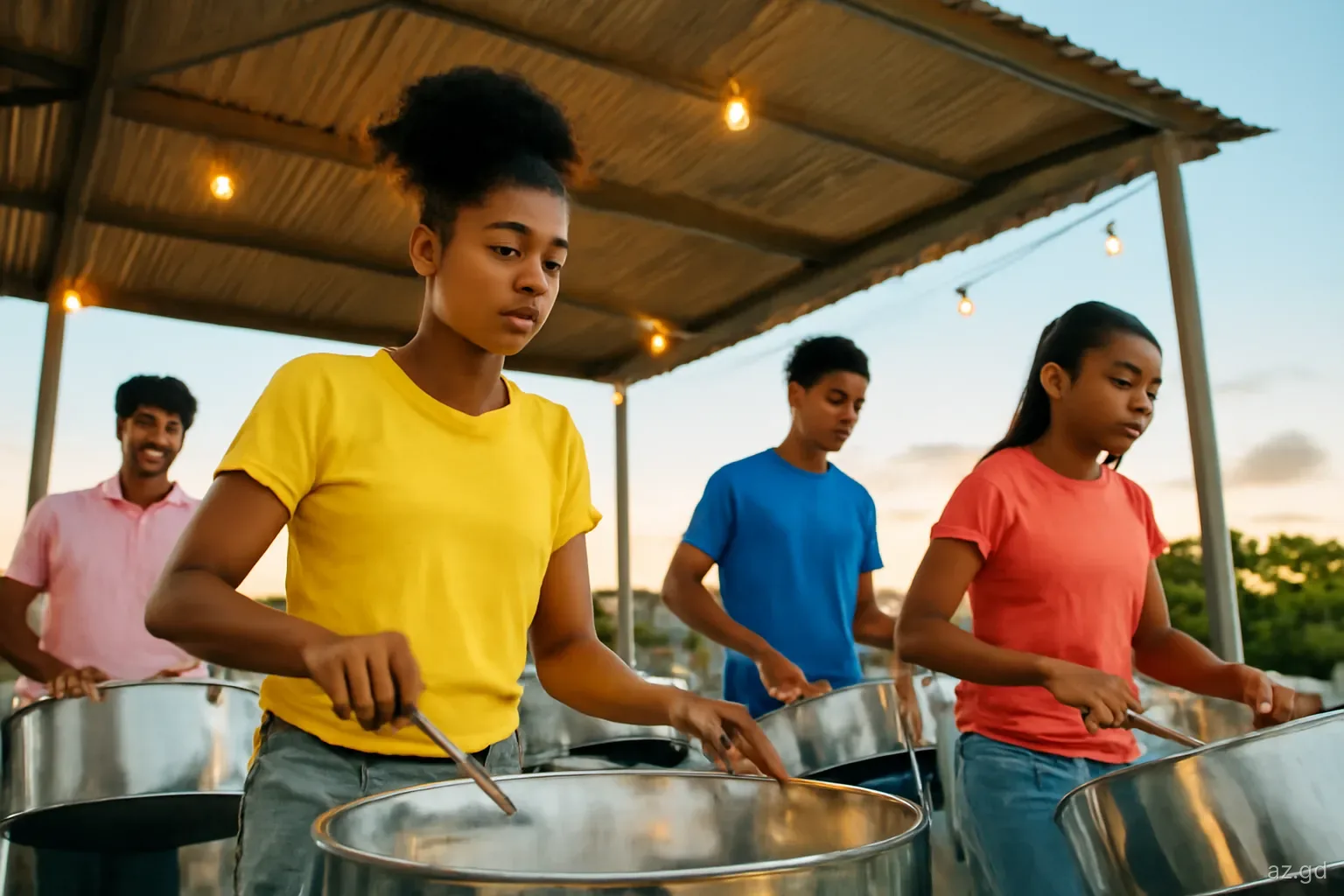
The instrument. Steel pan, invented in Trinidad from oil drums in the mid-twentieth century, spread quickly to Grenada. Steelbands are community institutions, attached to neighbourhoods, schools and sponsors, and their panyards double as youth clubs.
Panorama. The national steelband competition is held during the carnival season. Bands spend weeks rehearsing a single arrangement, usually of a popular soca song, and the final is a long night of large orchestras playing at full power.
Hearing pan outside carnival. Many hotels and restaurants book pan soloists or small ensembles for dinner sets, particularly in the Grand Anse and Lance aux Epines area. Steelbands also play at church events and national celebrations. Panyard rehearsals in June and July are often open to quiet visitors, but ask first.
Big Drum, string band and quadrille: the older traditions
Older styles survive most strongly on Carriacou. Big Drum, played on rum-keg drums with a chantwell and chorus, is ceremonial music for the ancestors and is covered in more detail in the AZ.GD article on Carriacou's African heritage. String bands, built around violin, guitar, cuatro, banjo, bass and shak-shak, play the dances and songs of rural Grenada and accompany quadrille, a set dance descended from European ballroom figures and adapted with Creole rhythms.
The Carriacou Maroon and String Band Music Festival, usually held in late April, is the best single chance to hear both Big Drum and string bands in one place. On the mainland, string band music turns up at heritage events, independence celebrations and some village fairs, but rarely on a regular schedule, so ask the Grenada Tourism Authority or local cultural groups what is coming up.
Parang, gospel and what plays on the bus
Parang. In December, groups of singers with guitars, cuatros and shak-shaks go from house to house, especially on Carriacou, singing Christmas songs with improvised verses that tease friends and neighbours. The Carriacou Parang Festival grew out of this custom and is a highlight of the Christmas season.
Gospel and church music. Grenada is a deeply churchgoing country, and choirs, gospel concerts and hymn singing are central to musical life. Sunday morning services in St George's or a village church are a fine introduction to local voices.
Reggae and dancehall. Jamaican music is hugely popular, and local artists work in reggae, dancehall and their hybrids with soca. Route buses are mobile sound systems; the driver's playlist is part of the ride.
Country and old-time. Older Grenadians often have a soft spot for country music, crooners and old calypsos, which you may hear in rum shops and at family gatherings.
Where to hear music outside carnival season
Live music is easiest to find in the south-west, where hotels, beach bars and restaurants around Grand Anse, Morne Rouge, True Blue and Lance aux Epines book pan players, bands and DJs on set nights of the week. Fish Friday in Gouyave mixes street food with sound systems and sometimes live performers, and village fetes, church harvests and sports days often feature a band or a sound system.
Schedules change often, so the reliable approach is to ask at your accommodation, watch local radio announcements and look for event posters around town. Around Independence in February and Emancipation in August, cultural shows bring out folk dance troupes, string bands and drummers. On Carriacou, Hillsborough's bars and the Paradise Beach area are the main options outside festival weekends, and live performances are more frequent in high season.
Mistakes visitors make with Grenadian music
A few misunderstandings come up often:
- Assuming everything is Trinidadian. The genres are shared, but Grenada has its own artists, competitions and jab jab style.
- Turning up to J'ouvert in good clothes. If you are anywhere near a Jab Jab band, expect oil and paint. Wear old clothes or stay well back.
- Filming ceremonies without asking. Big Drum at a family event is not a concert. Ask first, every time.
- Ignoring volume and hours. Fetes start late and go till dawn. If you book accommodation in town in August, ask about noise.
- Skipping the slow songs. Groovy soca and calypso reward listening; judging a season only by the J'ouvert tracks misses half of it.
- Expecting a fixed calendar. Competition dates, venues and even festival formats change from year to year. Check the Spicemas Corporation and local media close to the time.
Frequently asked questions
Is the Mighty Sparrow from Grenada?
Yes. Slinger Francisco, the Mighty Sparrow, was born in Grand Roy in the parish of St John in 1935. His family moved to Trinidad when he was a small child, which is where his career was built.
What is jab jab music?
A Grenadian style of soca made for J'ouvert morning at Spicemas, when Jab Jab masqueraders cover themselves in oil or paint. It has heavy, driving rhythms and chanted lyrics, often referring to chains, oil and devil mas.
When is the best time to hear live music in Grenada?
July and August, in the run-up to Spicemas, bring the most live music, from calypso tents to Panorama and fetes. Late April suits Carriacou's string band and Big Drum festival, and December is Parang season.
What instruments are used in a Grenadian string band?
Typically violin, guitar, cuatro, banjo, a bass instrument and the shak-shak, a shaker. Bands play for quadrille dancing and village events, and they feature at Carriacou's Maroon and String Band Music Festival.
What does Road March mean?
Road March is the title for the most-played song on the road on Carnival Tuesday, judged by how often bands play it as they cross judging points. It reflects what the crowds actually choose to dance to.
Can visitors attend a steelband rehearsal?
Often yes, especially in the weeks before Panorama, but panyards are community spaces. Ask a band member or organiser before entering, keep out of the way of players, and consider buying a drink or making a donation.