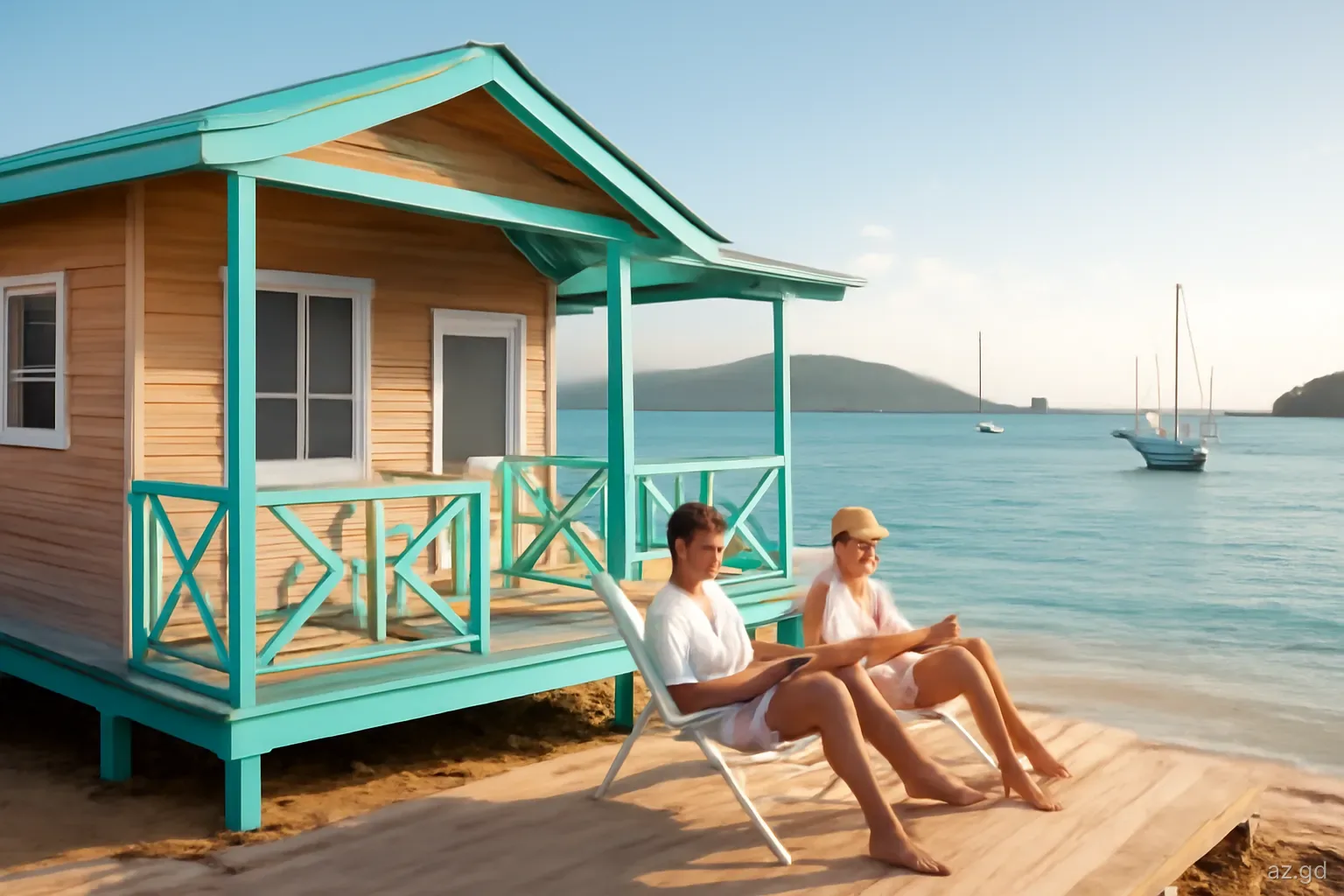
A growing number of visitors come to Grenada for weeks or months rather than days: winter escapees from North America and Europe, remote workers, families of St George's University students, sailors waiting out hurricane season ashore, and people testing whether they want to move. For all of them, nightly hotel rates make little sense, and the market for furnished monthly rentals is where the value lies.
That market works differently from hotel booking. Much of it is informal, priced in a mix of US and EC dollars, and arranged through agents, owners and word of mouth. This guide explains where long-stay rentals are concentrated, how to find them, what they typically include, and the checks that prevent an expensive first month. Immigration rules for longer stays are covered in this site's entry and immigration section; confirm your own permitted stay with the Immigration Department before committing to a lease.
Where long-stay visitors tend to live
The south-west holds most furnished rental stock. True Blue and the area around St George's University has apartment blocks built largely for students and faculty, which means furniture, air conditioning and internet are standard and leases are used to short terms. Grand Anse offers walkable access to the beach, supermarkets and buses, and is the easiest place to live without a car. Lance aux Epines is quieter and more spread out, with houses and apartments popular among retirees and families who drive.
Further afield, St David's south coast around Westerhall and Calivigny offers more space and greenery at lower rents, at the cost of longer drives. St George's town has cheaper rooms and apartments, mainly let to Grenadians, and is convenient for buses to every parish. Some long-stayers choose a few months on Carriacou, where the pace is slower and rentals are fewer; after Hurricane Beryl, availability there has been tighter while rebuilding continues.
Sailors who haul out or leave their boats at a marina for hurricane season form their own long-stay group. Apartments and rooms near the marinas and boatyards around Prickly Bay, Clarkes Court Bay, Woburn and Port Louis in St George's lagoon are popular with crews working on their boats, and some marinas can point to nearby rentals. Demand here follows the sailing calendar rather than the tourist one, rising from June as boats arrive from the north.
How to find a monthly rental
Local real estate agents. Several established agencies in the Grand Anse and Lance aux Epines area handle furnished rentals as well as sales. They can arrange viewings, draw up a lease and act as the point of contact with overseas owners. Agents normally earn their commission from the landlord, but confirm whether any fee falls on the tenant.
Online booking platforms with monthly discounts. Many holiday apartments offer weekly and monthly reductions. Booking the first two to four weeks this way gives a secure landing while you look for something better on the ground.
Community groups and noticeboards. Expat, sailing and university community groups online frequently carry rental listings, often for properties never advertised elsewhere. Treat them like any private listing: view before paying.
Word of mouth. Grenada is small and personal recommendations matter. Taxi drivers, guesthouse owners and people met at marinas often know of a flat about to come free.
Timing. Demand from students peaks before the university's January and August starts. Looking in the weeks between semesters, or outside the December to April high season, tends to produce more choice and better rates.
What long stays cost, and what is included
Rents vary widely with location, size, standard and season, so treat any figure as a starting point. As a rough guide, modest furnished one-bedroom apartments in the south-west have commonly been let in the region of several hundred to around two thousand US dollars a month, with sea-view apartments and houses in Lance aux Epines costing considerably more. Rates for a one-month stay in high season are higher than for a six-month lease starting in May.
The biggest variable is utilities. Electricity in Grenada is expensive by international standards, and running air conditioning day and night can add a substantial sum to a month's costs. Some landlords include electricity up to a cap, some include it entirely at a higher rent, and many pass on the actual bill. Water is cheaper but should still be clarified. Internet from Flow or Digicel is usually included in student-oriented apartments. Ask for a recent electricity bill for the unit to get a realistic idea, and budget for LPG gas cylinders if the stove runs on gas.
Lease terms to agree in writing
Even for a three-month stay, a short written agreement protects both sides. It does not need to be complex, but it should cover these points:
- The monthly rent, the currency it is payable in, the due date and the payment method.
- The security deposit, commonly equivalent to one month's rent, and the conditions and timing for its return.
- Exactly which utilities are included, any caps, and how excess usage is calculated.
- The start and end dates, and the notice required if either side wants to end early.
- Who pays for and arranges repairs, and how quickly urgent problems such as water or power failures will be dealt with.
- Cleaning, linen and garden services, if any, and their frequency.
- An inventory of furniture and equipment, ideally with photos, signed by both parties at move-in.
Living in a rental day to day
Life in a long-term rental soon settles into routines that short-term visitors never meet. Groceries come from the supermarkets in Grand Anse and St George's, with Saturday the busiest day at the St George's market for fresh produce and fish. Route buses run along the main corridors from early morning into the evening, but service thins out at night and on Sundays, so many long-stayers either hire a car for the whole stay or buy one if staying six months or more. Driving requires a local permit, issued for visitors with a valid licence from home.
Rainy season, roughly June to December, brings humidity and mould risk in closed-up rooms; running a dehumidifier or air conditioning periodically and keeping wardrobes ventilated helps. Mosquito screens and repellent are useful year-round, and dengue fever occurs in the region, so avoid standing water around the property. Hurricane season overlaps the rainy months: ask the landlord whether the building has shutters, what the plan is for a storm warning, and where the nearest official shelter is. The National Disaster Management Agency (NaDMA) issues guidance and shelter information when a storm threatens, and local radio carries its announcements.
Mistakes newcomers make in the first month
The same handful of problems catches long-stay visitors repeatedly. Most are avoidable with a little scepticism and some local advice:
- Paying a deposit on an unseen property. Photos can be years old. Book short-term first, then view in person.
- Ignoring the hill. A flat with a view may be a steep walk from the bus route, impractical in heat or rain without a car.
- Assuming utilities are cheap. An open-ended electricity arrangement with heavy air conditioning use can be a shock.
- Not checking water storage. Without a tank, mains interruptions leave you dry.
- Overstaying permitted entry. Leases do not extend immigration permission. Arrange extensions with the Immigration Department in good time.
- Skipping the inventory. Without move-in photos, deposit disputes are hard to settle.
- Forgetting insurance. Travel insurance often limits trip length; check that cover lasts for the full stay, including medical evacuation.
Frequently asked questions
How much does it cost to rent an apartment in Grenada for a month?
It varies with area, standard and season. Modest furnished one-bedroom apartments in the south-west have often been let for several hundred to around two thousand US dollars a month, while sea-view properties cost more. Utilities, especially electricity for air conditioning, can add significantly. Confirm current figures with agents or owners.
Where do digital nomads and long-stay visitors usually live in Grenada?
Most base themselves in the south-west: Grand Anse for walkability and buses, True Blue for furnished apartments and good internet near St George's University, and Lance aux Epines for quieter houses. St David offers more space at lower rents but requires a car. A few choose Carriacou for a slower pace.
Is electricity included in monthly rentals in Grenada?
Sometimes, but not always. Arrangements range from fully included to capped allowances to passing on the actual bill. Because electricity is costly and air conditioning uses a lot, ask for the exact terms in writing and, if possible, see a recent bill for the unit before signing.
Can visitors sign a lease in Grenada without residency?
Yes. Short-term furnished leases with visitors are common, particularly in areas serving university students and winter visitors. A lease does not grant any immigration status, however, so check how long you are permitted to stay and apply for an extension through the Immigration Department if needed.
When is the best time to find a long-term rental in Grenada?
Outside the December to April high season and between the university's semester starts in January and August. At those times more furnished units are free and landlords are more willing to negotiate. Booking a few weeks of temporary accommodation first gives time to view properties in person.