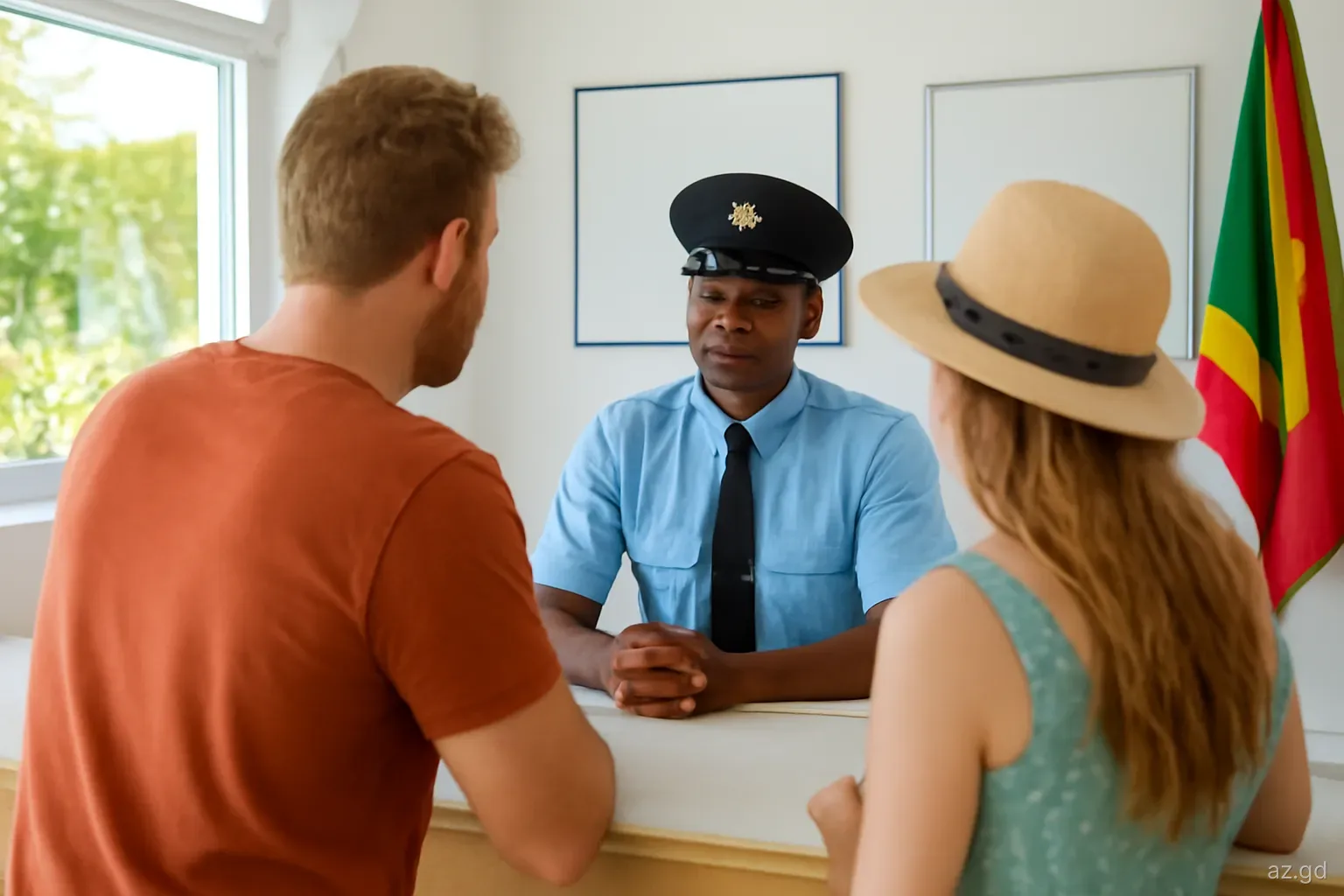
If something is stolen or you are the victim of a crime in Grenada, report it to the Royal Grenada Police Force as soon as you can. Insurers almost always need a police report for theft claims, airlines and embassies may want one for a stolen passport, and the police can only act on patterns of crime they know about.
Reporting is straightforward: you go to the police station for the area where the crime happened, give a statement and receive a reference. What visitors are rarely told is how the process continues if someone is charged, why that can involve a return visit, and how to get the paperwork your insurer will ask for.
Where to report
For an emergency or a crime in progress, call 911. For anything else, go to the police station that covers the area where the incident happened. The RGPF has stations in each parish, including in St George's, along the south coast tourist belt, in Grenville, Gouyave, Victoria, Sauteurs and St David's, as well as in Hillsborough on Carriacou and on Petite Martinique. Your hotel, villa manager or marina office will know which station handles their area.
Reporting to the wrong station is not a disaster; officers will take initial details and pass them on, but it adds delay. If you are leaving Grenada soon, say so at the start. Officers can prioritise taking your statement before your flight, and you can provide contact details abroad for follow-up.
For serious crimes such as assault, robbery or sexual offences, the Criminal Investigation Department becomes involved. Officers may ask you to attend a hospital for examination and documentation of injuries, which also serves as medical evidence.
Making the report
The process at the station follows a familiar pattern. Being prepared shortens it considerably:
- Bring photo identification: a passport, or a copy if the passport itself was stolen, plus a local driving permit if relevant.
- Write down what happened while it is fresh: the date, time, exact place, what was taken or done, and descriptions of anyone involved, including clothing, vehicles and direction of travel.
- List stolen items with makes, models, serial numbers and approximate values. Phone IMEI numbers, laptop serial numbers and photographs of the items all help.
- Give your statement to the officer, who will write it down or ask you to. Read it carefully before signing and correct anything that is wrong.
- Ask for the report or reference number and the officer's name and station before you leave.
- Ask how to obtain a copy of the police report for insurance purposes and whether there is a fee. Procedures vary, and a written request may be needed.
Getting the paperwork your insurer needs
Ask early. Insurers usually require a police report or at least a crime reference number for theft claims, and many set a deadline for reporting, often within 24 or 48 hours. Report promptly, even if the loss seems small.
Be patient with copies. A formal written report can take time to prepare. If you are leaving before it is ready, leave a forwarding address or email and ask whether the station can send it, or ask your accommodation to collect it.
Keep your own record. Photograph the stolen item's receipt or box if you have it at home, keep any hotel incident report, and note the names of witnesses such as staff who helped.
Cards and phones. Cancel bank cards and block phones immediately through your bank and network provider, then add the reference numbers they give you to your police report and claim.
Road accidents: a report you cannot skip
In Grenada, the police should be called to any road accident involving injury or significant damage, and the vehicles should not be moved until officers have attended, unless they are creating a danger. Insurance companies and car hire firms will ask for the police report, and without it a claim can stall.
While waiting, photograph the vehicles, their positions, number plates and any damage, and note the names and contact details of the other driver and witnesses. Exchange insurance details. Do not argue about fault at the scene; the police officer will take statements from each driver. If you are driving a hire car, call the hire company as soon as it is safe, because many contracts require immediate notification. If anyone is hurt, call 911 first.
Mistakes that weaken a report
Small slips can make it harder for police to act on a report or for an insurer to pay out, and almost all of them are easy to avoid with a little care on the day. The most common are:
- Waiting until the last day of the holiday to report a theft that happened a week earlier. Insurers notice the gap, and evidence fades.
- Giving vague descriptions of stolen goods without makes, models or serial numbers.
- Not reading a written statement before signing it, then finding errors later.
- Leaving without a reference number or the name of the investigating officer.
- Assuming a hotel incident report is enough. It helps, but it is not a police report.
- Posting accusations about named individuals on social media before the police have investigated, which can create legal problems of its own.
- Forgetting to give a reliable email address or overseas contact, so the officer cannot reach you when there is news or the case needs a further statement.
If someone is charged: what happens next
Grenada's criminal justice system follows the English common law tradition. Less serious offences are tried in the Magistrates' Courts, and more serious cases go to the High Court, part of the Eastern Caribbean Supreme Court. If a suspect is arrested and charged, you may be needed as a witness, and in Grenada, as in other common law jurisdictions, the case depends heavily on witness evidence given in person.
This is a real issue for visitors. A case may not be heard until weeks or months later, by which time you are home. Tell the police from the start how long you will be in Grenada and give reliable contact details. Ask the investigating officer how the case will proceed if you cannot return, and whether your statement can be used. Your embassy or high commission can explain the general process but cannot give legal advice or intervene in a case; for that, a local attorney is needed.
Residents should expect to attend court when summoned. Missing a court date can lead to a case being dismissed.
Support for victims of serious crime
Victims of violent or sexual crimes should seek medical care first: the General Hospital in St George's and Princess Alice Hospital can examine and treat injuries, and early examination matters both for health and for evidence. Ask the police to accompany you, or ask the hospital to contact them. You do not need to decide immediately whether to pursue a prosecution in order to get medical care.
Grenada has government and non-governmental support services for survivors of gender-based violence and domestic abuse, including services coordinated through the Ministry responsible for social development and gender affairs and the Ministry of Health. Visitors should also contact their embassy or high commission, which can help with contacting family, finding an English-speaking lawyer if needed and arranging travel. Travel insurers often provide counselling and can cover extra accommodation or changed flights.
Frequently asked questions
How do you report a theft in Grenada?
Go to the police station covering the area where the theft happened, bring identification and a list of stolen items, and give a statement. Ask for the reference number. Call 911 only if the crime is in progress or someone is in danger.
Can you get a police report in Grenada for insurance?
Yes. After making a statement, ask the officer how to obtain a copy of the police report for insurance purposes. It may take time and may involve a written request. If you are leaving soon, arrange for it to be sent or collected on your behalf.
Will you have to come back to Grenada for a court case?
Possibly. If a suspect is charged, the case often relies on witnesses giving evidence in person, and hearings can take months. Tell the police how long you are staying and ask how the case can proceed if you cannot return.
Do police in Grenada speak English?
Yes. English is the official language of Grenada, and all police business is conducted in English. Grenadian Creole English is widely spoken in daily life, but officers will speak standard English with visitors and record statements in English.
What should you do if your passport is stolen in Grenada?
Report the theft to the police and get a reference number, then contact your embassy, high commission or consulate about an emergency travel document. You may also need to contact the Immigration Department about your entry record before leaving the country.