Grenada's waters are busy with fishing boats, yachts, dive boats, ferries to Carriacou and day charters, and most trips pass without trouble. When something does go wrong at sea, the Royal Grenada Coast Guard is the agency responsible for search and rescue, and the main way to reach it is VHF channel 16.
Help at sea takes longer to arrive than on land, and the waters between Grenada and the Grenadines can turn rough quickly. This guide explains how to call for help, what to carry and what to tell people before you leave, for skippers, crew and anyone heading out on a boat they do not control.
Who responds at sea
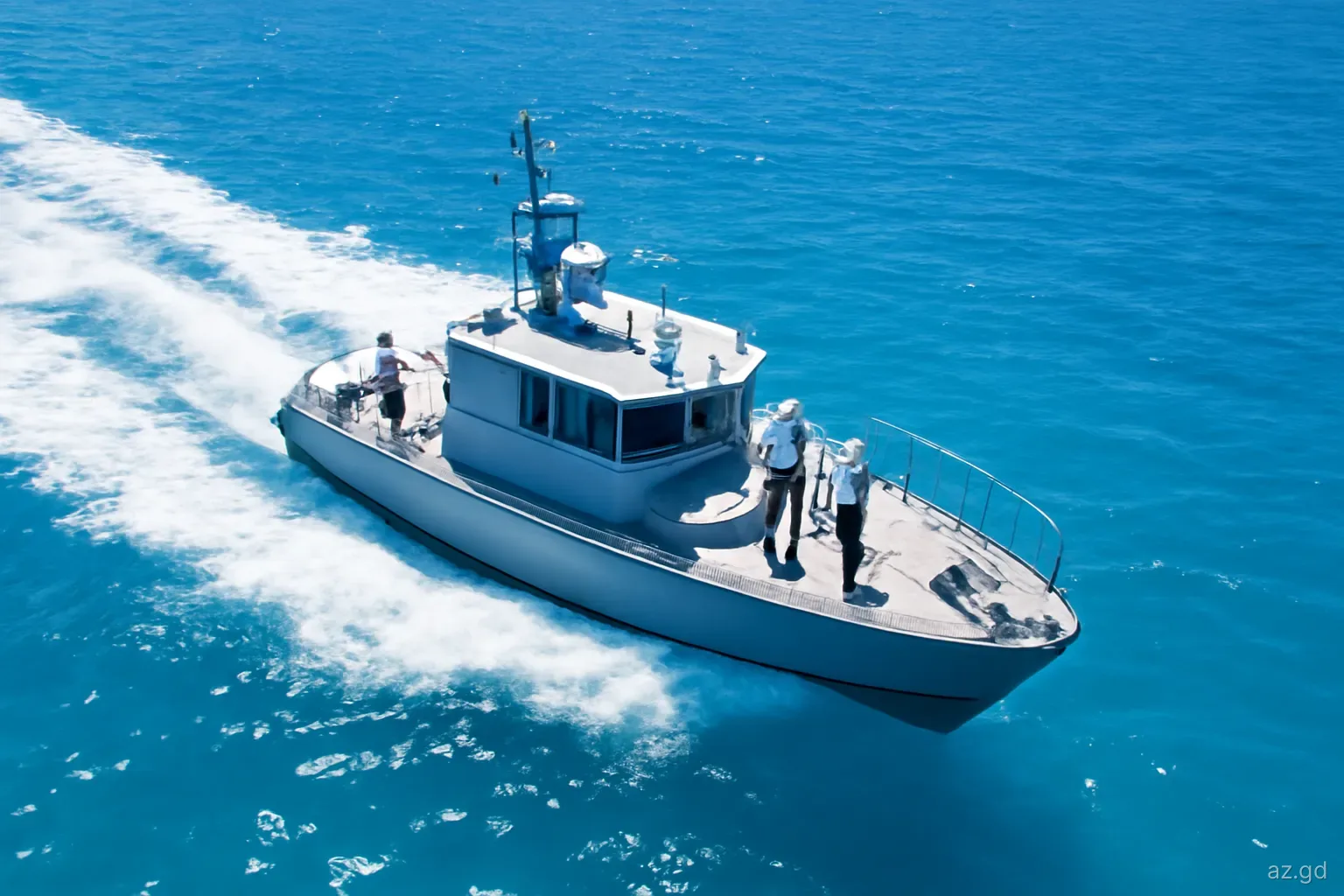
The Royal Grenada Coast Guard is a unit of the Royal Grenada Police Force, with its base at True Blue on the south coast. Its roles include search and rescue, law enforcement and border patrol. It operates a small fleet of patrol vessels and works with the police, the fire service and, in larger incidents, with regional partners and nearby coast guards.
Other vessels play a big part too. Under maritime law, any vessel that hears a distress call is expected to assist if it safely can, and in practice the first boats on scene are often fishing boats, dive boats or yachts nearby. That is why a clear Mayday on channel 16, heard by everyone, is so important.
On land, call 911 and explain that the emergency is at sea; the call can be passed to the coast guard. Marina offices around the south coast also monitor VHF and can help relay calls.
Making a distress call on VHF
If there is grave and imminent danger to the vessel or people on board, such as sinking, fire, a person overboard or a serious medical emergency, make a Mayday call on VHF channel 16:
- Switch to channel 16 on high power. If your radio has a red DSC distress button and is connected to GPS, press and hold it to send an automatic distress alert with your position.
- Say "Mayday, Mayday, Mayday", then "This is" and the vessel name three times, plus the call sign if you have one.
- Say "Mayday" and the vessel name once more, then give your position as latitude and longitude, or a bearing and distance from a known landmark such as Point Salines, Glover Island or Sandy Island.
- State the nature of the emergency and the help you need.
- Give the number of people on board and any injuries.
- Describe the vessel: type, length, hull colour and any distinguishing features.
- Say "Over" and listen. If there is no answer, repeat the call. For urgent but not life-threatening problems, use "Pan-Pan" instead of "Mayday".
What to carry and file before leaving
Good preparation makes the difference between a quick rescue and a long search. Before heading out of the harbour, make sure you have:
- Lifejackets for everyone on board, sized for children, and worn by non-swimmers and children at all times on small boats.
- A fixed VHF radio and a waterproof handheld as a backup, since phone signal disappears quickly offshore.
- An EPIRB or personal locator beacon, registered to your vessel and details, on boats heading into open water.
- Flares within their expiry date, a torch, a whistle and a signalling mirror.
- Plenty of drinking water and sun protection; dehydration becomes a risk quickly if a boat breaks down.
- A float plan left with someone ashore: route, people on board, departure and expected return time, and when to raise the alarm.
- An updated weather forecast. Squalls can build quickly, and the channel between Grenada and Carriacou can be rough in strong trade winds.
Diving accidents and injuries at sea
Decompression illness. Symptoms such as joint pain, numbness, weakness, dizziness or breathing problems after a dive need immediate attention. Give oxygen if trained and available, keep the diver lying down and alert the coast guard and emergency services. Contact a diving emergency service, which can advise on the nearest available hyperbaric chamber.
Chamber availability. A hyperbaric chamber was installed at St Augustine's Medical Services in 2017, but any chamber's availability depends on staffing and maintenance. Serious cases may need transfer to another island. Divers should confirm the current arrangements with their dive operator before diving.
Propeller and boat injuries. Snorkellers and swimmers near anchorages and dive sites are at risk from boat traffic. Use a dive flag or surface marker buoy, stay close to the dive boat and watch for tenders in busy bays.
Fishermen and long trips. Small open boats going far offshore should carry a handheld VHF, a locator beacon and extra fuel and water. Engine failure is the most common reason boats need assistance.
Person overboard
Falling overboard is one of the most dangerous situations at sea, particularly in the swell and currents between the islands. Everyone on board should know what to do:
- Shout "Man overboard" and the side, and immediately throw a lifebuoy, cushion or anything that floats towards the person.
- Assign one person to point at the person in the water continuously and never take their eyes off them.
- Press the MOB button on the GPS or chartplotter if fitted, to mark the position.
- Turn the boat back under control, approaching from downwind and slowing well before reaching the person; stop the propeller near anyone in the water.
- If the person cannot be recovered quickly, make a Mayday call on VHF channel 16 with the marked position.
- Once aboard, keep the person warm, check for injuries and seek medical advice, as near-drowning victims can deteriorate hours later.
Ferries, day trips and charters: safety as a passenger
Most people at sea around Grenada are passengers rather than skippers: on the inter-island ferry to Carriacou and Petite Martinique, on catamaran day sails, fishing charters, dive boats and water taxis. Passengers have less control but can still make sensible choices. Book with established, licensed operators, note where lifejackets are stored when you board, and ask for one for each child before leaving the dock.
On small water taxis and speedboats, sit low and towards the middle of the boat, hold on in waves and keep hands inside the hull when coming alongside. If the boat is visibly overloaded, if the weather is deteriorating or if the skipper has been drinking, it is reasonable to decline to travel. On the Carriacou ferry, the crossing can be rough in strong trade winds; take seasickness tablets before departure, stay seated in rough water, and keep away from the rails.
Kick 'em Jenny and other hazards to know
Kick 'em Jenny is an active submarine volcano about 8 kilometres north of Grenada's northern coast, between Grenada and Ronde Island. It is monitored by the University of the West Indies Seismic Research Centre, and Grenada's National Disaster Management Agency sets the alert level and the maritime exclusion zone around the summit. At lower alert levels, boats must keep outside a 1.5 kilometre zone, with mariners often advised to stay further away; at higher levels the zone widens to 5 kilometres.
The volcano lies on the route between Grenada and Carriacou, so skippers should check the current alert level before passage. Other hazards include strong currents around headlands and between islands, shallow reefs around Carriacou and the Grenadines, unlit fish traps and fishing gear at night, and sudden squalls in the rainy season. During hurricane season, monitor forecasts closely and follow NaDMA and marina advice.
Frequently asked questions
How do you contact the coast guard in Grenada?
At sea, call on VHF channel 16, using Mayday for life-threatening emergencies or Pan-Pan for urgent problems. On land, call 911 and say the emergency is at sea. The Royal Grenada Coast Guard is based at True Blue and handles search and rescue.
Is there a hyperbaric chamber in Grenada?
A hyperbaric chamber was installed at St Augustine's Medical Services in 2017. Availability depends on staffing and maintenance, so divers should confirm current arrangements with their operator and have dive insurance that covers transfer to another island if needed.
What is the exclusion zone around Kick 'em Jenny?
It depends on the alert level. At lower levels, boats must stay outside a 1.5 kilometre zone around the summit, with a wider berth often advised; at higher alert levels the zone is 5 kilometres. Check the current level from NaDMA before sailing past.
Do you need a VHF radio to sail in Grenada?
A VHF radio is essential safety equipment for any boat going beyond the immediate shoreline. Mobile signal disappears quickly offshore, and channel 16 is monitored by the coast guard, marinas and other vessels, which are often the first to respond.
What should be in a float plan?
Include the boat's name and description, the people on board, the route, departure time, expected return and the time at which someone should call for help. Leave it with a reliable person ashore, such as a marina office, friend or accommodation host.