When deep red sorrel starts appearing in bundles on market tables and at roadside stalls, Grenadians know Christmas is close. The plant is Hibiscus sabdariffa, known elsewhere as roselle, and the part used is the fleshy red calyx that wraps each seed pod. Steeped with ginger and spice, sweetened and chilled, it becomes the ruby-coloured drink that sits in jugs in nearly every Grenadian fridge from December into the New Year.
Sorrel is simple to make, but it rewards a few tricks, and it trips up visitors in predictable ways: confusing it with the European herb of the same name, being surprised by the stains, or underestimating a glass that has been laced with rum. This is how the season works, how the drink is made and where to find it.
When sorrel is in season
Sorrel is a short-day plant: it flowers as the days shorten in the second half of the year, so although it is planted earlier, the calyces are ready to harvest from around late November through December and into January. That timing is why it became a Christmas drink across the English-speaking Caribbean. Small farmers and backyard growers across Grenada plant a few rows for the season, and fresh sorrel is at its most abundant in the two or three weeks before Christmas.
Outside the season you can still make sorrel from dried calyces, which are sold in packets in supermarkets and markets all year. Dried sorrel produces a perfectly good drink, slightly less bright than fresh. You will also find bottled sorrel drinks and concentrates on supermarket shelves, from both local producers and regional brands. Their sweetness and strength vary a great deal, so read the ingredient list if you are watching sugar.
In Grenada, sorrel is not only a drink. Cooks use it for jam, jelly, chutney and sauces, and some make a sorrel wine that is left to ferment for weeks. But for most families, the jug in the fridge is the point.
How Grenadian sorrel is made
Every household has its own version, but the method is broadly the same. The quantities below suit about a pound of fresh calyces, enough for roughly two litres of drink.
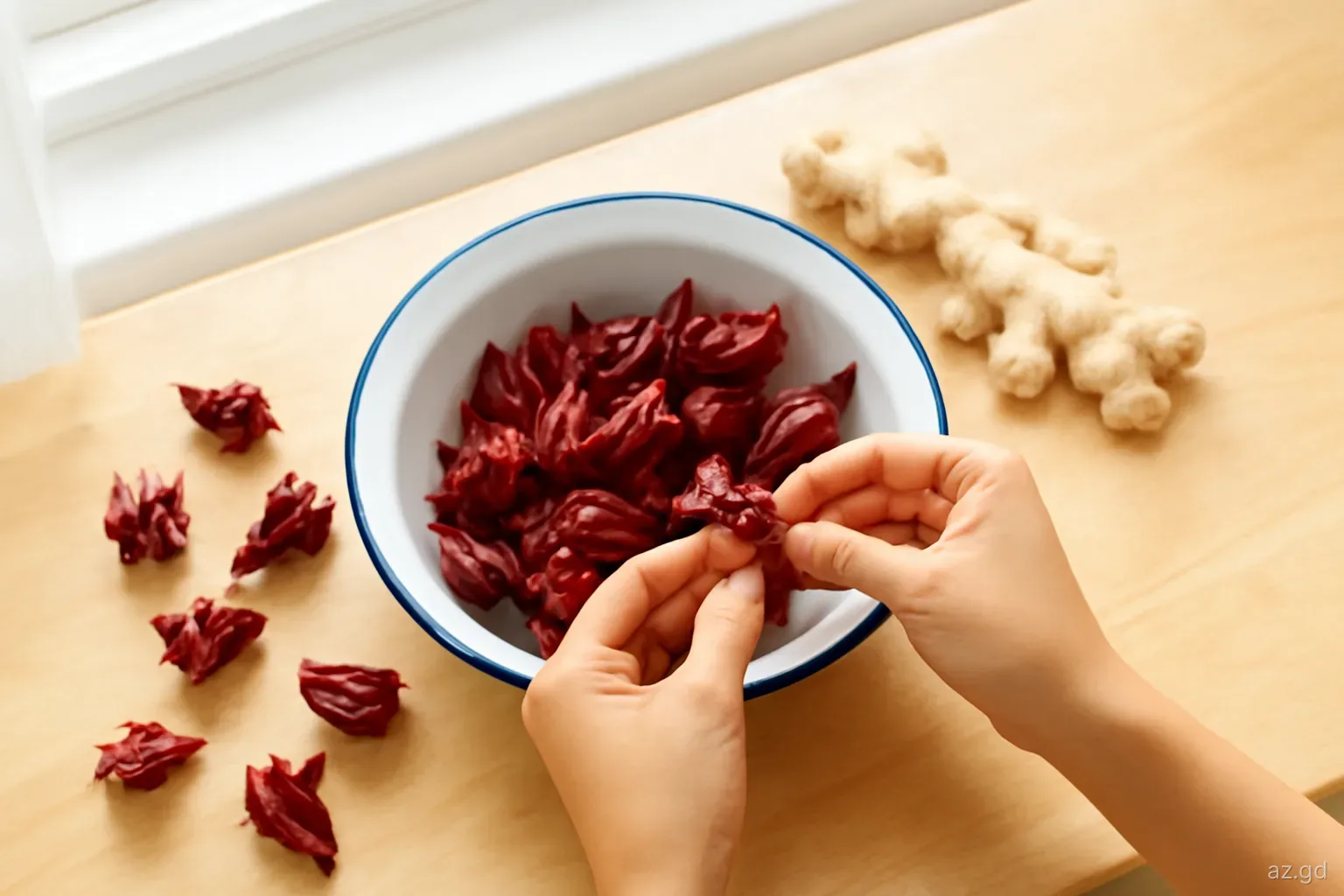
- Separate the calyces from the seed pods. Push the hard green pod out with your thumb or a small knife and keep only the red petals. This is the slow part; families often do it together.
- Rinse the calyces well in cold water to remove dust and any insects.
- Put them in a large pot or heat-proof bowl with a thumb-sized piece of grated or sliced fresh ginger, a few cloves and a stick of cinnamon. Some add a bay leaf, a strip of orange peel or a few allspice berries.
- Pour over about two litres of boiling water. Some cooks simmer for a few minutes; others simply steep. Either way, cover and leave it overnight or for up to a day to draw out colour and flavour.
- Strain through a fine sieve or cloth, pressing the calyces to extract the liquid.
- Sweeten to taste with white or brown sugar, stirring until dissolved. Start with less than you think; sorrel is naturally tart, and sugar is easier to add than to remove.
- Bottle and refrigerate. Serve very cold, over ice, with or without rum.
Adding rum, and other variations
Sorrel with rum. Many households add rum to some or all of the batch, either a dark or golden rum for warmth or a white rum for a sharper kick. The tart, spicy flavour hides alcohol well, which makes a rum-laced sorrel easy to overdo. If you are hosting, keep a separate jug without rum for children, drivers and non-drinkers.
Sorrel and ginger beer. Ginger beer is the other traditional Christmas drink in Grenada, and some people mix the two for a fizzier, spicier glass.
Less sugar, more spice. Home brewers increasingly sweeten lightly and lift the flavour with extra ginger, cloves or a little lime juice, which suits a hot afternoon better than a syrupy drink.
Sorrel ice and desserts. Leftover sorrel can be frozen in ice cube trays, reduced into a syrup for drizzling over ice cream, or set into jelly.
A gift as much as a drink. Bottles of home-made sorrel are passed between neighbours, taken to church friends and offered to visitors at Christmas. Accepting a glass when you visit a Grenadian home in December is part of the hospitality.
Where to buy fresh sorrel and ready-made drink
In season, sorrel is easy to find. These are the usual places to look.
- Market Square in St George's, especially on Saturday mornings in December, when vendors sell bundles of fresh calyces, ginger and spices together.
- Grenville market and parish markets elsewhere on the island, as well as roadside stalls and farmers selling from the back of a pickup.
- Supermarkets in Grand Anse, St George's and the larger towns, which stock fresh sorrel in season and dried packets year-round.
- Snackettes, cookshops and some restaurants, which offer a glass of sorrel as a seasonal drink in December and January.
- Craft and local-products shops, which may sell bottled sorrel syrup, jam or sauce as souvenirs.
- Carriacou and Petite Martinique, where fresh supply depends on what arrives by boat or grows locally; dried sorrel is the reliable fallback.
Mistakes and practical cautions
It stains. Sorrel juice is a powerful dye. It marks wooden chopping boards, light clothing, grout and plastic containers. Wear an apron, use glass or stainless steel, and rinse spills straight away.
It does not keep for ever. Home-made sorrel without preservatives should live in the fridge, and most cooks aim to drink it within about a week. If it starts to fizz, smell sour or grow mould on the surface, throw it out. Bottles left out on a warm counter spoil quickly in Grenada's heat. Rum extends its life, but it is still best kept cold.
It is not the sorrel in European recipes. In the UK and Europe, sorrel usually means a sour green leaf. In Grenada it always means the red hibiscus calyx. If you are buying dried sorrel abroad to recreate the drink, look for hibiscus flowers or roselle.
Health claims need care. Hibiscus is studied for possible effects on blood pressure, and some people drink sorrel for that reason. It is a drink, not a medicine; anyone on blood pressure or other regular medication should ask a doctor before drinking large amounts.
Sorrel and the rest of a Grenadian Christmas
Sorrel rarely appears alone. In the weeks before Christmas, many Grenadian households clean, repaint and put up new curtains, and the kitchen fills with seasonal food: baked ham, black cake made with dried fruit soaked for weeks in rum and wine, sweet bread and big pots of rice and peas. Sorrel and home-made ginger beer are the drinks that go with all of it, set out for family, neighbours and anyone who drops by.
Christmas in Grenada is also a time of church services, carol singing, parang music and village concerts, and of people returning from abroad to spend the season with family. Visiting is constant, and a glass of sorrel is the standard welcome. If you are invited to a Grenadian home over the holidays, it is polite to accept at least a small glass and to compliment the cook, since each family is quietly proud of its own recipe. Bringing a bottle of rum or a cake is a well-received gesture.
For visitors renting a villa or apartment, making a batch of sorrel is an easy way to join in. Buy fresh calyces and ginger at Market Square on a December Saturday, follow the steps above and keep the jug in the fridge for the week.
Frequently asked questions
What is sorrel made from in Grenada?
Grenadian sorrel is made from the red calyces of Hibiscus sabdariffa, also called roselle. The calyces are separated from the seed pods, steeped in boiling water with ginger, cloves and cinnamon, then strained, sweetened and chilled. It is unrelated to the leafy green sorrel used in European cooking.
When is sorrel season in Grenada?
Fresh sorrel is harvested from roughly late November into January, peaking in the weeks before Christmas, because the plant flowers as the days shorten. Dried sorrel is sold in supermarkets and markets all year, so the drink can be made in any month.
Does sorrel contain alcohol?
Not on its own. Plain sorrel is a non-alcoholic spiced drink. Many Grenadian households add rum, especially at Christmas, and the tart, spicy flavour can disguise how much has gone in. If you are unsure, ask before drinking, particularly if you are driving.
How long does home-made sorrel last?
Kept in the fridge in a clean, closed bottle, home-made sorrel usually stays good for about a week. Signs it has turned include fizzing, a sour or yeasty smell and mould on the surface. Adding rum helps it keep a little longer, but it should still be refrigerated.
Can you take dried sorrel home from Grenada?
Dried, commercially packaged sorrel is usually straightforward to carry, but rules on plant products differ by country. Declare it if your destination's customs form asks about plants or food, and check the agricultural import guidance before travelling. Fresh calyces are more likely to be restricted.
Where can visitors try sorrel in December?
Market Square in St George's, roadside vendors, snackettes, cookshops and many restaurants offer sorrel during the Christmas season. Visitors staying with Grenadian families or attending church events in December will often be offered a glass as part of the hospitality.