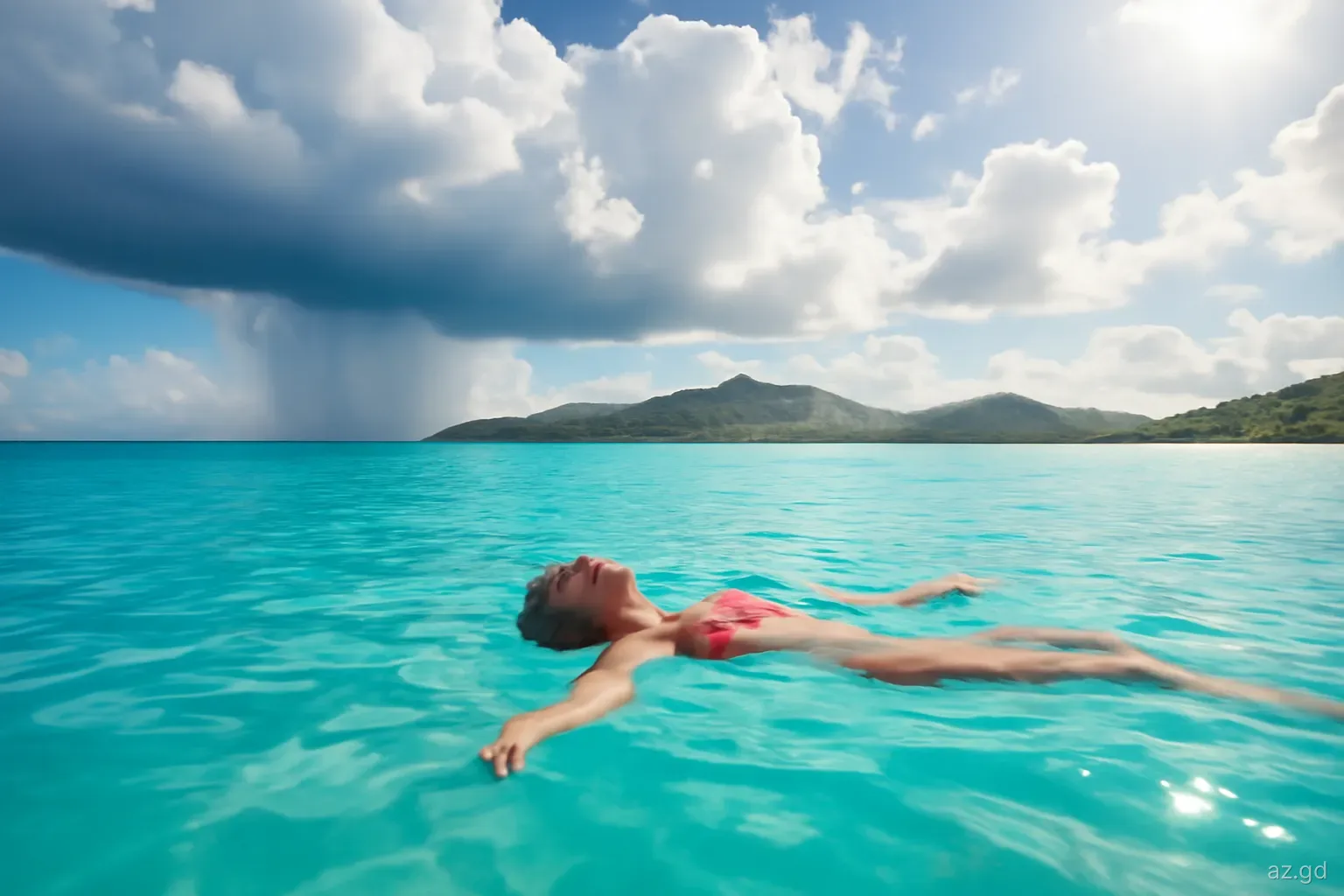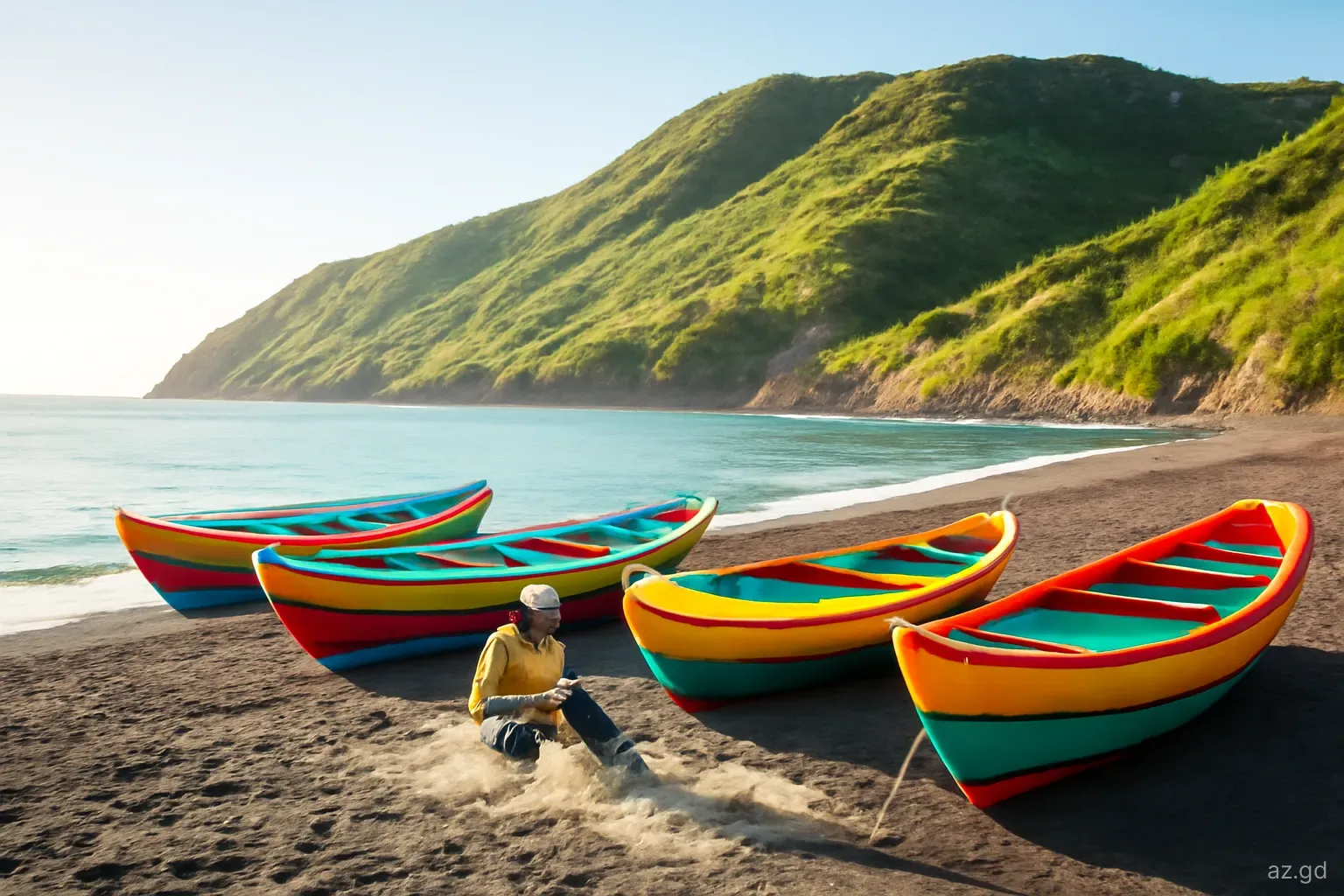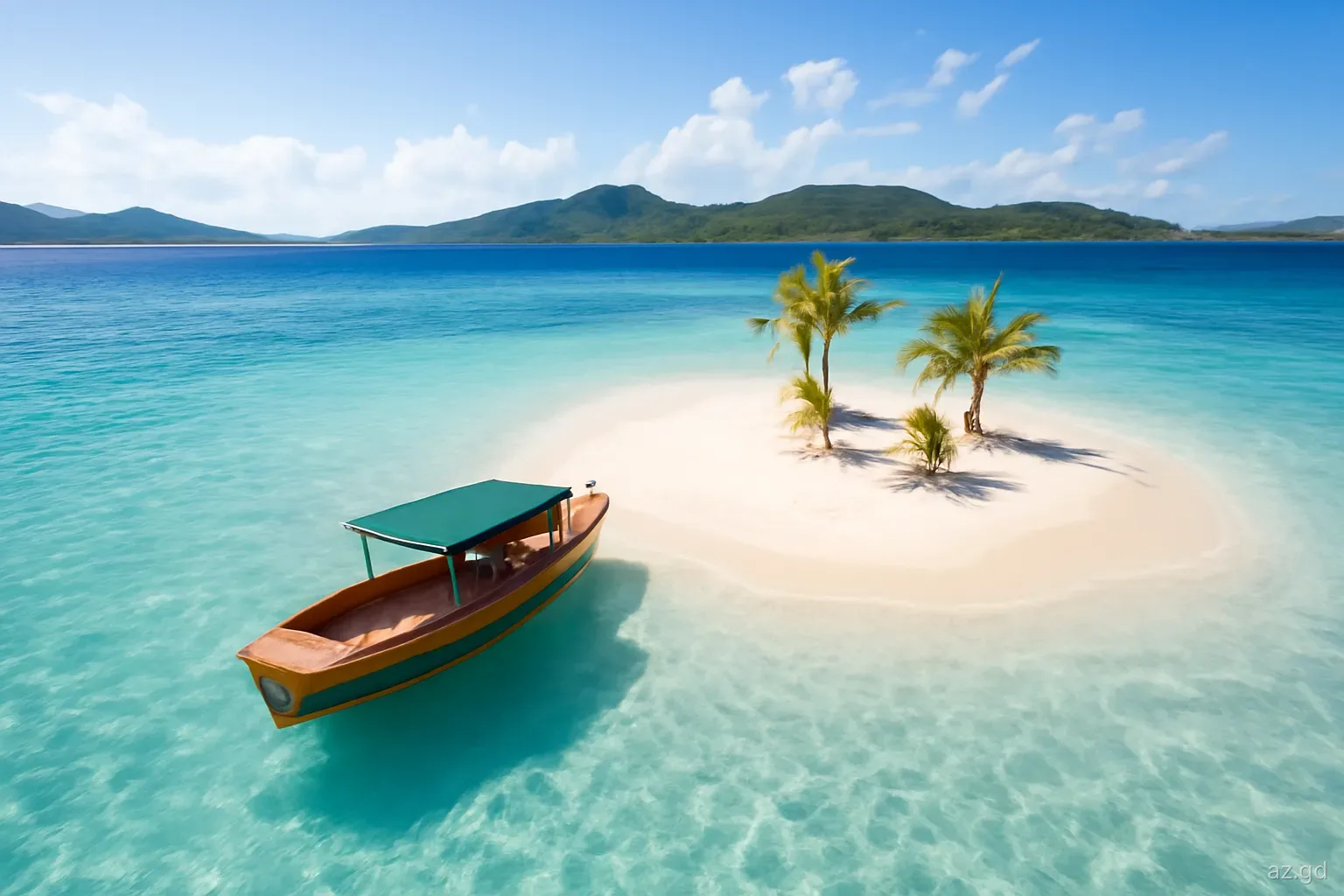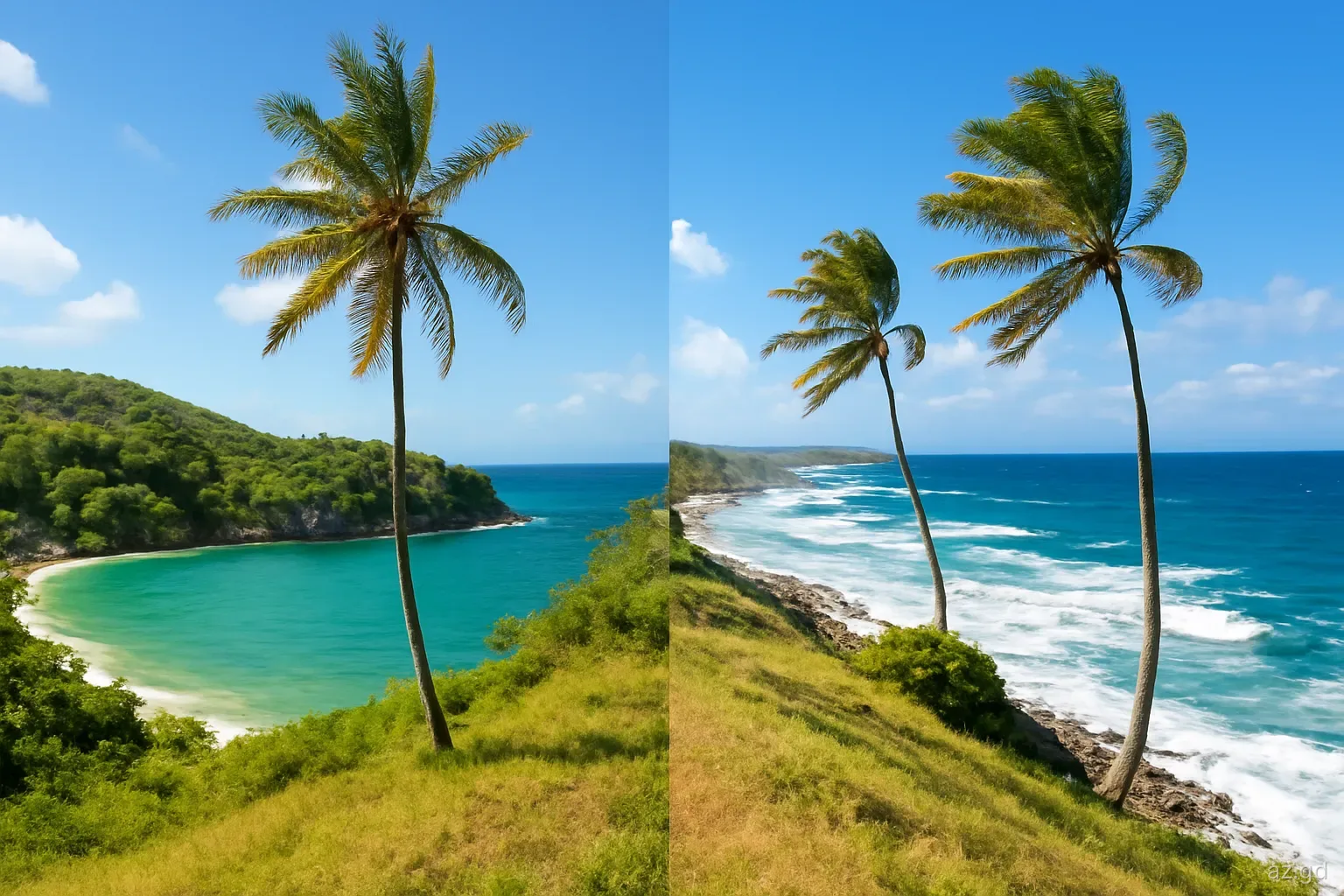
Grenada is small, but its two coastlines behave like different countries. The west and south-west face the Caribbean Sea, in the lee of the island, and are usually calm. The east and north-east face the open Atlantic, straight into the trade winds, and are often rough. Pick the wrong side for what you want and a planned swim can turn into an afternoon of watching waves from the sand.
This guide explains why the two coasts differ, what that means for swimming, snorkelling and family days, and how to read conditions for yourself. It applies to Carriacou too, where the same pattern holds on a smaller scale.
Why the two coasts are so different
The north-east trade winds blow across the Atlantic for most of the year and hit Grenada's windward side first. They push a steady swell onto the east coast, from Levera and Bathway in St Patrick down through Grenville in St Andrew to the bays of St David. Waves are bigger and more frequent, the water is often churned and the beaches are steeper, with currents running along and away from the shore.
The island's central mountains block that wind and swell from the leeward side. Beaches from Grand Mal north of St George's to Grand Anse, Morne Rouge and Point Salines sit in comparatively calm water, with gentler slopes and clearer visibility. That is why most hotels, dive operators and yacht anchorages are on the west and south.
The pattern is not fixed. Winter ground swells from distant North Atlantic storms sometimes reach the leeward beaches, and on still days in the rainy season the east coast can be surprisingly gentle. Reefs also make a difference: a reef close offshore can create a calm, swimmable pool even on an Atlantic beach, as at Bathway.
The Caribbean side at a glance
The leeward coast is the default for most beach days. Typical characteristics:
- Calm or gentle surf on most days, especially from April to October.
- Gradually shelving sandy bottoms at the main beaches, good for wading and learning to swim.
- Clearer water, which suits snorkelling around rocky points and protected areas such as the Molinere–Beausejour marine protected area north of St George's.
- More facilities: hotels, beach bars, chair rental, water sports and easy bus access along the main west-coast and Grand Anse roads.
- More people, particularly at Grand Anse on weekends and cruise-ship days.
- Less seaweed on most days, although sargassum has occasionally reached the south-west beaches.
- Sunset views, as the beaches face west.
- Easy access on foot from most hotels and guesthouses on the south-west tip, so a beach day needs little planning.
- Ground swells in winter that can close the usual calm beaches for a day or two; when that happens, sheltered bays such as Morne Rouge are the fallback.
The Atlantic side at a glance
The windward coast rewards people who want space and scenery, provided they respect the sea:
- Bigger waves, stronger longshore currents and rip currents at many beaches, including some that look inviting.
- Wilder scenery: headlands, offshore islets, mangroves and long, empty stretches of sand, as at Levera and parts of St David.
- Fewer facilities; many beaches have no food, toilets or shade apart from trees.
- Sargassum seaweed strandings, sometimes heavy, mainly in the warmer months. Rotting weed smells of sulphur and can make a beach unpleasant for days.
- Important nesting beaches for sea turtles, including leatherbacks at Levera, with rules that apply during the nesting season.
- Swimming that is often best limited to reef-sheltered spots or confined to wading, depending on the day.
- Sunrise rather than sunset.
How the seasons shift the balance
The dry season, roughly January to May, brings the most reliable trade winds. That keeps the Atlantic coast lively and the leeward coast at its calmest, apart from occasional ground-swell days early in the year. It is also when Grand Anse and the other west-coast beaches are busiest with visitors and cruise passengers.
From June the rainy season sets in, with heavier showers and lighter, more variable winds on some days. The east coast can calm down noticeably in these lulls, and some Atlantic bays become pleasant for wading. This is also the main sargassum season, so a calm Atlantic beach may still be lined with weed. Hurricane season runs from June to the end of November; when a tropical system passes nearby, both coasts can become dangerous for days.
Around Carriacou the same rhythm applies, with the added factor that the ferry crossing and small-boat trips to offshore beaches such as Sandy Island depend on sea state. If the forecast shows strong winds, plan your offshore beach day for another morning.
Which side for which kind of beach day
Young children and weak swimmers. Choose the Caribbean side: Grand Anse, Morne Rouge or Pink Gin on most days. Check for winter swell, but the odds are strongly in your favour.
Snorkelling. Mostly the Caribbean side, around rocky points and in protected areas on the west coast. On the Atlantic side only snorkel in reef-sheltered areas with local advice.
Long walks and solitude. The Atlantic side. Levera, the north-east coast and the bays of St David are where you can walk for long stretches without meeting anyone.
Surfing and bodyboarding. The Atlantic and southern coasts catch the swell, and there is a small surf community. Surf only where locals do, and ask about reefs and currents before paddling out.
Sunset drinks. The Caribbean side, from Grand Anse north along the leeward coast.
A combined day out. Pair a drive through the interior or a waterfall with an east-coast beach for the scenery, then end on the west side for a swim.
Sand, colour and texture on each side
The coasts also look and feel different underfoot. The best-known leeward beaches, Grand Anse, Morne Rouge and the Point Salines bays, have fine pale sand derived largely from coral and shell, which stays comfortable to walk on and settles quickly in the water, keeping it clear. Further up the west coast, towards Grand Mal, Happy Hill and the bays beyond Gouyave, volcanic grey and black sand becomes more common. It heats up fast in the midday sun, so bring something for your feet.
Atlantic beaches are a mix. Some, like Bathway and Levera, have golden sand; others are coarse, steep and strewn with driftwood, seaweed and stones carried in by the surf. Plastic and debris wash up more often on the windward side because the prevailing currents carry it there, which is why many community beach clean-ups focus on the east coast.
How to read the water before you swim
Whichever coast you choose, take two minutes to look before you get in. On unfamiliar Atlantic beaches this is the most important habit you can have.
- Stand above the beach and watch for several minutes. Waves arrive in sets; the first few you see may not be the biggest.
- Look for rip currents: a channel of darker, smoother water between breaking waves, or a line of foam and debris moving out to sea.
- Check the slope. A steep beach with waves dumping on the shore can knock adults over in knee-deep water.
- Ask anyone local who is there: fishermen, vendors or people swimming. They know which corner of the bay is safe that day.
- Enter where others are swimming, not on an empty section of an otherwise busy beach.
- If you are caught in a current, do not swim against it. Float, signal for help and swim parallel to the shore until you are out of it.
- Never swim alone on an isolated Atlantic beach. In an emergency, call 911.
Frequently asked questions
Which coast of Grenada has the calmest beaches?
The west and south-west, facing the Caribbean Sea, have the calmest beaches on most days. Grand Anse, Morne Rouge and Pink Gin are the usual choices for easy swimming. The exception is winter ground swell, which can bring waves to these beaches for a day or two.
Is it safe to swim on Grenada's east coast?
Sometimes, in the right spots. Many Atlantic beaches have strong currents and heavy surf, so swimming is best confined to reef-sheltered areas such as the pool inside the reef at Bathway. Look at conditions, ask locals and avoid swimming alone.
When is sargassum seaweed worst in Grenada?
Strandings usually peak in the warmer months, broadly from spring into early autumn, but the amount varies widely from year to year. The Atlantic-facing beaches in St Patrick, St Andrew and St David are most affected. The Caribbean side is hit less often.
Does Carriacou have the same calm and rough sides?
Broadly, yes. Carriacou's western and southern bays, such as Paradise Beach and Tyrrel Bay, are more sheltered, while the windward east coast catches more wind and swell. Offshore reefs create calmer water at several eastern spots.
Where can you surf in Grenada?
The south and Atlantic coasts pick up the most swell, and a small local surf community rides breaks in those areas. Conditions depend on swell direction and season. Ask local surfers about reefs and currents first, and never surf alone at an unfamiliar break.