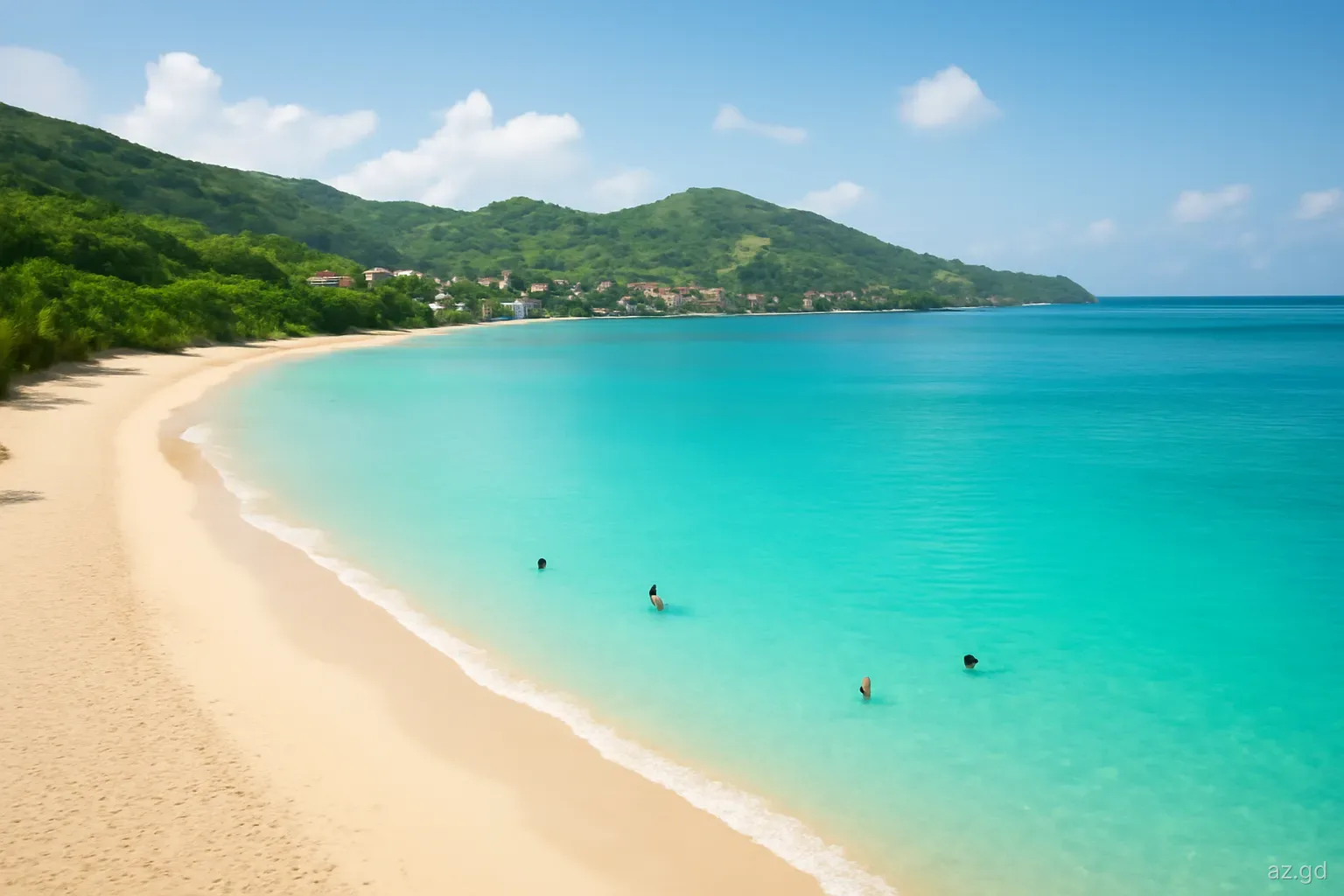
Grand Anse is the beach most people mean when they talk about swimming in Grenada: roughly two miles (about 3 km) of pale sand on the sheltered Caribbean side of St George parish, a short ride south of the capital. Most of the island's larger hotels sit along it, the main tourist strip runs behind it, and on a calm day you can walk from one end to the other in about half an hour.
Because it is so central, it is also the beach where practical questions matter most. How do you reach it without a hire car? Where can you use a toilet? What does a chair cost, and what happens when two or three cruise ships are in port? This page answers those questions so you can plan a beach day that runs smoothly.
How the two miles are laid out
Think of Grand Anse in three stretches. The northern end, closest to St George's, is where you find Camerhogne Park, a small public green space by the sand, and the craft and spice market where licensed vendors trade from fixed stalls. It is the end most Grenadians use at weekends and on public holidays, and the easiest place to arrive by route bus.
The middle stretch is lined by hotels, guesthouses and restaurants set back behind the sand. Several public paths cut through between properties to the beach, so a hotel frontage is not a closed door; you are entitled to walk and swim along the shore in front of it. The southern end runs towards Quarantine Point, the headland that separates Grand Anse from Morne Rouge Bay. It tends to be quieter, with fewer vendors and more shade from sea grape and almond trees.
If you only want to swim and lie down, any stretch works. If you want food, music and people-watching, stay near the middle and north. If you want space on a busy day, keep walking south.
Getting there without a hire car
Route bus. Route 1 minibuses leave the main bus terminal on Melville Street in St George's and run along the Grand Anse main road all day, every day, which makes Grand Anse the easiest beach on the island to reach by public transport. Tell the conductor where you want to get off, or press the bell; buses stop on request rather than at fixed timetables. Fares are set by government and are the lowest zone fare on the island, a few EC dollars; have small notes or coins ready.
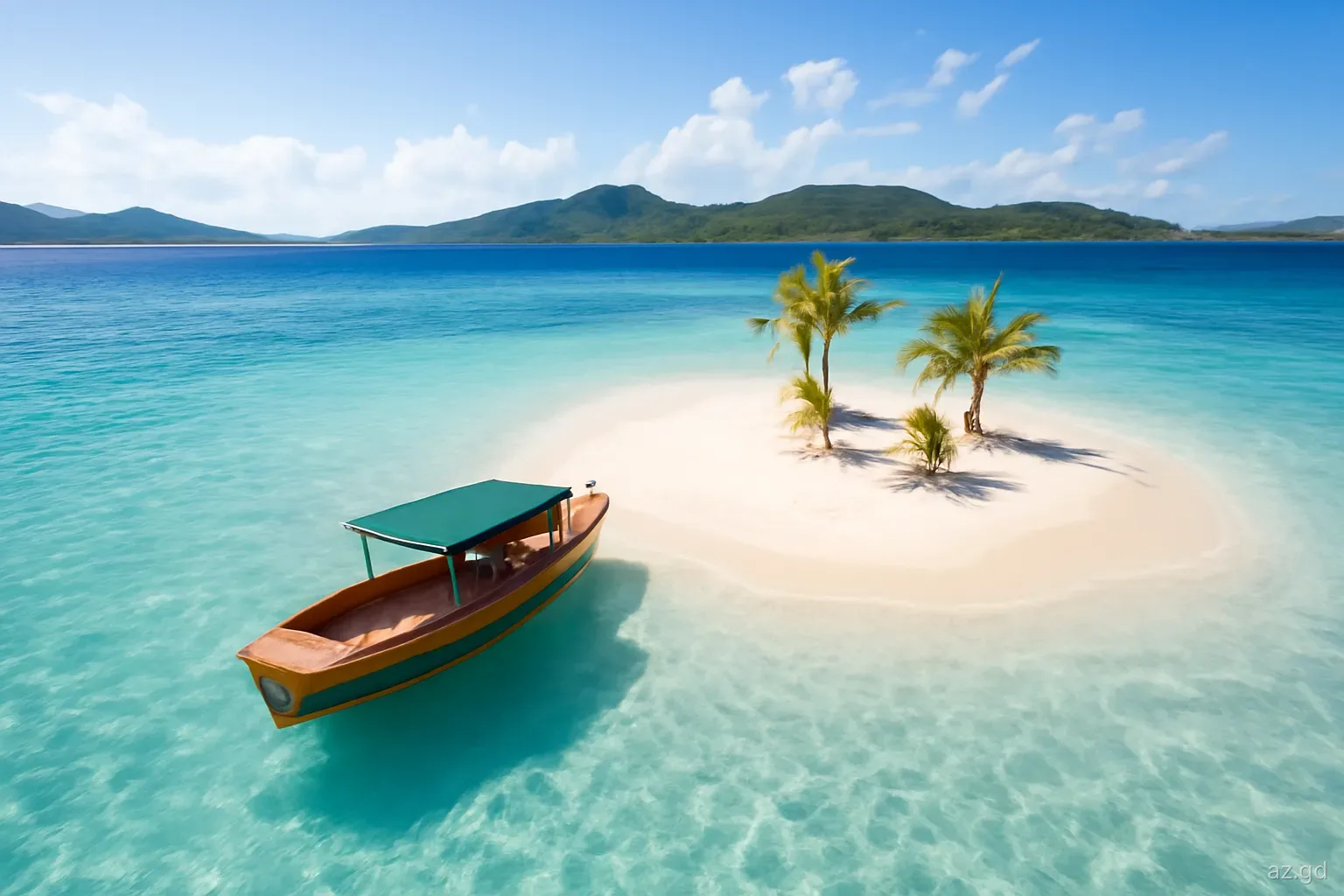
Water taxi. Small boats run between the Carenage in St George's and Grand Anse, landing on the sand. It is a pleasant way to arrive and avoids the traffic around the town. Agree the fare and the pick-up time before you set off, and ask whether the price is per person or per boat.
Taxi. Taxis work on rates published by the government for standard routes, including the airport, which is only a few minutes' drive away. Confirm the fare and whether it is in EC or US dollars before getting in.
Driving. Parking is the weak point. There is limited space near Camerhogne Park and along side roads, and verges fill quickly at weekends. Park legally, keep valuables out of sight and do not block the narrow entrances that residents use.
Facilities: what exists and what does not
Grand Anse is well served compared with the island's more remote beaches, but it is still a public beach rather than a managed resort. Plan around these realities:
- Toilets and showers. Public provision is limited. Beach bars and restaurants usually keep their facilities for customers, so buying a drink or a meal is the normal way to use one. Hotel facilities are for guests.
- Chairs and umbrellas. Vendors and some beach bars rent loungers and umbrellas, often in pairs. Expect roughly US$10–25 for a pair with an umbrella for the day, depending on where you are and how busy it is. Prices change, so agree the amount and the currency first.
- Shade. There are trees along much of the back of the beach, but shade near the water is scarce from late morning. Early arrivals get the best spots under the sea grapes.
- Food and drink. You can choose anything from roadside snacks and vendors with coconuts to sit-down restaurants. Cash in EC dollars is easiest with small vendors.
- Lifeguards. Do not assume there is one on duty. Swim within your ability and keep children within arm's reach.
- Water sports. Kayaks, paddleboards and boat trips are available from operators along the beach; check that the operator provides life jackets.
Sea conditions through the year
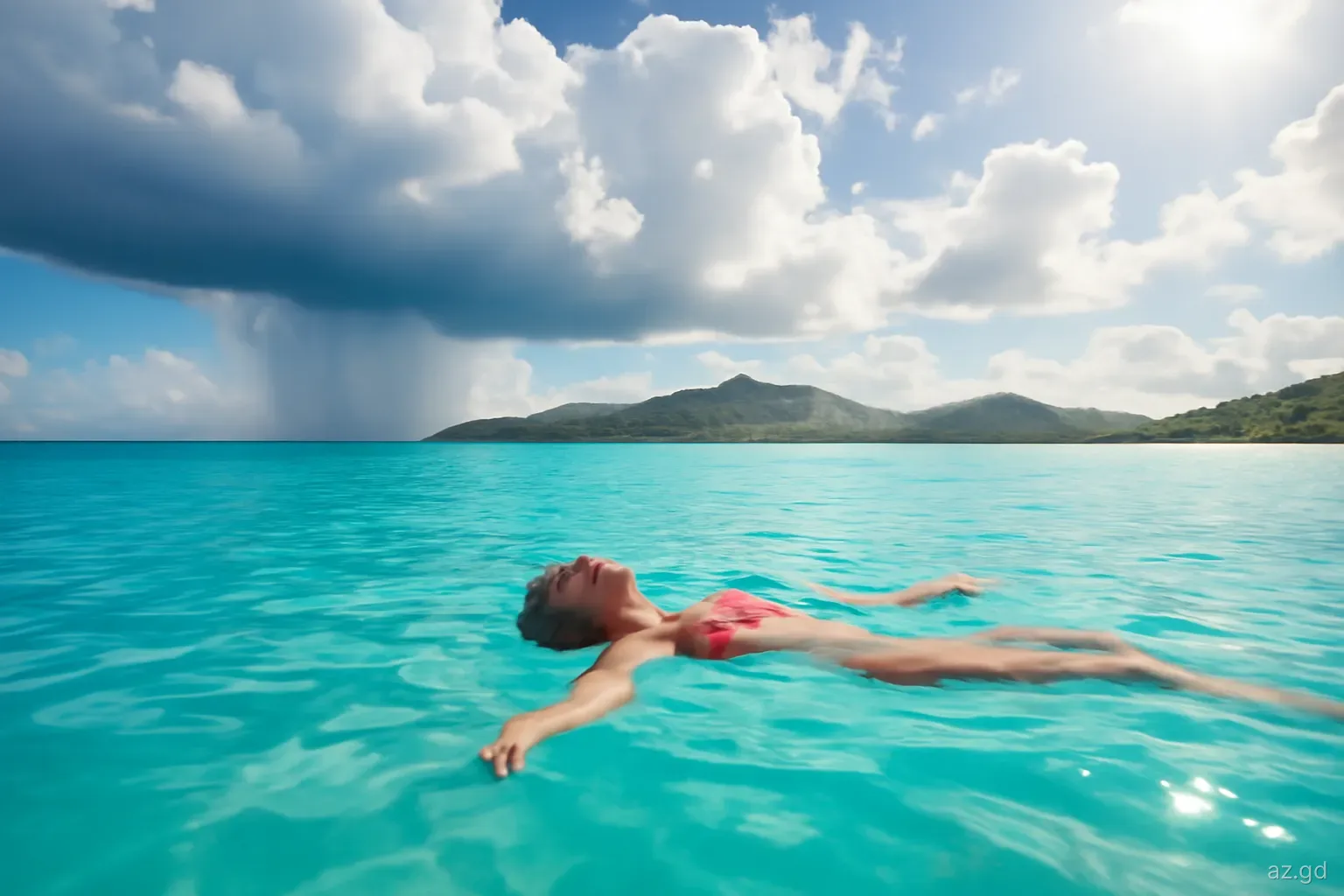
Grand Anse faces west into the Caribbean Sea and is protected from the Atlantic trade-wind swell, which is why the water is usually calm and gently shelving. On most days you can wade out a good distance before swimming, and the sandy bottom has few rocks. This makes it one of the more forgiving beaches on the island for confident and nervous swimmers alike.
There are exceptions. Between roughly November and March, distant North Atlantic storms can send ground swells that wrap around the island and break heavily on west-facing beaches, sometimes for a day or two at a time. Tropical systems passing during the hurricane season, June to November, can also churn the water. Sargassum seaweed, more usually an east-coast problem, has occasionally reached Grand Anse too, most recently noted in mid-2025.
Watch for boat traffic. Buoys mark swimming areas in places, and jet skis and water-taxi boats move close to shore. Swim inside the marked zones, stay visible and avoid swimming near the landing points where boats come in.
Vendors, cruise days and beach etiquette
Vendors are part of the beach. Licensed vendors sell spice baskets, jewellery, aloe, fruit and massages. Most take a polite "no, thank you" the first time; a firm, friendly answer works better than ignoring someone. If you do buy, small notes help.
Cruise days change the mood. During the cruise season, roughly October to April, several thousand passengers can arrive in St George's on a single morning, and many head straight for Grand Anse. The northern and central stretches fill between late morning and mid-afternoon. On those days go early, stay later, or walk towards the southern end.
Dress codes. Swimwear is fine on the sand, but cover up when you walk into shops, buses or the market. Topless and nude bathing are not part of local beach culture, and camouflage clothing is illegal for civilians in Grenada, including visitors and children.
Leave the beach as you found it. Take rubbish away, avoid glass on the sand and never remove sand, shells or coral; removing beach material is controlled under coastal protection law.
Mistakes visitors make at Grand Anse
Most problems on Grand Anse are small and avoidable. These are the ones that come up again and again:
- Leaving phones, wallets and car keys unattended on a towel while everyone swims. Take turns, or bring a waterproof pouch.
- Underestimating the sun. The water is cool and the breeze steady, so burns come quickly, especially between 10am and 3pm.
- Assuming hotel frontage is off limits, and squeezing onto the busiest public stretch as a result. The shore itself is open to walk along.
- Swimming near boat landing points or across jet ski lanes.
- Not agreeing a price before taking a chair, massage or boat ride, then arguing about it afterwards.
- Planning a quiet beach day on a heavy cruise-ship morning without checking the port schedule first.
- Sheltering under an unfamiliar tree in the rain. Manchineel, a tree with toxic sap and small green apple-like fruit, grows on some Grenadian beaches; its sap and dripping rainwater blister skin.
Frequently asked questions
Is Grand Anse Beach free to use?
Yes. There is no entrance charge for Grand Anse or for walking along the shore in front of the hotels. You only pay for things you choose to use, such as loungers, umbrellas, food, drinks or water sports. Agree prices before you use anything.
Which bus goes to Grand Anse from St George's?
Route 1 minibuses run from the main bus terminal on Melville Street along the Grand Anse main road. They run all week, including Sundays, and stop on request. Ask the conductor to drop you near the stretch of beach you want.
Is Grand Anse safe for swimming?
On most days the water is calm, clear and gently shelving, which makes it one of the easier swimming beaches in Grenada. Take care during winter ground swells or after passing storms, swim inside buoyed areas and keep away from boat landing points.
Are there public toilets at Grand Anse?
Public facilities are limited. In practice most visitors use the toilets at a beach bar or restaurant where they buy something. If you are travelling with young children, plan your day around a place where you will be eating or drinking.
When is Grand Anse least crowded?
Early mornings and late afternoons are quietest, as are days when no cruise ships are in port. Weekends and public holidays bring local families, especially at the northern end, which gives the beach a lively atmosphere rather than a crowded one.
Can you walk from Grand Anse to Morne Rouge?
Morne Rouge Bay lies just beyond Quarantine Point at the southern end of Grand Anse. Most people get there by road, a short walk or ride over the headland, rather than along the rocks, which can be slippery and are exposed to waves.