When a tropical system threatens Grenada, information comes from two official sources. The Grenada Meteorological Service, based at Maurice Bishop International Airport, issues watches and warnings for Grenada and its dependencies. The National Disaster Management Agency, NaDMA, coordinates the national response: it publishes shelter openings, advisories on closures and instructions to the public, and works with district disaster committees across the parishes and on Carriacou and Petite Martinique.
Most visitors will never need what follows, but if a storm does approach during your stay, knowing the sequence removes much of the anxiety. The steps below follow a typical storm from first mention in the forecast to the all-clear, with what a visitor in a hotel, villa or yacht should be doing at each stage.
Understanding the alert levels
Tropical wave or disturbance. Forecasters are watching an area of showers that may or may not develop. Nothing to act on yet, but it is the moment to start checking the forecast twice a day.
Tropical storm watch or hurricane watch. Storm or hurricane conditions are possible in Grenada, generally within about 48 hours. This is the signal to prepare: supplies, cash, fuel, documents and a decision on whether to leave.
Tropical storm warning or hurricane warning. Conditions are expected, generally within about 36 hours. Preparations should be finished quickly, because outdoor work becomes dangerous once winds rise. Shelters are usually announced at this stage.
All-clear. Issued when the threat has passed. It does not mean conditions are safe everywhere: flooded roads, landslides, downed power lines and damaged buildings can remain dangerous for days.
When a watch is issued: the first 24 hours
This is the window in which you still have choices. Use it calmly and early, because shops, petrol stations and banks become crowded as the warning approaches.
- Talk to your hotel or host about their storm plan: which rooms or buildings are used for shelter, whether there is a generator and water storage, and how guests will be updated.
- Contact your airline about change waivers. Airlines often allow free changes when a storm threatens, and seats on the last flights out fill fast.
- Register your trip with your embassy or high commission if you have not done so; the UK, US and Canadian governments all run traveller alert schemes.
- Withdraw enough cash for several days; card machines and ATMs stop working without power and communications.
- Buy drinking water, ready-to-eat food, batteries, a torch and medicines. A commonly used guide is about four litres of water per person per day.
- Fill the fuel tank of any rental car and park it away from trees and low ground.
- Charge phones and power banks, and save key contacts on paper: your accommodation, airline, insurer and embassy.
When a warning is issued: finishing preparations
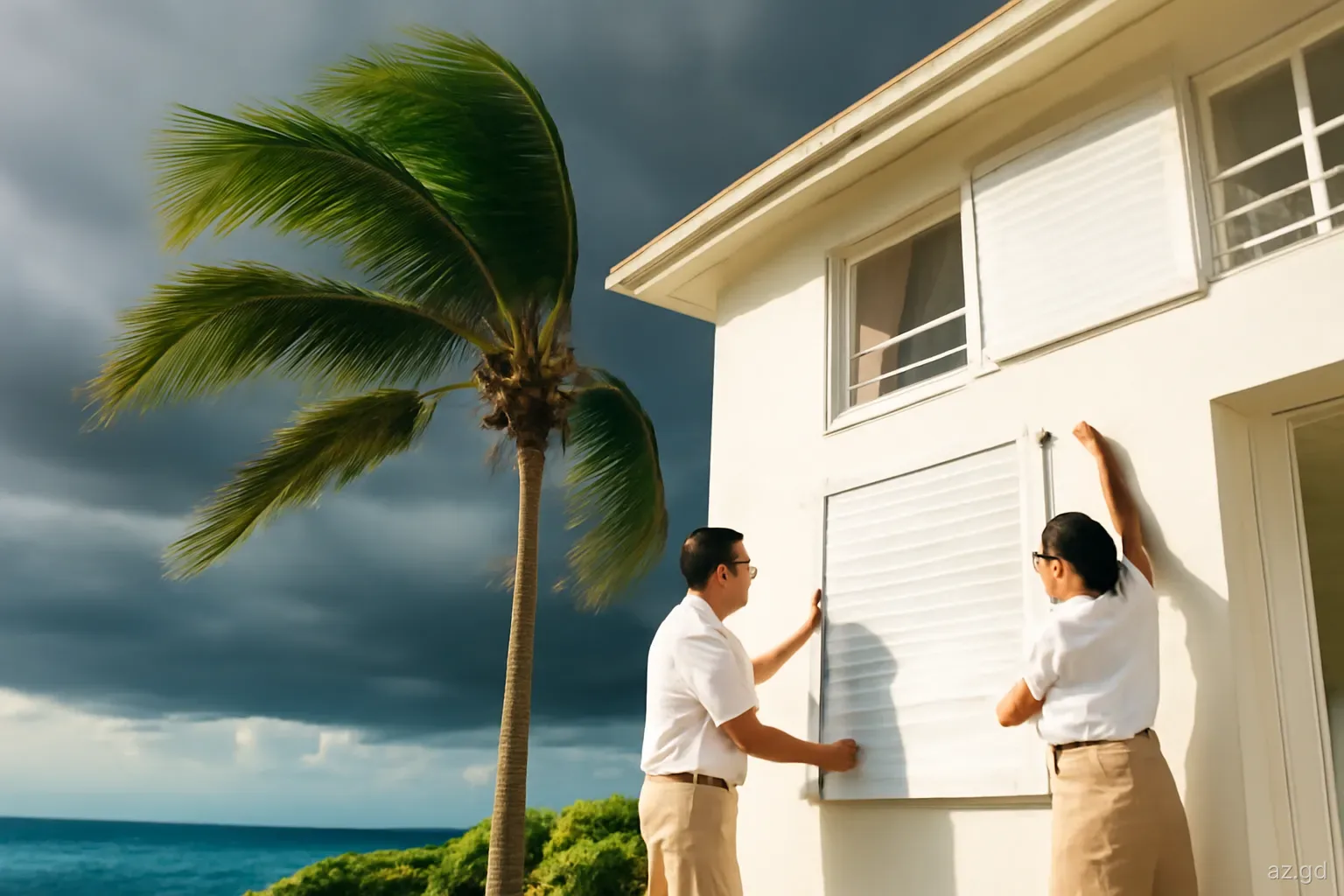
At warning stage, expect the airport to close to commercial traffic before tropical-storm-force winds arrive, and the Osprey ferry and inter-island flights to stop earlier still. If you have not left by now, plan to stay in place. Hotels will move guests away from beachfront rooms and glass, and villa owners or managers should be fitting shutters and securing outdoor furniture, which can become dangerous projectiles.
If your accommodation is on low ground near the sea, in a river valley or beneath a steep slope, ask whether you should move. Storm surge can flood parts of Grenville, Hillsborough and other coastal areas, and heavy rain brings landslides on hillside roads in St John, St Mark and St Andrew. NaDMA publishes the list of emergency shelters, usually schools and church halls, and the advice is to know both your nearest shelter and a backup, because not every listed building opens for every storm.
Put passports, insurance documents, cash and medicines in a waterproof bag that stays with you. Fill bathtubs or large containers with water for washing and flushing, since public water supply is often shut off to protect the system.
During the storm
Stay indoors in the strongest interior room, away from windows and doors, until the official all-clear. One of the most dangerous moments comes if the eye passes overhead: winds drop suddenly and the sky may brighten, then the far side of the storm arrives from the opposite direction, often within an hour. People have been injured going outside to check damage during this lull.
Power is usually cut by GRENLEC before or during strong winds to protect the network and the public, so expect darkness and keep torches rather than candles for light. Listen to local radio on a battery or wind-up set, since mobile data may drop out. Do not try to drive, cross rivers or go to the beach to watch the sea; storm surge and debris carried by waves are deadly.
Keep a simple log of times and conditions if you can, and conserve phone battery by switching off data except to check official updates. Fear and boredom are both real during a long night of wind; keeping children occupied and adults rested makes the hours after the storm, when decisions matter, much easier.
On a yacht, the advice is to be off the boat and ashore in a secure building well before the storm arrives. Boats in hurricane holes and boatyards should be prepared days earlier, not during the warning.
Special situations
On Carriacou or Petite Martinique. Transport off the islands stops early, and the sister islands may be cut off for some time after a severe storm, as Beryl showed. If you would rather ride out a storm on the main island or leave the country, decide at the watch stage, not the warning stage. Stock more water and food than you would on the main island.
In a private villa or Airbnb. You will not have hotel staff to organise things. Ask the owner or manager at the watch stage who will fit shutters, where the water shut-off and electrical mains are, whether there is a cistern or generator, and who to call if the roof is damaged. If the answers are vague, consider moving to a hotel while rooms are available.
Travelling with children or elderly relatives. Bring extra supplies of baby food, nappies and essential medicines, and keep children's routines going indoors with games and books. Heat without air conditioning after a storm is hard on infants and older people, so plan for fans that run on batteries and plenty of drinking water.
With medical needs. If you rely on refrigerated medicine, oxygen or dialysis, speak to your doctor and your hotel immediately. Leaving before a storm may be the safest choice, because the General Hospital in St George's and the hospital on Carriacou will be focused on emergencies.
After the storm passes
The period after a storm often causes more injuries than the storm itself. A few rules keep visitors safe while the island assesses damage:
- Wait for the all-clear from NaDMA before going outside, and then stay close to your accommodation.
- Treat every fallen wire as live. Report downed lines and keep well away from them.
- Avoid floodwater, which may hide open drains, debris and sewage, and do not drive through it.
- Boil or treat water until authorities confirm the supply is safe, and use bottled water for drinking.
- Expect restrictions. Authorities may limit movement on roads to allow clearing crews and emergency services to work.
- Contact family and your embassy as soon as communications return, and tell your insurer about any losses with photographs.
- Use 911 for police, fire or ambulance emergencies, keeping calls short when networks are overloaded.
Frequently asked questions
Who issues hurricane warnings for Grenada?
The Grenada Meteorological Service, based at Maurice Bishop International Airport, issues watches and warnings for Grenada, Carriacou and Petite Martinique, working with regional forecasting centres. NaDMA, the National Disaster Management Agency, then coordinates the public response, including shelters, closures and safety advisories.
What is the difference between a hurricane watch and a warning?
A watch means hurricane conditions are possible, generally within about 48 hours, and is the signal to prepare. A warning means conditions are expected, generally within about 36 hours, and preparations should be completed urgently while it is still safe to be outdoors.
Where are the hurricane shelters in Grenada?
NaDMA publishes the official list of emergency shelters, which are mostly schools, community centres and church buildings across the parishes and on Carriacou and Petite Martinique. Not every listed shelter opens for every storm, so check which ones are open and identify a backup close to where you are staying.
Does the airport close during a hurricane?
Yes. Maurice Bishop International Airport closes to commercial flights before storm-force winds arrive and reopens once the runway, terminal and air traffic systems are checked. Airlines often add or rearrange flights before closure and usually allow free changes when a storm threatens.
Should tourists go to a public shelter?
Most tourists shelter in their hotel, which will have its own plan. Public shelters are mainly intended for people whose homes are unsafe. If your villa or guesthouse is in a vulnerable spot, ask your host or NaDMA for advice early rather than waiting until conditions worsen.