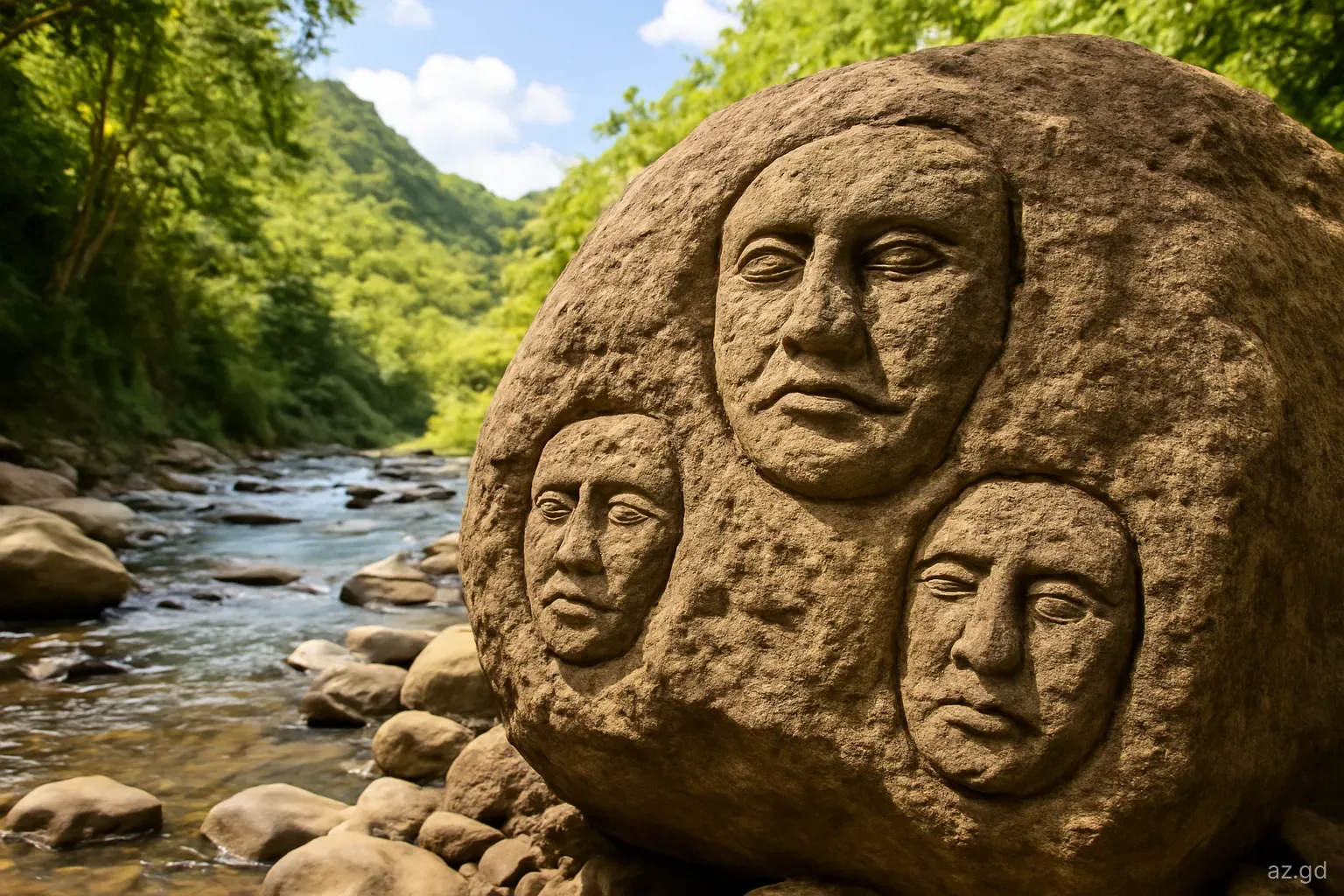
Grenada's oldest works of art are not in a museum. They are carved into boulders in river ravines and on the shoreline: spirals, faces with round eyes, figures with raised arms, cut into the rock by Amerindian people more than a thousand years ago. They are easy to miss and poorly signposted, and a few are slowly being lost to erosion, vegetation and careless visitors.
This guide lists the main petroglyph and Amerindian sites that can be visited, explains what you will see, and sets out the simple rules that keep them intact. It focuses on practical access; for the broader story of the island's first peoples, see the AZ.GD history article on the Kalinago.
Mt Rich, St Patrick
What it is. The best-known petroglyph site in Grenada, in a ravine beside the St Patrick River near the village of Mt Rich. The main boulder carries more than 60 carved images, among them faces and abstract designs, and other carved stones lie nearby.
How old. Pottery from a site close by suggests occupation no earlier than about AD 700, and much of Grenada's rock art is thought to date from roughly AD 750 to 900, though dating carvings directly is difficult.
Seeing it. The main boulder has shifted and tilted over time, so some carvings face awkward angles and are best seen in low, raking light. Images are faint; patience and a guide help.
Access. Ask in Mt Rich for directions or a local guide. The approach involves a short walk down to the river, which can be slippery and is affected by heavy rain.
Duquesne Bay and the north-west coast
Duquesne Bay, St Mark. Carvings sit on rocks at the shoreline of this small bay on the north-west coast. Archaeologists associate them with later Amerindian occupation, roughly AD 900 to 1200, and suggest the setting, at the meeting of land and sea, may have had spiritual meaning. Tradition holds that the French named the bay after a Kalinago leader in the area.
The Carib Stones at Waltham. Near Victoria, also in St Mark, a group of carved boulders long known locally as the Carib Stones. Local directions are essential, as the site is not signposted for visitors.
Other carvings near Victoria. Further rock art has been recorded around Victoria and the surrounding villages. Some lies on private land; always ask before entering.
Timing. At Duquesne, visit at low tide in calm weather, as swell can cover the lower rocks and make footing dangerous.
Pearls, Leapers' Hill and Carriacou
Pearls, on the east coast north of Grenville near the old airstrip, is regarded as one of the most important early ceramic-age sites in the Eastern Caribbean, with pottery from the first Saladoid settlers. Unfortunately, decades of looting, farming and construction have badly disturbed it, and there is nothing to see on the surface beyond the occasional shard. Its significance lies in what has been found and documented, much of which is held in museum collections.
Leapers' Hill, the cliff beside St Patrick's Roman Catholic Church in Sauteurs, marks the place where Kalinago people are said to have jumped to their deaths rather than surrender to the French around 1650. A path through the churchyard leads to the edge, with views over the north coast to the Grenadines. An interpretation centre that once operated there has closed, and the Grenada National Trust has said it intends to reopen it. A commemoration is held each year around 30 May.
On Carriacou, coastal Amerindian sites such as Grand Bay have yielded pottery, shell and food remains, and are being studied as erosion eats into them. There is little to see without a specialist, but the Carriacou Museum, when open, holds finds from the island.
Rules that protect the carvings
Petroglyphs have survived a thousand years of weather. A single careless visit can do more damage than a century of rain:
- Never chalk, paint or wet-scrub carvings to make them show up in photographs. Chalk and paint seep into the stone; scrubbing wears it away. Use low-angle light instead.
- Don't touch more than necessary. Oils from skin and grit on shoes speed up erosion. Avoid standing or sitting on carved surfaces.
- Leave everything in place. Pottery shards, shells and stone tools on the ground are archaeological evidence. Photograph and report finds to the National Museum or the Grenada National Trust.
- No rubbings. Paper rubbings were once common; they damage soft stone and are discouraged.
- Keep sites clean. Take all rubbish with you, including food waste that attracts animals.
- Respect landowners. Several sites are on private land or reached across farms. Ask permission and close gates behind you.
Planning a petroglyph day
The main sites cluster in the north, so a single day can cover several:
- Start early from the south of the island; the drive to St Mark or St Patrick takes one to two hours depending on route and traffic.
- Check the tide and recent rainfall. Low tide suits Duquesne Bay; a dry spell makes the Mt Rich ravine safer.
- Visit Duquesne Bay and the Waltham stones in the morning, using local directions in Victoria or Duquesne.
- Continue to Sauteurs for Leapers' Hill and lunch, then visit Mt Rich in the afternoon, when the light angle often brings out the carvings.
- Hire a driver or guide who knows the sites, or arrange one through the Grenada Tourism Authority or a reputable tour operator. Independent visitors should ask villagers for directions; most are happy to help.
- Bring water, insect repellent, sturdy footwear with grip and a torch or phone light to cast low-angle light across faint carvings.
What the carvings may mean
No one knows for certain what the petroglyphs meant to the people who carved them. Common motifs, such as faces with round eyes and mouths, figures with raised arms and spirals, appear throughout the Lesser Antilles, suggesting shared beliefs. Many sites are beside water, at river pools, waterfalls or the shoreline, and archaeologists suggest these were places linked to ancestors and spirits, perhaps boundaries between the human world and the realm of the dead.
Some faces may represent zemis, the spirits or deities venerated across much of the pre-Columbian Caribbean, while other designs may have marked territory or recorded events. A useful approach on a visit is to note where the carvings face, what water is nearby and how the site would have looked from a canoe. Seen in that context, the boulders stop being curiosities and become evidence of how the island's first people understood their landscape.
Seeing the carvings in context
Grenada's petroglyphs belong to a wider tradition of rock art found from Puerto Rico to Trinidad and along the rivers of the South American mainland. Similar faces and spirals appear in St Vincent, where carved boulders are more numerous, and in Guadeloupe, where a dedicated archaeological park protects a large group of carvings. Comparing them helps make sense of what you see in Grenada: the same visual language spread along the canoe routes that connected the islands.
Before or after visiting the sites, the Amerindian rooms of the Grenada National Museum in St George's give useful context, with pottery and adornos showing the same faces and motifs in clay. An archaeology outreach project has also produced educational material on a petroglyph path in the north of the island, and local schools sometimes visit the sites as part of heritage education. Guides who work with these programmes are often the best informed about current access.
Frequently asked questions
Where are the best petroglyphs in Grenada?
Mt Rich in St Patrick has the largest group, with more than 60 carvings on one boulder. Duquesne Bay and the Waltham Carib Stones in St Mark are also worth visiting. All three are in the north of the island.
How old are Grenada's petroglyphs?
Most are thought to date from roughly AD 700 to 1200, carved by Amerindian communities living on the island well before the arrival of Europeans. Exact dating is difficult because the carvings themselves cannot be dated directly.
Is a guide needed to see the petroglyphs?
A guide is not compulsory, but strongly recommended. Sites are poorly signposted, some are on private land, and faint carvings are easy to miss. Local guides or villagers can show you where to look and how to approach safely.
Can you see anything at the Pearls archaeological site?
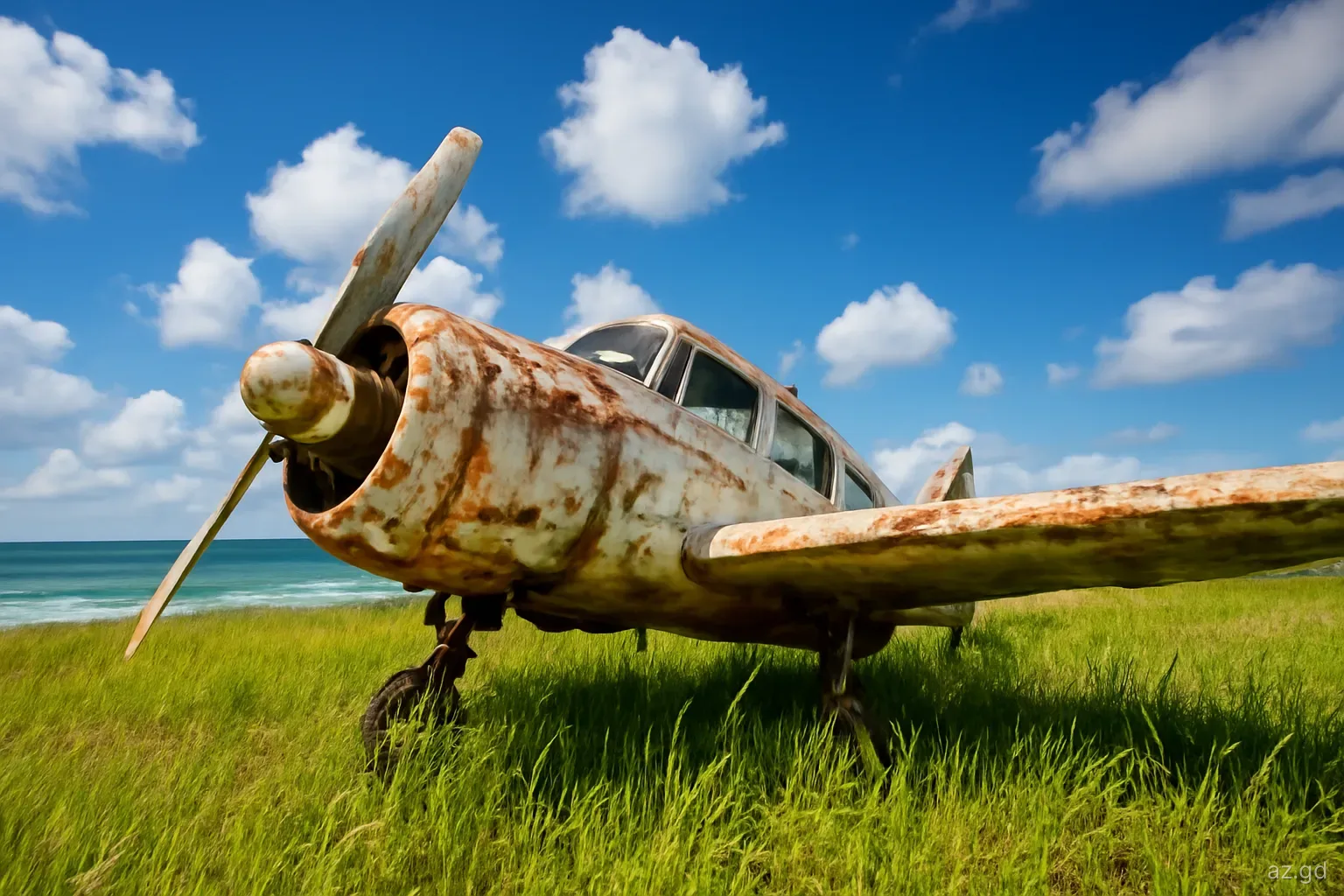
Very little on the surface. Pearls is archaeologically important but has been heavily disturbed by looting and construction. Its finds are in museum collections, and the area is better known to visitors for the abandoned aircraft on the old airstrip.
Why is chalking petroglyphs for photos a problem?
Chalk and paint penetrate the stone and can permanently stain or weaken it, and scrubbing them off causes further wear. Use the low-angle light of early morning or late afternoon, or a torch held at a shallow angle, instead.
Is Leapers' Hill worth visiting?
Yes, for its history and views. It is easy to reach beside St Patrick's Roman Catholic Church in Sauteurs. The interpretation centre has been closed, so read up beforehand, and treat the site as a place of remembrance.