The events of 1979 to 1983 happened on a small island, and most of the places involved are still in daily use: a police fort now being turned into a heritage site, an airport, a university campus, a prison on a hilltop. Almost nothing is formally interpreted, and few visitors realise how much of the story they pass through on the way from the airport to their hotel.
This route links the main sites in a logical order, from the south coast to St George's and on to the old airstrip at Pearls. It is written for respectful visitors interested in history, not as a battlefield tour. Many Grenadians lost relatives in 1983 or lived through the curfew and the fighting, and some sites are places of mourning. For the background, see the AZ.GD explainer on the revolution and the intervention.
South coast: the airport and True Blue
Maurice Bishop International Airport, Point Salines. The airport the People's Revolutionary Government built with Cuban workers and engineers, intended to open Grenada to long-haul tourism. Washington saw a potential military airfield. On 25 October 1983 US Rangers parachuted onto the unfinished runway in the opening assault. It opened in 1984 and was renamed after Bishop in 2009. Every arriving visitor lands on this piece of history.
True Blue. On 13 March 1979 the New Jewel Movement began its takeover by seizing the army barracks at True Blue, near the airport. In 1983 the True Blue campus of St George's University was the first place US forces reached American students. The university holds commemorations for the US servicemen who died.
Grand Anse. Students at the university's Grand Anse campus, on the beach, were evacuated by helicopter during the intervention. Today it is the island's busiest resort area.
Calivigny and the south-east
Calivigny peninsula. A training camp of the People's Revolutionary Army stood on the Calivigny peninsula east of the airport. It was assaulted by US troops on 27 October 1983, an operation in which several US helicopters crashed or collided on landing. The area has since been largely redeveloped and much of it is private, so there is little to see and access may be restricted.
Driving past. The roads through Woburn and Lower Woburn give views towards the peninsula and Calivigny Island offshore. Do not enter private property or resort land.
Context. The southern coast, now lined with marinas, villas and resorts, was in 1983 a landscape of camps, construction sites and fishing villages. The transformation is part of the story, and older residents of Woburn and the surrounding villages remember the helicopters and the gunfire of those days vividly.
St George's: where the crisis played out
Market Square. The crowds that gathered on 19 October 1983 came together in and around the town centre before marching up to free Maurice Bishop.
Mount Wheldale. Bishop was held under house arrest at his home in Mount Wheldale, on the hill above St George's, from 13 October until the crowd freed him on the 19th. The new Parliament building, opened in 2018, now also stands on Mount Wheldale.
Fort George. Then Fort Rupert. The crowd took Bishop to the fort, where he and seven others were executed in the courtyard that afternoon. A plaque installed in 1993 marks the spot, and the government committed in 2024 to a permanent memorial. With the police headquarters gone since 2024, the fort is being redeveloped; check access.
Richmond Hill. Fort Frederick served as a command post of the revolutionary army. Nearby, US aircraft mistakenly bombed the mental hospital on 25 October, killing 18 people. Richmond Hill Prison held political detainees under the PRG and, later, those convicted over the October killings, the last released in 2009.
Pearls: the abandoned planes
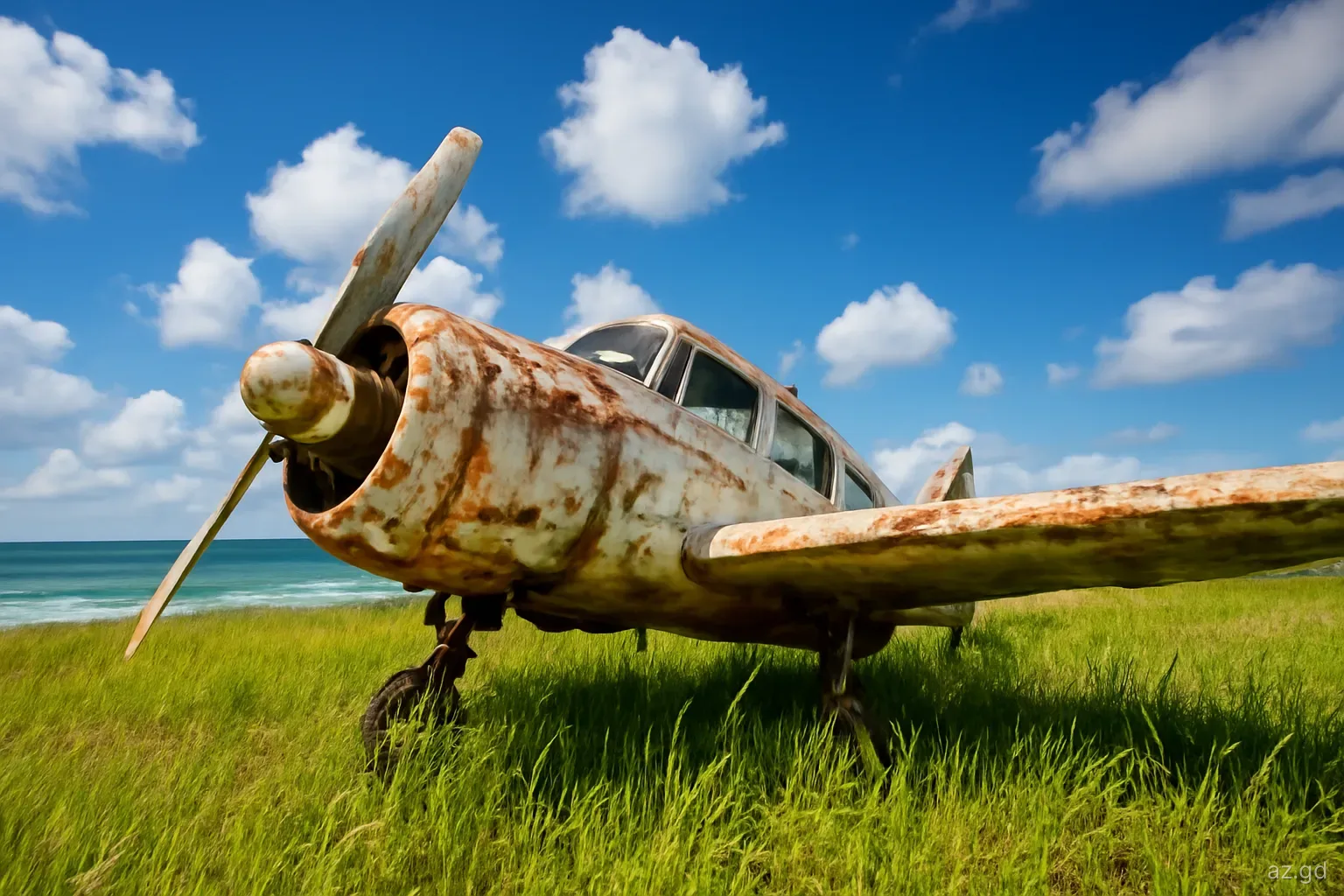
Pearls Airport, on the east coast north of Grenville, was Grenada's only airport before Point Salines. It was seized by US Marines on 25 October 1983, and after the new airport opened in 1984 it was closed and left to decay. Two Soviet-built Antonov aircraft linked to Cuba remain on the old runway, damaged in 1983 and never flown out. Accounts differ on their exact types, but they are usually described as a Cuban An-26 transport and a smaller An-2 biplane.
The runway has since been used informally for driving practice, grazing and, at times, racing, and the planes have been stripped and weathered over the years. Visitors can walk around them freely, but the metal is rusted and sharp, so take care, especially with children, and do not climb on wings or tails. The site is a short drive north of Grenville, and the surrounding coast and the Atlantic surf make it a striking stop on an east-coast day. Archaeologically, the Pearls area is also important for Amerindian remains, though nothing is visible on the surface.
Suggested route and timing
The route can be done in one long day by car, or split into a south coast and St George's half day and a separate east coast trip:
- Morning, south coast. Start near the airport and True Blue, then drive past Grand Anse towards St George's.
- Late morning, Richmond Hill. Visit Fort Frederick for views and context, taking care not to photograph the prison.
- Midday, St George's. Walk to Fort George and the plaque, and visit the National Museum on Young Street, which has material on the period, if it has reopened.
- Afternoon, east coast. Drive over the Grand Etang road or round the coast to Grenville and on to Pearls for the aircraft.
- Optional, Carriacou. The last military action of the intervention took place on Carriacou on 1 November 1983, but there is no specific site to visit.
How Grenada commemorates 1983
Commemoration is uneven, and that reflects how divided memory remains. 25 October, Thanksgiving Day, is a public holiday, but many Grenadians treat it as an ordinary day off rather than a celebration. 19 October has no holiday status, yet it is the date that draws memorial services, wreath-laying at Fort George, church gatherings and newspaper reflections each year, especially on anniversaries ending in a round number.
Physical memorials are modest: the 1993 plaque at Fort George, commemorations at St George's University for the US servicemen killed, and murals and street names honouring Bishop. The search for the remains of Bishop and his colleagues, never found, is a continuing source of grief and pressure on successive governments. Visitors interested in the period will learn most by listening to people who lived through it; many are willing to talk, but let them lead the conversation.
Sensitivities and practical cautions
This is recent history, and the people around you are part of it:
- Avoid taking sides in conversation. Opinions on Bishop, the PRG, the October killings and the intervention vary sharply, even within families.
- Be careful with 19 and 25 October. Memorial events take place on and around these dates. Attend respectfully if invited, and keep cameras away unless clearly welcome.
- Respect working sites. The airport, prison, hospital and university are operating institutions. Do not try to enter restricted areas or photograph security arrangements.
- Take care at Pearls. Wrecks are rusted and sharp, and vehicles sometimes use the runway at speed.
- Use a knowledgeable guide. Some local tour guides lived through 1983 and can share first-hand memories, which add more than any plaque could.
Frequently asked questions
Where are the abandoned planes in Grenada?
On the old Pearls Airport runway, on the east coast north of Grenville in St Andrew. Two Soviet-built Antonov aircraft linked to Cuba have stood there since being damaged during the 1983 intervention. Visitors can walk around them.
Where was Maurice Bishop killed?
In the courtyard of Fort George in St George's, then called Fort Rupert, on 19 October 1983. A plaque marks the site, and the government has committed to building a permanent memorial there.
Is there a museum about the Grenada Revolution?
There is no dedicated museum. The Grenada National Museum in St George's covers the period in its twentieth-century displays. Plans for Fort George's redevelopment have included museum space, so check what is open when you visit.
Why is the airport named after Maurice Bishop?
Because his revolutionary government began building it, with Cuban assistance, at Point Salines. It opened in 1984 after the intervention and was renamed Maurice Bishop International Airport in 2009 in recognition of that role.
Can you visit Calivigny where the army camp was?
Most of the Calivigny peninsula has since been developed or is privately owned, and little trace of the camp is accessible. The area can be viewed from nearby roads, but do not enter private or resort property.
Is it safe to visit Pearls Airport?
Generally yes, during daylight. The main hazards are sharp, rusted metal on the wrecks and vehicles occasionally driving fast on the runway. Go with a driver or companion, keep children close and avoid climbing on the aircraft.