Almost every village in Grenada has at least one rum shop: a small, usually family-run bar, often a single room with a counter, a fridge, a few shelves of bottles and a bench or table outside. Some double as a grocery selling bread, tinned goods and phone credit. They open early, close when the last customers leave, and serve as the village's meeting room, news desk and sports bar.
Visitors are welcome in most of them, and a stop at a rum shop is one of the most honest ways to see everyday Grenada. But they run on unwritten rules. Knowing how to walk in, what to ask for and how to behave around the domino table will make the difference between an awkward five minutes and a friendly afternoon.
Walking in: the greeting matters
Say good morning, good afternoon or good night. Grenadians greet the room on entering, and a stranger who walks straight to the counter without a word comes across as rude. "Good afternoon" to everyone, then to the person serving, is enough. After dark, "good night" is used as a greeting, not only as a farewell.
Expect to be noticed. A new face gets looked at, sometimes asked where they are from. That is curiosity, not hostility. A short, friendly answer usually opens the conversation.
Read the room before settling in. Some shops are clearly a men's afternoon space; others are mixed and family-run with children helping behind the counter. Women visitors are generally treated with courtesy, especially in a group, but it helps to sit near the counter rather than in the middle of a closed group.
Dress like a normal person, not like the beach. Swimwear is out of place away from the shore. Shorts and a T-shirt are fine; put a shirt on if you have walked up from the bay.
What to order and how it is served
The default drink is white rum, and the default white rums are Clarke's Court Pure White and Rivers from River Antoine, with Jack Iron common too. All are strong: Pure White and Jack Iron at 69%, island Rivers at around 75%. Ask for a shot or a "drink" and you will usually get a small measure in a glass, often with a separate glass of water. That water is the chaser: you take the rum and follow it immediately with a mouthful of water, which is how most local drinkers take it.
Groups often buy a small bottle and share it at the table rather than ordering glass by glass, pouring for each other. You can also ask for a softer option: rum with a soft drink, coconut water or juice. Beer is always available, typically Carib or Stag from the local brewery, and Guinness is popular. Nobody will think less of you for drinking a soft drink or a malt instead of rum.
Prices in rum shops are low compared with hotel bars, and you will usually pay in cash at the counter, in EC dollars. Small notes and coins are appreciated.
The unwritten rules of the table
These are the customs that regulars notice, even if no one will ever explain them out loud.
- Rounds go round. If someone buys you a drink, offer to buy the next one. Accepting drinks all afternoon without returning the gesture is noticed.
- Turning down a drink is fine if it is done kindly. A smile and "Ah good, thanks" or a hand over the glass is understood. Refusing curtly is not.
- Pouring a drop on the ground before drinking, for those who have passed on, is a custom some older drinkers keep, especially in Carriacou. Watch rather than imitate unless invited.
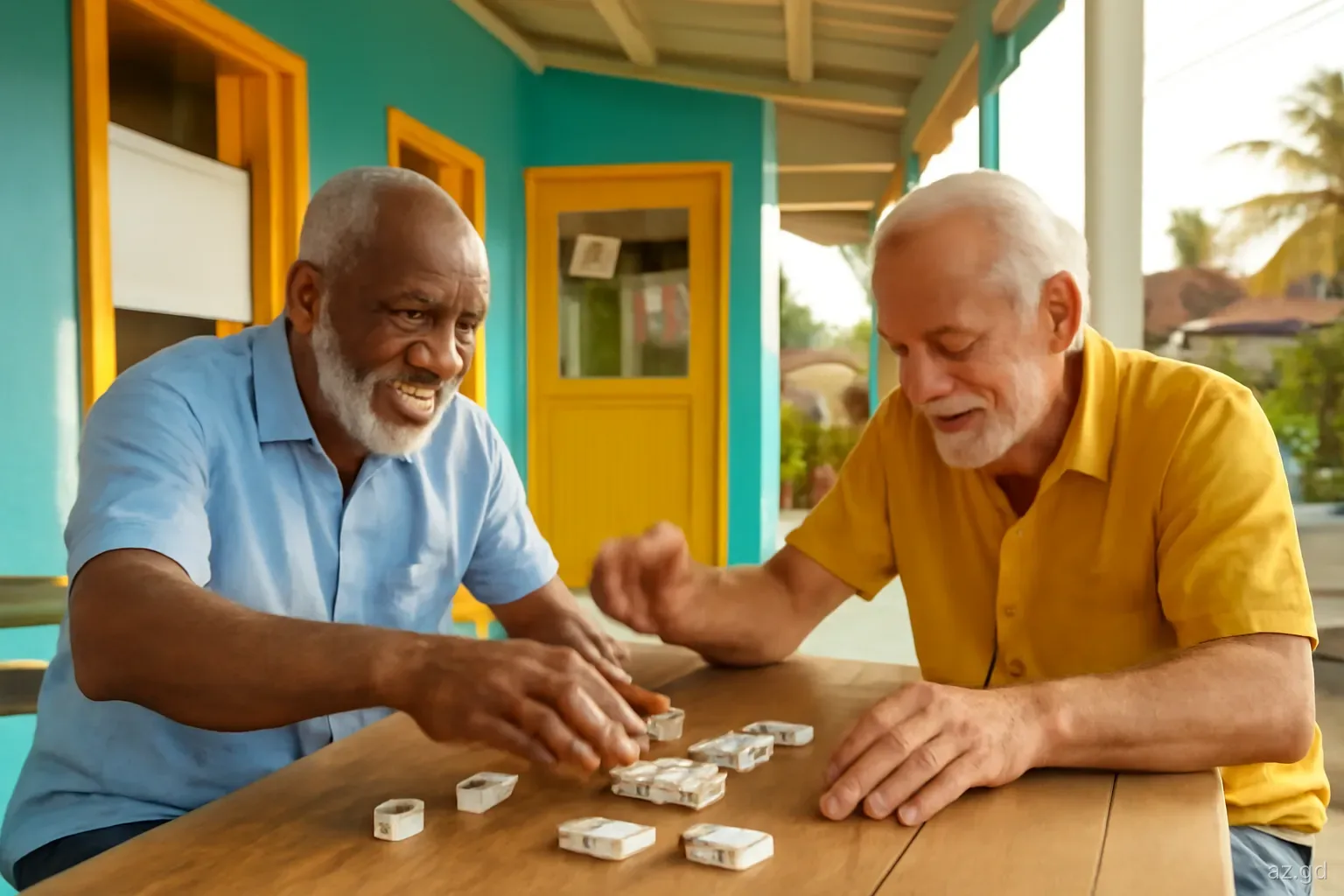
- The domino table belongs to the players. Watch, do not touch the tiles and do not offer advice. Slamming the tiles down is part of the game, not an argument.
- Cricket and football on the television are serious business. Asking questions is welcome; changing the channel is not.
- Ask before photographing people. Most will say yes; some will not, and that is their right.
Food, music and when to go
Rum shops are not restaurants, but many sell something to eat, especially at weekends. Depending on the shop, that might be fried fish and bakes, souse on a Saturday morning, a pot of something on a gas ring, or simply crackers, nuts and sweets. Ask what is cooking; if nothing is, the shop will often point you to someone nearby who is.
Late afternoon, after work, is when a rum shop is at its best: dominoes going, music on, people passing through on the way home. Friday and Saturday nights are livelier and louder, and Sunday afternoons are often a family-and-friends affair. During big cricket matches or around Carnival in August, expect crowds and very loud music. Mornings are quieter, though a few early drinkers are part of village life everywhere in the Caribbean.
Every parish has its own rhythm. Shops along the main roads and near bus stops see a steady stream of people passing through; shops deep in a village are more of a neighbourhood living room, where everyone knows everyone. Fishing communities such as Gouyave, Grenville and Woburn have rum shops close to the beach where fishermen gather once boats are in. In Carriacou and Petite Martinique, the rum shop is often also the place to hear about a boat launch, a wake or a dance happening that week. If you want a recommendation, ask your taxi driver or guesthouse host which shop they use themselves; it will usually be friendlier than the one closest to the tourist strip.
Mistakes that mark out a first-timer
Drinking the rum like a whisky. Sipping a 69% or 75% white rum neat, slowly, without water, burns and dehydrates. Take it in one small mouthful with the chaser, or ask for it mixed.
Underestimating how many you have had. The measures are small, the conversation is good and the heat is real. Three shots of overproof is a lot more alcohol than three beers. Eat, drink water and pace yourself.
Driving afterwards. Grenada's roads are narrow and steep, and police do stop drivers. If you have been in a rum shop, take a taxi or a route bus home, or have a non-drinking driver.
Treating the shop as an attraction. Turning up as a large tour group, filming everyone and leaving without buying anything is unwelcome. Buy something, chat, and leave the place as you found it.
A few words you will hear
Grenadian English in a rum shop is relaxed and fast. Knowing a handful of terms helps you follow along.
- Lime / liming means hanging out with friends, usually with drinks and conversation. A rum shop is a classic place to lime.
- A drink, ordered without detail, usually means a shot of white rum.
- Chaser is the water or soft drink that follows the rum.
- Sweet drink is the everyday term for a fizzy soft drink.
- Malt is the dark, sweet, non-alcoholic malt beverage sold in most shops, popular with people who do not drink alcohol.
- Stag and Carib are the two local beers; ask for either by name.
- Fire one is a casual invitation to have a drink, as in "come and fire one".
- Good night, said on arrival after dark, is a greeting, and the right reply is "good night" back.
Frequently asked questions
Are tourists welcome in Grenadian rum shops?
Generally yes. Most rum shops welcome visitors who greet people politely, buy a drink and behave as guests. Small groups fit in more easily than large ones. If a shop feels like a closed circle of friends, it is fine to have one drink and move on.
What is the water served with rum for?
It is a chaser. Local drinkers take a small shot of strong white rum and immediately follow it with a mouthful of water, which softens the burn and keeps you hydrated. It is the normal way to drink overproof rum in a Grenadian rum shop.
Can women go to rum shops alone?
Many women do, particularly in family-run shops where the owner is a woman. Some shops are male-dominated, especially in the afternoons. A woman visiting alone is usually treated courteously, but sitting near the counter and chatting with the person serving is the easiest approach.
Do rum shops take cards?
Rarely. Rum shops are small cash businesses, and you should expect to pay in Eastern Caribbean dollars. Some will take US dollars at a rounded rate, but small EC notes and coins are far more practical and avoid problems with change.
Is it rude to order a soft drink in a rum shop?
Not at all. Soft drinks, malt, juice, coconut water and beer are always on sale, and plenty of regulars do not drink rum. What matters is greeting people and being friendly, not what is in your glass.