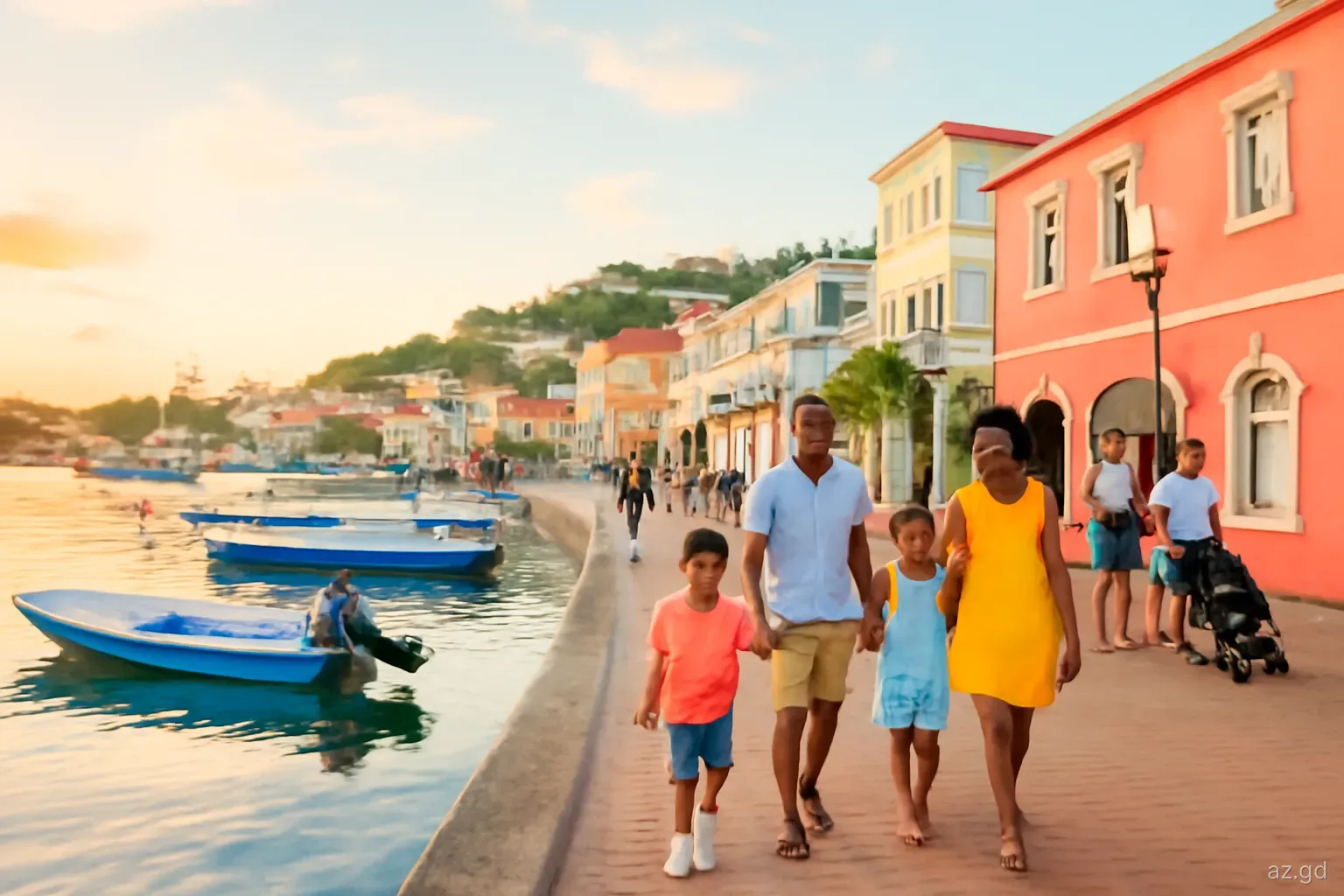
Grenada is widely regarded as one of the calmer destinations in the Caribbean, and most visitors leave without encountering any crime at all. People greet strangers, children walk to school, and the atmosphere in St George's and the villages is generally relaxed. That reputation is earned, but it is not the whole story.
Crime does happen, and like everywhere it is mostly opportunistic: things taken from cars left open, unattended bags on the beach, burglaries at villas and outboard engines removed from dinghies. Violent crime exists too, though it mostly involves people who know each other rather than visitors. An honest picture helps you take sensible precautions without becoming anxious.
What crime actually looks like
The crime most likely to affect a visitor or new resident is theft. Phones, wallets and bags left unattended on beaches such as Grand Anse or in open cars are the classic targets. Villa and house burglaries, particularly when properties are left empty or windows are open at night, are the second main category. Yachts at anchor have their own version: dinghies and outboard motors are stolen if left without a lock overnight, both in Grenada and throughout the Eastern Caribbean.
Robbery and assault are less common but not unknown, and the British government's travel advice notes occasional armed robberies and sexual assaults. Incidents involving visitors tend to happen at night, on isolated beaches or roads, or after heavy drinking. Domestic and interpersonal violence makes up a large share of serious crime overall, as in many countries. Scams aimed at visitors are relatively rare compared with busier destinations, though unlicensed taxi drivers quoting inflated fares and informal guides demanding payment after the fact both happen.
Grenada does not have the gang problems of some larger Caribbean countries, but the government and police have repeatedly expressed concern about firearms and youth crime, and policing priorities shift accordingly. Local news covers crime openly, which is a good way to stay informed about current concerns.
Sensible precautions for visitors
On the beach. Bring only what you need and keep valuables in your accommodation's safe. If you swim, have someone watch your belongings or use a waterproof pouch.
In cars. Leave nothing visible in a parked car, even for a few minutes at a viewpoint or waterfall car park. Lock the doors while driving in town, as the British government advises.
After dark. Use licensed taxis, agree the fare first, and avoid walking alone on unlit roads or along isolated beaches at night. Popular nightlife areas such as Grand Anse and Lance aux Epines are busier and safer than empty streets.
Cash and jewellery. Carry modest amounts of cash, use ATMs inside banks or malls during the day, and leave expensive jewellery at home.
Unwanted approaches. Vendors on beaches and in St George's can be persistent but are rarely threatening. A polite, firm "no thank you" works. Be wary of strangers offering drugs or unsolicited help with directions that ends in a demand for money.
Home and villa security for residents and long stays
Burglary is the crime residents worry about most, and a few habits make a property a much less attractive target:
- Lock doors and close burglar bars or louvres at night and when going out, even for a short time. Many burglaries are through an open window.
- Use outside lighting and consider motion-sensor lights on paths and around parked cars.
- Ask the landlord about window grilles, door bars and a safe before renting, especially for ground-floor properties.
- Get to know neighbours. In Grenadian communities, people notice strangers and unusual activity, and a neighbour who knows you are away is a strong deterrent.
- Keep a dog, or rent near people who do; dogs are the most common home security in rural areas.
- When leaving a house empty, arrange for someone to check on it and avoid posting travel plans publicly online.
- Insure contents and record serial numbers and photographs of valuable items.
Boats, marinas and anchorages
Grenada is a popular base for sailors, particularly during the hurricane season, when hundreds of boats stay at marinas and boatyards around the south coast, including Prickly Bay, True Blue, Mount Hartman Bay, Clarke's Court Bay and Woburn, and at Port Louis in St George's. The cruising community is close-knit and shares security information quickly.
The main risk is dinghy and outboard theft. Lock the dinghy and engine to the boat at night with a cable, raise the dinghy out of the water if possible, and lock it to the dock when ashore. Lock the companionway when away and at night, and keep valuables out of sight from the cockpit. Report thefts to the police and the marina, and share details on the cruisers' radio net so others can watch for the stolen items.
Area by area: where people take more care
The south coast tourist belt from Grand Anse and Morne Rouge through True Blue and Lance aux Epines is busy, well lit in parts and full of hotels, restaurants and bars. It sees most of the opportunistic theft simply because that is where visitors and their belongings are, so watch bags on the beach and in bars. St George's is lively during the day and around cruise ship arrivals, when pickpocketing and persistent vending are the main concerns; the town is much quieter after offices close, and empty back streets are best avoided late at night.
Rural villages in St Andrew, St Patrick, St John and St Mark are generally very safe and friendly, though roads are dark at night and house burglaries happen everywhere. Carriacou and Petite Martinique have very low crime by most measures, though theft from boats and from homes left open still occurs. After major storms, when homes are damaged and supplies short, opportunistic theft tends to rise for a period, so secure possessions and generators.
Staying informed
Residents keep up with safety the same way they keep up with everything else: local radio, television news, newspapers and their online sites, community social media groups and word of mouth. The Royal Grenada Police Force issues public notices about crime trends, road closures and wanted persons, and NaDMA issues advisories about natural hazards.
Visitors should read their own government's travel advice before departure, as it summarises current risks and local laws, and register with their embassy's traveller programme if one exists. Sailors share security updates on the morning cruisers' net on VHF and in online cruising groups. Asking your host, landlord or dive operator about any area you plan to visit is often the quickest way to get current, specific advice.
Laws and customs that catch visitors out
Some safety issues are about the law rather than crime. It is illegal for anyone, including children, to wear camouflage clothing in Grenada, and items can be confiscated. Drug offences carry severe penalties, and you should never carry bags or parcels for anyone else through customs. Swimwear is for the beach: walking through St George's or into shops in a bikini or without a shirt is considered disrespectful, though not usually a police matter.
Attitudes to LGBT+ people in Grenada are largely conservative, as in much of the Caribbean. Certain same-sex sexual acts remain illegal under Grenadian law, though prosecutions of consenting adults are rare. Public displays of affection, by any couple, attract more attention than in North America or Europe.
Finally, swearing in public is frowned upon and can be an offence under public order laws. Grenadians value courtesy: a "good morning" or "good afternoon" before any request goes a long way.
Frequently asked questions
Is Grenada safe for tourists?
Grenada is generally considered one of the safer Caribbean destinations, and most visits pass without incident. Petty theft and burglary are the main risks, with occasional violent crime. Normal precautions such as using hotel safes, locking cars and avoiding isolated places at night keep risk low.
Is St George's safe at night?
The main areas around the Carenage and busy restaurants are generally fine in the evening, but streets empty out after dark. Take a taxi rather than walking unlit roads, stay with company, and avoid isolated areas, as you would in any town.
Is Grenada safe for solo female travellers?
Many women travel alone in Grenada without problems. Comments and attention from men can be persistent, and sexual assaults, though uncommon, do occur. Use licensed taxis, avoid isolated beaches and roads after dark, and be careful with drinks at parties and festivals.
Why is camouflage clothing illegal in Grenada?
Grenadian law restricts camouflage clothing to the security forces, a rule shared by several Caribbean countries. The law applies to everyone, including visitors and children. Leave camouflage-patterned clothing, bags and accessories at home to avoid confiscation or a fine.
Is Grenada safe for LGBT travellers?
LGBT travellers visit Grenada, but attitudes are mostly conservative and certain same-sex sexual acts remain illegal, though prosecutions of consenting adults are rare. Discretion with public displays of affection is common advice. Many hotels and guesthouses are welcoming, and violence against visitors is uncommon.