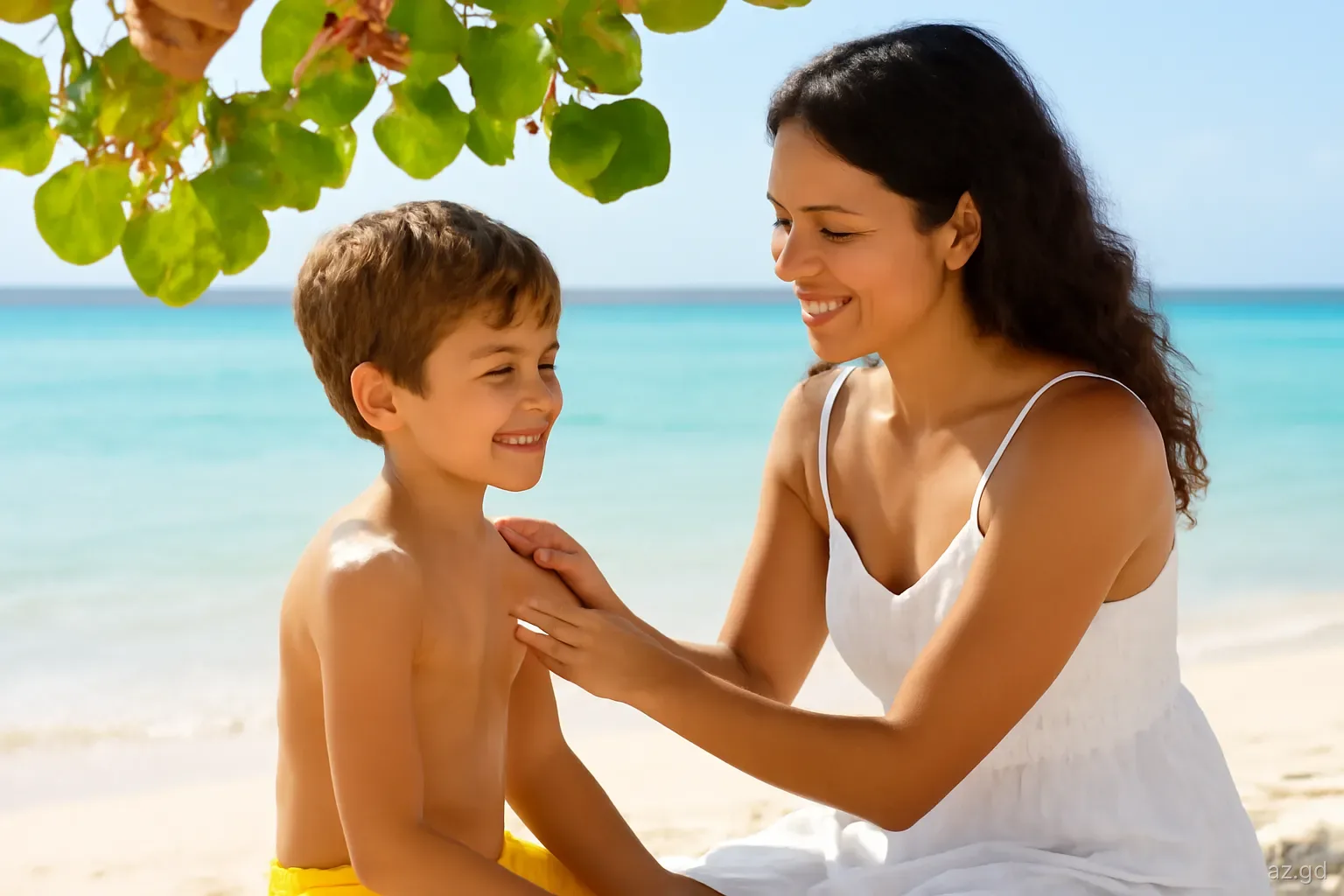
Most health problems children meet in Grenada are small and predictable: too much sun, a scraped foot on coral, a few mosquito bites, an upset stomach after too much mango. Knowing what to expect, and where to go if something more serious happens, lets you deal with them calmly and keep the holiday or the move on track.
This guide is for visiting families and for parents who have moved to Grenada with children. It covers prevention first, then where medical care is available for children on the main island, Carriacou and Petite Martinique. It is general information, not medical advice: for anything specific to your child, speak to your own doctor before travelling and to a doctor in Grenada if a problem arises.
Sun and heat: the most common problem by far
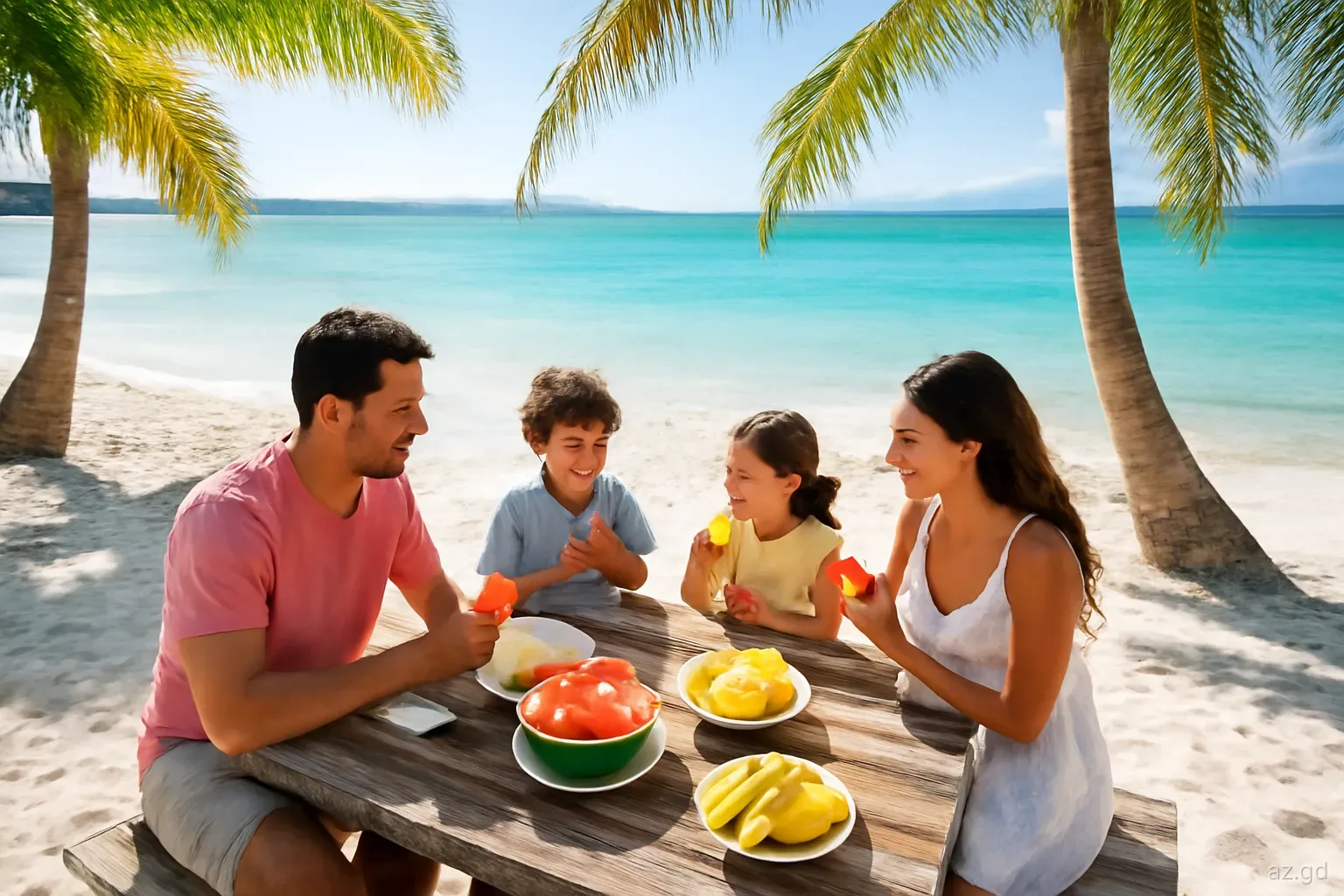
Grenada is close to the equator, and the ultraviolet index is high all year, including on cloudy days. Children burn quickly, often without anyone noticing until the evening. The reflective surfaces of sea and sand make it worse. Sun-protective swimwear with long sleeves, a hat with a neck flap, and shade between late morning and mid-afternoon do more than sunscreen alone.
Use a high-factor sunscreen and reapply after every swim. Babies under six months should be kept out of direct sun rather than covered in sunscreen. Signs of heat exhaustion in children include unusual tiredness, irritability, headache, nausea and flushed skin. Move the child into shade or air conditioning, give fluids and cool them with water; if they become confused, stop sweating or are very drowsy, treat it as an emergency.
Children who have arrived from a cold climate need a few days to adjust. Keep the first two days light on activity and heavy on water, fruit and rest.
Sea and beach hazards
Sea urchins. Black spiny urchins live on rocks and reef in shallow water. Treading on one is painful and the spines break off in the skin. Water shoes for rocky areas solve most of the problem. If spines go in, a pharmacy or doctor can advise; avoid digging deep with a needle.
Jellyfish and stinging hydroids. Stings are usually mild but frightening for children. Rinse with seawater (not fresh water) and seek advice if there is a strong reaction, breathing difficulty or a sting near the eyes.
Currents on the Atlantic side. Beaches on the east coast, such as Bathway and those around Grenville, face the open Atlantic and can have strong currents and waves. Calmer Caribbean-side beaches like Grand Anse suit young swimmers better. Most beaches have no lifeguards, so an adult must watch constantly.
Manchineel trees. These grow along some beaches and have small green apple-like fruit. The fruit is poisonous and the sap burns skin and eyes. Do not let children shelter under them in rain, as water dripping from the leaves carries the sap. They are often marked with a red band on the trunk, but not always.
Coral cuts. Wash scrapes thoroughly with clean water and keep them covered. In a warm climate small cuts can become infected; see a doctor if redness spreads.
Mosquitoes, dengue and other bites
Mosquitoes are most active at dawn and dusk and after rain. The species that carry dengue, chikungunya and Zika also bite during the day. Dengue circulates in the Caribbean, and Grenada's Ministry of Health has reported outbreaks and rises in cases in recent years, including a 2023 outbreak in which school-age children were among the groups most affected. Protection is the main defence for children: repellent suitable for their age, loose long clothes in the evening, screened windows or bed nets, and air conditioning at night.
Around a rented home, empty anything that holds standing water: plant saucers, buckets, toys left in the yard. A high fever, severe headache, pain behind the eyes, rash or unusual tiredness in a child after mosquito bites needs a doctor's assessment. Do not give aspirin or ibuprofen if dengue is suspected unless a doctor advises it; doctors usually recommend paracetamol for fever in that situation.
Sandflies on some beaches at dusk cause itchy bites. Ants, including fire ants in grassy areas, can sting; check where toddlers sit down. Grenada has no venomous snakes of the kind feared in other regions, but children should still be taught not to handle wildlife.
Food, water and tummy upsets
Water. Public supplies are treated, and many residents drink tap water. After heavy rain the supply can turn cloudy; at those times use bottled or boiled water for young children. Bottled water is cheap and widely sold.
Fruit. Local fruit is a highlight, but large amounts of mango, plums or unripe fruit cause loose stools in children unused to them. Wash fruit and introduce new ones gradually.
Street food. Food cooked fresh in front of you, such as fried fish, bakes or corn, is generally a safe bet. Be more careful with food that has been sitting out in the heat.
Rehydration. Oral rehydration salts are available at pharmacies. A child with diarrhoea who is not drinking, has no wet nappies for many hours, or has blood in the stool should see a doctor promptly.
Allergies. Nutmeg and other spices are used widely, and peanuts appear in some snacks and sauces. If your child has a serious allergy, carry their prescribed adrenaline auto-injectors and explain the allergy clearly when ordering food.
Where children get medical care
Grenada has public and private health services. Knowing the options before you need them saves time in a stressful moment.
- Emergencies: call 911. The General Hospital in St George's is the main referral hospital and has an accident and emergency department and a paediatric ward.
- Other public hospitals: Princess Alice Hospital in St Andrew's serves the east of the island, and Princess Royal Hospital in Carriacou serves the sister islands. Serious cases from Carriacou and Petite Martinique are usually transferred to the main island.
- Health centres and medical stations: the public system runs community clinics across the parishes, which handle child health checks and immunisations for resident families.
- Private paediatricians and family doctors: several practise in and around St George's and Grand Anse. Visiting families normally pay at the time of the visit and claim back from insurance.
- Pharmacies: found in St George's, Grand Anse, Grenville and other towns. Pharmacists are a good first stop for minor problems and will tell you when a doctor is needed.
- Insurance: make sure travel or health insurance covers children and includes medical evacuation, since some specialist care is only available overseas.
A small first-aid kit worth packing
Pharmacies in Grenada stock most basics, but a few items in your bag mean you can deal with minor problems on a beach or in a rental car without a special trip into town.
- Children's paracetamol and ibuprofen in the forms your child will take, with a measuring syringe.
- Oral rehydration sachets and a reusable water bottle for each child.
- Plasters, sterile wipes and a small tube of antiseptic cream for coral scrapes and grazes.
- An antihistamine suitable for your child's age, and a soothing cream for bites.
- Insect repellent and high-factor sunscreen you know your child tolerates.
- Tweezers, a digital thermometer and any prescribed medicines, including inhalers or auto-injectors, with copies of prescriptions.
- A note of your insurer's emergency contact details and policy number, kept separately from your wallet.
For families living in Grenada: vaccines and routine care
Resident families will find that childhood immunisations are delivered through public health clinics, and schools ask for immunisation records at enrolment. Bring your child's vaccination record from your previous country, translated into English if needed, and ask the clinic or your private doctor to review it against the local schedule.
Dental care is provided by private dentists in the main towns; public dental services exist but have limited capacity. Opticians and eye clinics are available in St George's. For specialist paediatric care such as cardiology or complex surgery, families may need to travel to Barbados, Trinidad, the United States or elsewhere, so check what your insurance covers before you need it.
Keep a simple folder with your child's medical history, allergies, current medicines and insurance details. In a small health system, arriving with clear information makes a real difference to how quickly a child is seen and treated.
Frequently asked questions
Do children need vaccines to travel to Grenada?
There are no special vaccine requirements for most visiting children beyond routine immunisations, but recommendations change. Check with your own doctor or a travel clinic several weeks before departure, especially for babies and children with medical conditions.
Is there a children's hospital in Grenada?
There is no separate children's hospital. The General Hospital in St George's has a paediatric ward and an emergency department. Private paediatricians also practise on the island. Complex specialist care may require travel overseas.
How can children be protected from dengue in Grenada?
Use an age-appropriate insect repellent, dress children in light long clothes at dawn and dusk, use bed nets or air conditioning, and remove standing water around your accommodation. See a doctor if a child develops a high fever after bites.
What should you do if a child steps on a sea urchin?
Keep the child calm, remove any spines that come out easily, and clean the area. Soaking in warm water can ease pain. Do not dig deeply into the skin. See a pharmacist or doctor if spines remain or the area becomes red and swollen.
Is children's medicine sold in Grenada?
Yes. Pharmacies sell children's paracetamol, ibuprofen, oral rehydration salts, antihistamines and creams. Brands may differ from home, so read doses carefully, and bring any prescription medicine your child needs from home.
What is the emergency number in Grenada?
Dial 911 for police, fire and ambulance. Tell the operator exactly where you are, including the parish and nearest landmark, because many places in Grenada do not have street numbers.