Grenada's school system follows the British-Caribbean pattern found across the Eastern Caribbean: a few years of pre-school, seven years of primary schooling from kindergarten to Grade 6, five years of secondary school in Forms 1 to 5, and then an optional two years of sixth-form study, usually at T.A. Marryshow Community College. Exams are set regionally by the Caribbean Examinations Council (CXC), so results earned in St George's, Grenville or Hillsborough are recognised throughout the region and by universities abroad.
What surprises many newcomers is who runs the schools. A large share are owned by churches, Roman Catholic, Anglican, Methodist and others, but staffed and funded largely by government. This guide explains each stage, how children move between them, and what families should expect to pay and do. The Ministry of Education is the authority for anything that changes year to year, such as dates and placement rules.
The stages at a glance
Early childhood (about ages 3 to 5). Pre-schools and day-care centres, run by government, churches, community groups and private owners, prepare children for primary school. Attendance is not compulsory, but most families use them, and places at popular centres fill early.
Primary (kindergarten to Grade 6). Children normally enter at about age five. Primary schools are found in every parish and on Carriacou and Petite Martinique, many of them small village schools. In Grades 5 and 6 pupils take the Caribbean Primary Exit Assessment, which helps determine their secondary placement.
Secondary (Forms 1 to 5). A five-year programme ending with the Caribbean Secondary Education Certificate (CSEC) exams in Form 5, typically at age 16 or 17. Under the Universal Secondary Education policy every child who completes primary school is placed in a secondary school.
Sixth form and tertiary. Students who want to go on take the Caribbean Advanced Proficiency Examination (CAPE), mainly through T.A. Marryshow Community College, or move into technical and vocational programmes, associate degrees, St George's University or study abroad.
Early childhood in practice. Pre-school places are offered by a mix of government early childhood centres, church and community providers and private nurseries, with day-care for younger children. Quality and fees vary, so visit, ask about staff training and ratios, and register early for the September intake.
Who runs the schools
Schools in Grenada fall into three broad groups. Government schools are owned and run directly by the state. Government-assisted schools, the largest group, are owned by churches but follow the national curriculum, with teachers paid by government; their names often show their origins, such as St George's Anglican Senior School, St Louis R.C. Girls' School or St George's Methodist School. Private schools are owned and funded independently and charge fees.
The church connection gives many schools a distinct ethos, with assemblies, prayers and religious education, and some secondary schools carry long traditions and alumni loyalties. Grenada Boys' Secondary School, founded in 1885, the St Joseph's Convent schools in St George's and Grenville, Presentation Brothers' College and the Anglican High School are among the older and better-known names, but placement depends on the national process rather than on church membership alone.
Government and assisted schools do not charge tuition, although parents pay for uniforms, books, transport, lunch and various contributions to school funds. Private schools charge fees that vary widely.
Compulsory schooling and the school year
Under the Education (Amendment) Act 2024, in force since September 2024, schooling is compulsory from age five to seventeen; the upper limit was previously sixteen. Families should confirm how the rule applies with the Ministry of Education, particularly for teenagers arriving from abroad who may be close to the limit.
The academic year runs from early September to July and is divided into three terms: September to December, January to around Easter, and from after Easter to July. Exams for CSEC and CAPE take place in May and June, with results released in August. Schools close for public holidays and occasionally for weather; during the hurricane season, which overlaps with the start of the school year, schools can be closed when a storm threatens, and some buildings double as emergency shelters.
The language of instruction is English. Children speak Grenadian Creole English at home and in the playground, and teachers move between registers, which newcomer children usually pick up within weeks.
What newcomer families often get wrong
Families relocating to Grenada, and returning nationals whose children were schooled abroad, run into the same few issues.
- Assuming any school will take a child mid-year. Popular schools are often full. Contact the Ministry of Education and the schools early, ideally months before arrival.
- Expecting grade levels to line up. A child's age, previous grade and attainment are considered together, and a child coming from the American or British system may be placed a year differently from what parents expect.
- Underestimating the CSEC timetable. Subject choices are made around Form 3, and a student who arrives in Form 4 or 5 has limited time to catch up on coursework, known as School-Based Assessment.
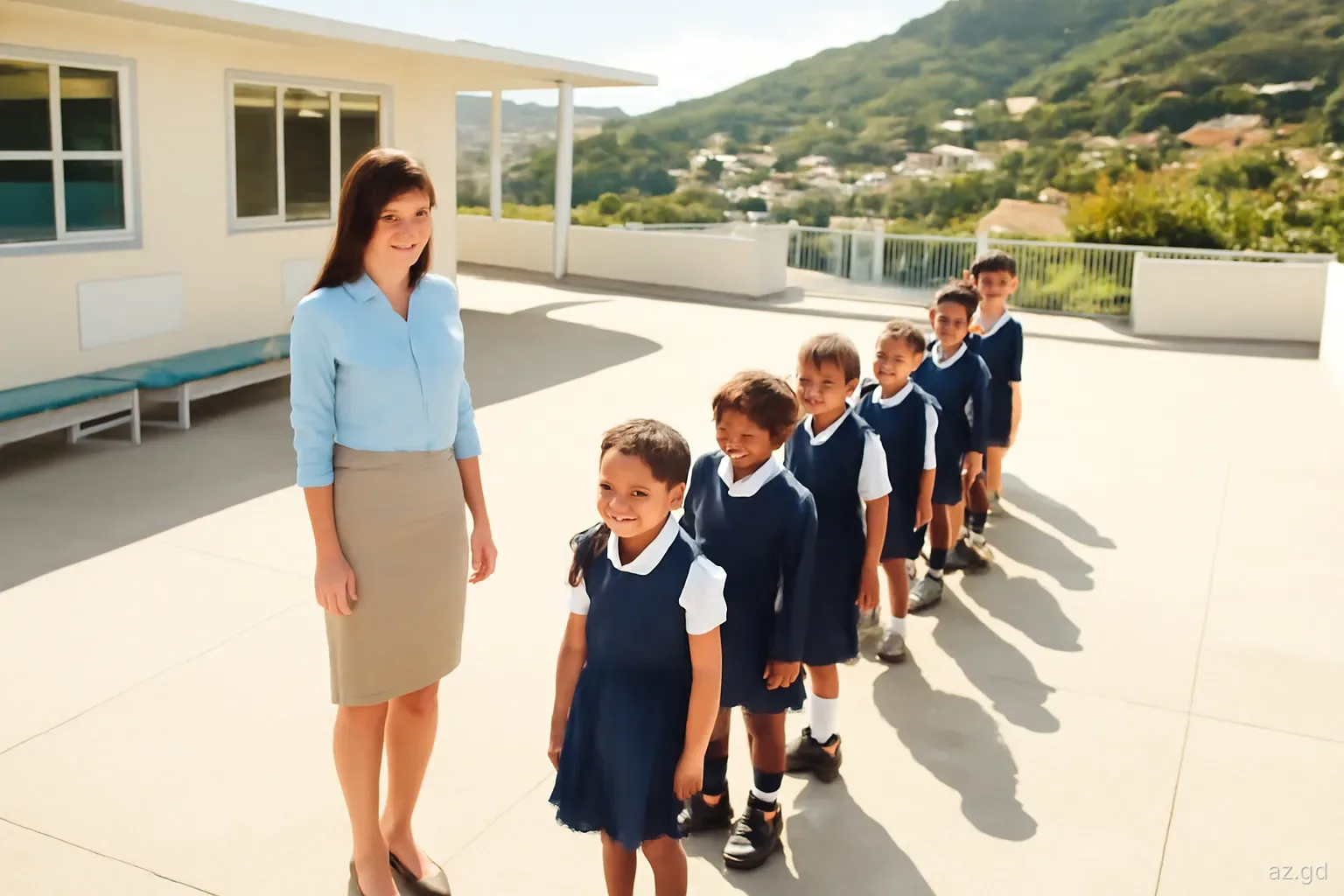
- Ignoring uniforms and grooming rules. Schools enforce uniform, hair and jewellery standards strictly. Ask for the rules before buying anything.
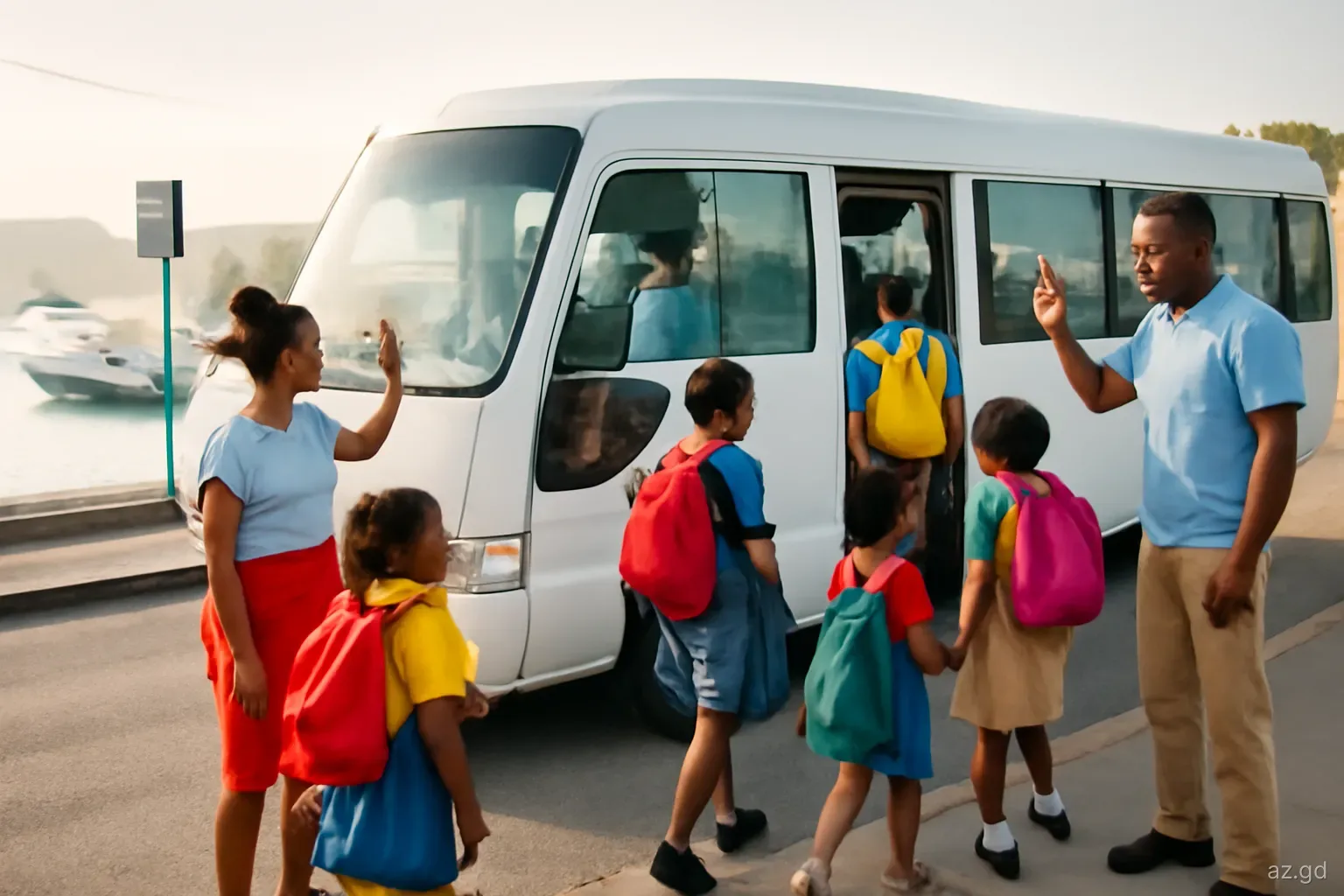
- Overlooking transport. Many children travel on route buses, which affects how early they leave home. Factor the journey into your choice of school and home.
Teachers, class sizes and resources
Teachers in government and assisted schools are employed through the public service, and many trained at T.A. Marryshow Community College, which absorbed the former Grenada Teachers' College, or at the University of the West Indies. Experienced teachers are the backbone of the system, though schools in rural areas and on the sister islands sometimes find it harder to fill specialist posts in subjects such as mathematics, sciences and foreign languages.
Class sizes vary. Small village primary schools can have modest classes, while popular schools in and around St George's are often full. Facilities range from well-equipped science laboratories and computer rooms to older buildings that need repair, and several schools have been refurbished or rebuilt with support from regional and international partners. On Carriacou and Petite Martinique, schools were among the buildings damaged by Hurricane Beryl in 2024, and repairs and temporary arrangements affected classes for a period.
Parent-teacher associations are active in many schools and raise money for equipment, repairs and activities. Joining one is a practical way for newcomer parents to understand how a school works and to meet other families.
How children move from stage to stage
The move from primary to secondary is the big transition. The Caribbean Primary Exit Assessment (CPEA), developed by CXC with regional ministries, replaced the old Common Entrance Examination in Grenada in 2012. It combines continuous assessment in Grades 5 and 6 with an external component, and the Ministry of Education uses the results to assign pupils to secondary schools for September. Results and assignments are usually published in June, with a process for parents to request transfers.
Within secondary school, students move up form by form, choose CSEC subjects for their final two years, and sit exams at the end of Form 5. Those who want to continue apply to T.A. Marryshow Community College or other institutions with their CSEC results; entry to CAPE generally requires passes in a set number of subjects, including English and mathematics, with good grades in the subjects to be studied.
Pupils with special educational needs can be supported through special education services and a small number of dedicated schools and units. Parents should raise needs with the school and the Ministry early, since resources are limited and placement takes time.
Frequently asked questions
At what age do children start school in Grenada?
Children usually start primary school, in kindergarten, at about age five, with schooling compulsory from that age. Most attend pre-school from about age three. Confirm the cut-off date for your child's birthday with the school or the Ministry of Education.
Are public schools free in Grenada?
Government and government-assisted schools do not charge tuition. Parents pay for uniforms, books, stationery, lunch, transport and contributions to school activities, which can add up, especially at the start of the school year in September.
What replaced the Common Entrance exam in Grenada?
The Caribbean Primary Exit Assessment, introduced in Grenada in 2012. It combines classroom assessment across Grades 5 and 6 with an external CXC component, and the results inform which secondary school each child is assigned to.
Does every child get a secondary school place?
Under the Universal Secondary Education policy, children completing primary school are placed in a secondary school. Which school depends on CPEA results, preferences and capacity, so not every child gets their first choice.
What exams do Grenadian students take?
The main exams are set by the Caribbean Examinations Council: the CPEA at the end of primary, CSEC at the end of Form 5, and CAPE for sixth-form students. Caribbean Vocational Qualifications are also offered in technical and vocational subjects.
Is the curriculum British or American?
Neither exactly. Grenada follows a national curriculum leading to regional CXC examinations, which developed from the British O and A Level tradition. Some private schools offer other curricula, such as Cambridge international qualifications.