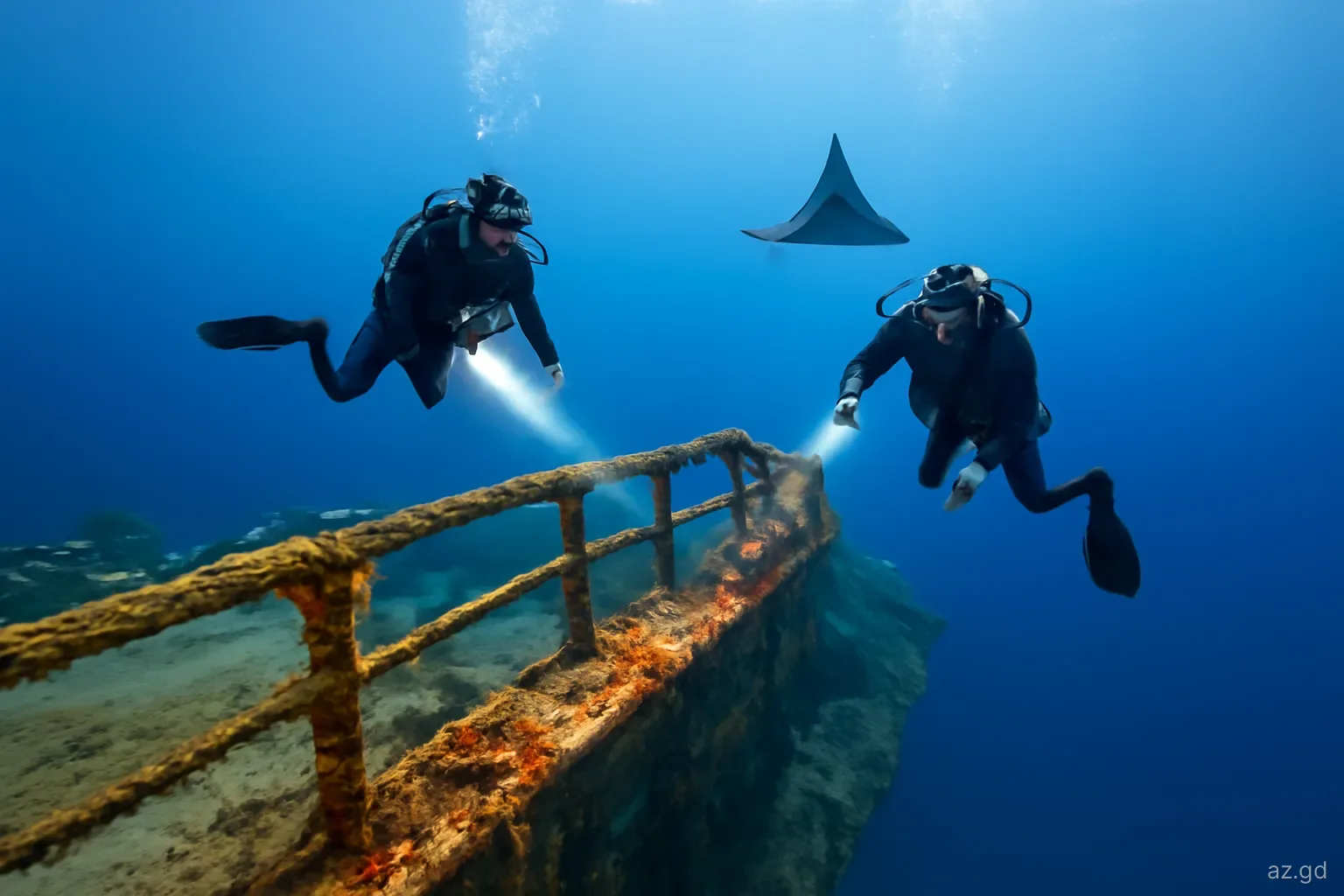
The Bianca C is the dive most people come to Grenada for, and the one dive operators are most careful about. The Italian liner, around 180 metres long, sits upright on a sand bottom at roughly 50 metres (about 165 feet) off the south-west coast near Pink Gin Beach. Her upper structure starts at around 27–30 metres, the famous stern swimming pool lies at about 35–40 metres, and the current that sweeps along the coast often runs straight across her.
That combination of depth, size and moving water means the Bianca C is not a wreck you simply book. Shops will want to see your certification, your logbook and, usually, a checkout dive first. This page explains what the dive actually involves, what operators will ask of you, and how to arrive ready rather than being turned away on the dock.
How a cruise liner ended up off Grand Anse
The ship had a long life before she reached Grenada. Laid down in France in 1939 and left unfinished, she was sunk by retreating German forces in 1944, raised after the war and sailed as La Marseillaise and then Arosa Sky before the Costa line of Genoa bought her and renamed her Bianca C in 1959.
On 22 October 1961, while anchored off St George's with passengers aboard, an explosion in the engine room started a fire. Local boats ran a rescue from the harbour, and almost everyone aboard was brought ashore; the death toll is usually given as one crewman on the day and two more who later died of burns. Grenadians housed and fed the passengers, which the Costa company later acknowledged with the bronze statue Christ of the Deep that stands on the Carenage today.
A Royal Navy frigate, HMS Londonderry, tried to tow the burning hull clear of the shipping lane. With her rudder jammed, the tow line parted and the ship went down a short distance off the coast, where she has lain ever since. Decades of storms, including Hurricane Ivan in 2004, have flattened parts of the superstructure: the starboard side has collapsed in places and the masts are down, so pictures from the 1990s no longer match what you will see.
What operators will ask of you
Certification to at least 30 metres. In practice that means Advanced Open Water (PADI, SSI or equivalent) plus a deep-diving specialty, or a higher rating. Open Water divers limited to 18 metres will not be taken on this dive by a reputable shop, whatever they offer to pay.
Recent experience. Expect questions about when you last dived and how deep. A logbook showing several dives in the past year, ideally including some beyond 25 metres, makes the conversation short. If you have been out of the water for a year or more, a refresher is the honest answer.
A checkout dive. Most operators want to see you in the water before the Bianca C, often on a reef or the shallow Veronica L wreck. They are watching buoyancy, air consumption and how calmly you handle descending in blue water without a visual reference.
Willingness to follow the plan. Guides set a turnaround pressure and a maximum depth. Divers who chase the pool or the bow beyond the plan put the whole group at risk, and guides have the right to end your dive.
Gas choice. Enriched air (nitrox) is commonly offered and extends no-decompression time at the shallower parts of the wreck, but only if you hold a nitrox card. At the deeper parts of the ship, oxygen limits rather than nitrogen become the constraint, which your guide will brief.
How the dive actually runs
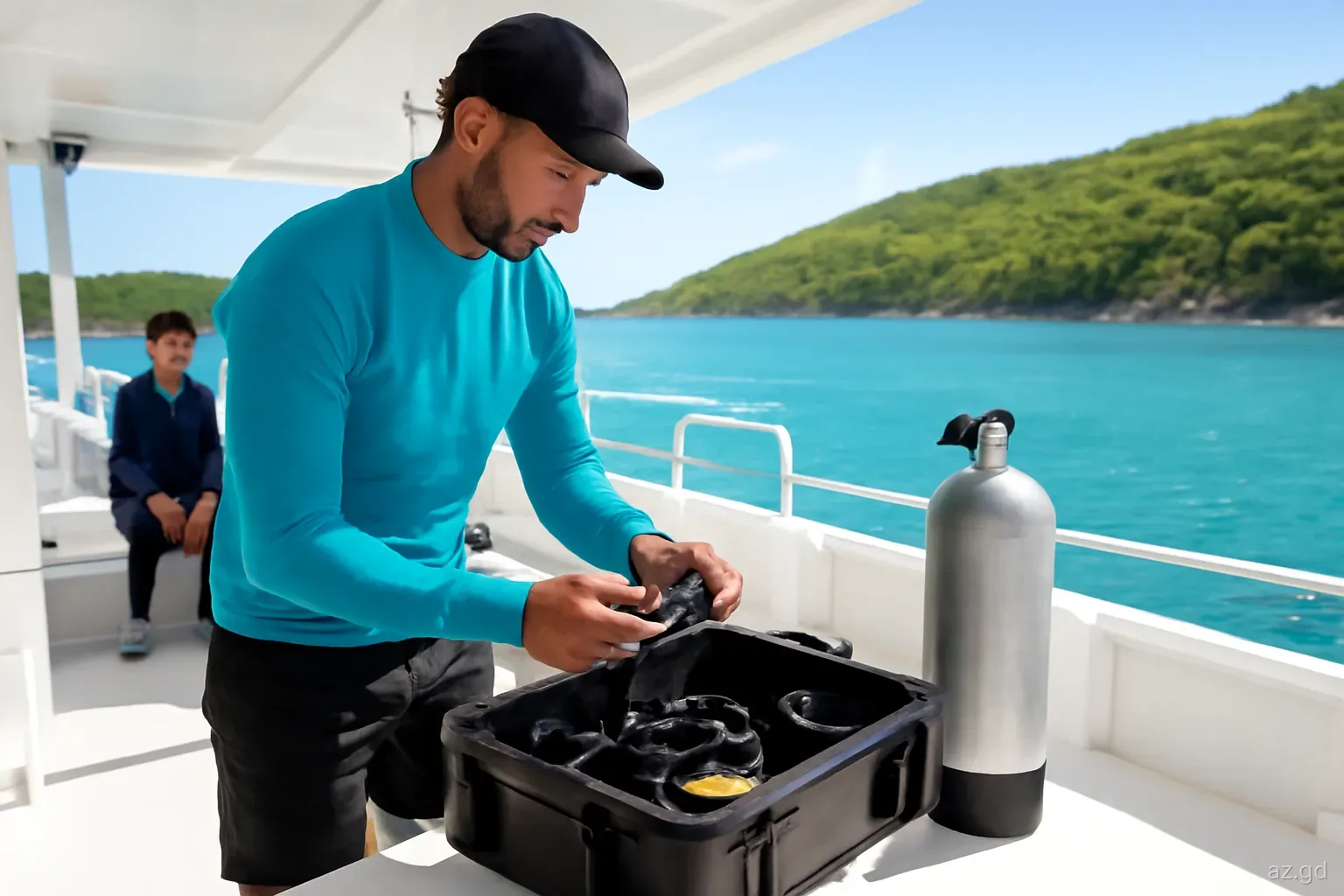
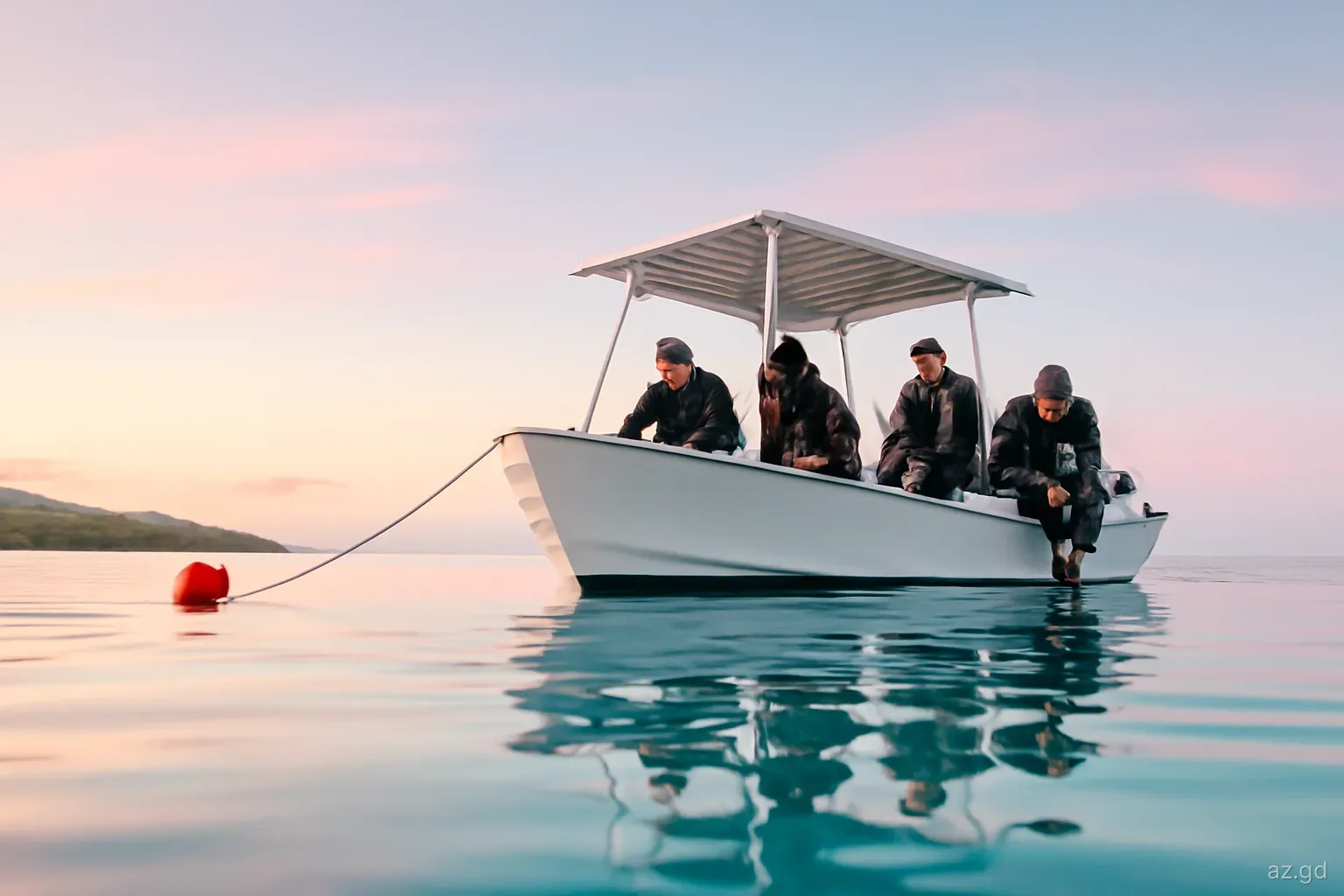
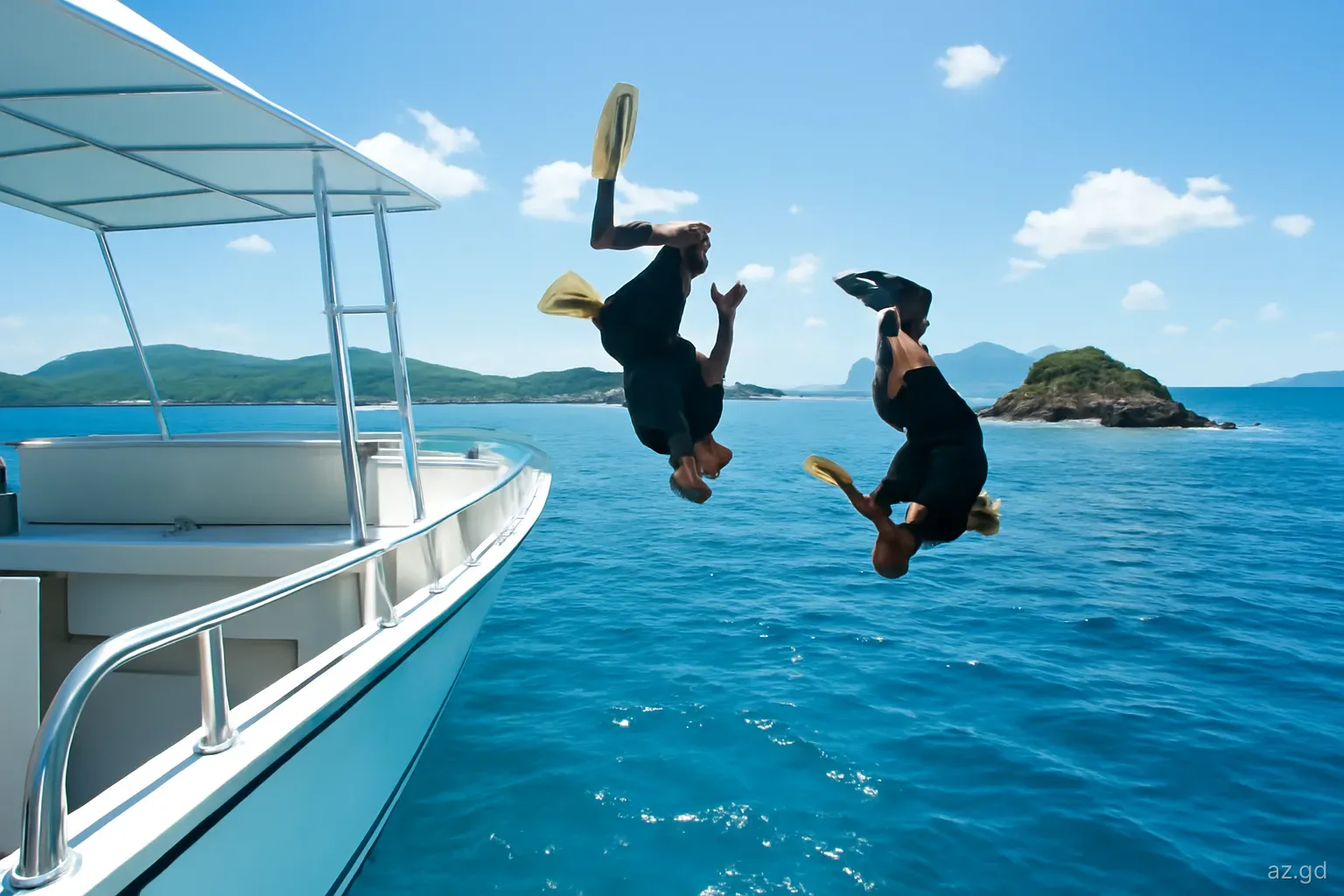
Boats leave from the dive shops around Grand Anse, Morne Rouge and the True Blue area, and the ride out is short. The descent is usually down a line or in open water as a group, and it is the moment that unsettles people: you drop through blue water with nothing visible below until the shape of the hull appears beneath you.
Because the current generally runs along the length of the ship, many dives are run as drifts. The group drops near the stern, passes over the pool area and the superstructure, and moves forward towards the bridge and bow before ascending, sometimes finishing over Whibble Reef. Bottom time at these depths is short, often 15 to 20 minutes on the wreck itself, followed by a longer ascent with a safety stop under a surface marker buoy.
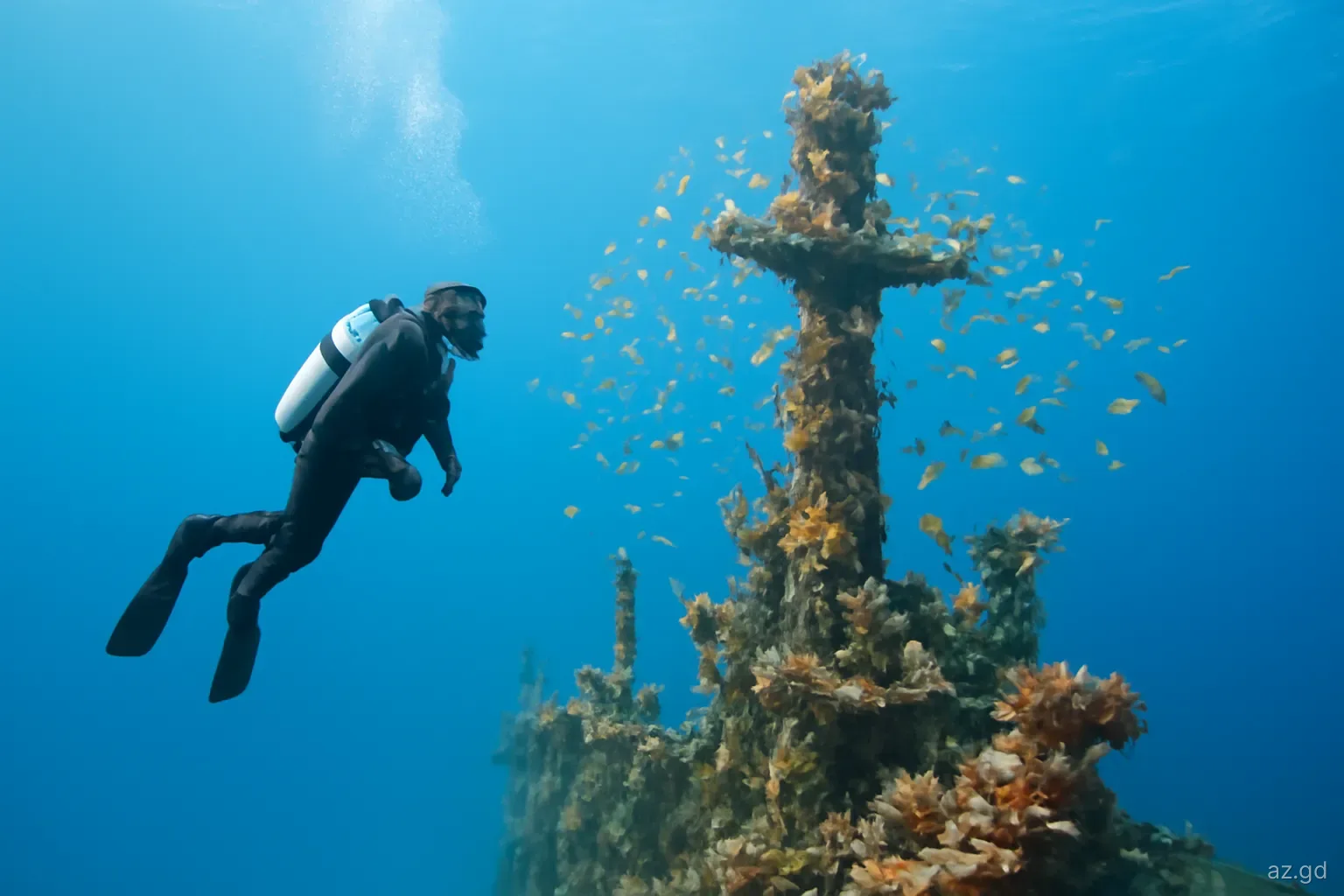
Penetration of the interior is not advised: the structure has weakened and silt inside reduces visibility to nothing in seconds. What divers come for is scale, the outline of the decks, and the life around her: eagle rays, barracuda, schools of Atlantic spadefish, moray eels and the occasional nurse shark resting on the sand.
Photography, light and what to expect at depth
Colour disappears fast. By 30 metres most reds and oranges are gone, and the wreck reads as blue and grey unless you carry a strong video light or strobes. Divers expecting the colours of shallow-reef photos are often surprised by how muted the ship looks.
Wide angle is the lens to bring. The appeal of the Bianca C is scale: the curve of the hull, the pool frame, divers silhouetted against the deck. A wide or fisheye setup captures this; macro work is better saved for shallower sites.
Keep the camera secondary. Short bottom time, current and depth leave little margin. Photographers who fall behind the group or drop below the planned depth chasing a shot are the guide's biggest worry. Settle buoyancy first, then shoot.
Visibility varies. On a good day you see a long stretch of the ship at once; on a hazy day the hull emerges only a few metres below you. Neither is predictable a week ahead, which is one more reason to leave flexibility in your schedule.
Mistakes that end Bianca C dives early
Most aborted dives on this wreck come down to a handful of avoidable errors. Guides see the same ones every season.
- Arriving without paperwork. Leaving your certification card or logbook at home, or relying on an app the shop cannot verify, can cost you the dive. Bring the card and a log, digital or paper.
- Booking it as dive one of the trip. Jet-lagged, dehydrated and unweighted for local conditions is a poor state for a 40-metre drift. Put it on day two or later.
- Overweighting. Many divers add weight "to be safe" and then fight their buoyancy all the way down. A proper weight check on the checkout dive fixes this.
- Ignoring narcosis. Nitrogen narcosis at 35–40 metres slows thinking even in experienced divers. Agree hand signals and turn points before you descend.
- Pushing on a strong-current day. When the current is ripping, guides may switch to a different site. Accept it: the wreck will be there another day.
- Flying too soon. Deep dives load more nitrogen. Keep at least the standard 18 hours before a flight out of Maurice Bishop International Airport after repetitive diving, and longer if you can.
How to prepare in the weeks before
If the Bianca C is the point of your trip, a little planning back home makes the difference between doing the dive and watching the boat leave.
- Check your certification level. If you only hold Open Water, take Advanced Open Water with a deep adventure dive, either at home or during the first days of your stay in Grenada.
- Get some deeper dives in your log, ideally in the 25–30 metre range, so the depth itself is not new.
- Take a nitrox course if you have time; it is short and widens the options your guide can offer.
- Buy dive accident insurance that covers depths to 40 metres and medical evacuation. Standard travel policies often exclude diving below 30 metres.
- Email the dive operator ahead, state your experience honestly and ask how they schedule the Bianca C: some run it on set days, others only when there is a group of qualified divers.
- Plan at least one easy dive before it, and leave a buffer day afterwards before your flight home.
Frequently asked questions
Can Open Water divers see the Bianca C at all?
Not safely. The shallowest parts of the ship are around 27–30 metres, beyond the 18-metre limit of an Open Water card. The usual route is to complete Advanced Open Water with a deep dive in Grenada first, then book the wreck later in the trip if the operator is satisfied.
How much does a Bianca C dive cost?
It is normally sold as part of a two-tank trip or dive package rather than separately. Expect broadly US$100–160 for a two-tank boat trip, plus nitrox and equipment hire if needed. Prices change and vary by shop, so confirm what is included before booking.
Is the current always strong?
No, but it is often present and can change during a dive. Some days the wreck is calm enough to tour gently; on others the guide will run it as a fast drift or move to a sheltered site. Operators judge conditions on the morning.
Can you go inside the wreck?
Penetration is not recommended. The structure has deteriorated after decades of storms, interior spaces are silty and unstable, and recreational guides keep groups on the outside of the hull. Technical divers with overhead training occasionally plan specialised dives, but that is a separate arrangement.
What is the best time of year to dive it?
It is dived year round. The dry season from roughly January to May tends to bring steadier visibility, while late summer and autumn can bring greener water after heavy rain and river plumes from South America. Hurricane season can cancel trips at short notice.
Is the Bianca C inside a marine protected area?
The wreck lies off the south-west coast rather than in the Molinere-Beausejour reserve further north, but the usual rules still apply: take nothing, touch nothing, and do not disturb resting animals. Your operator will brief any fees that apply to the day's sites.