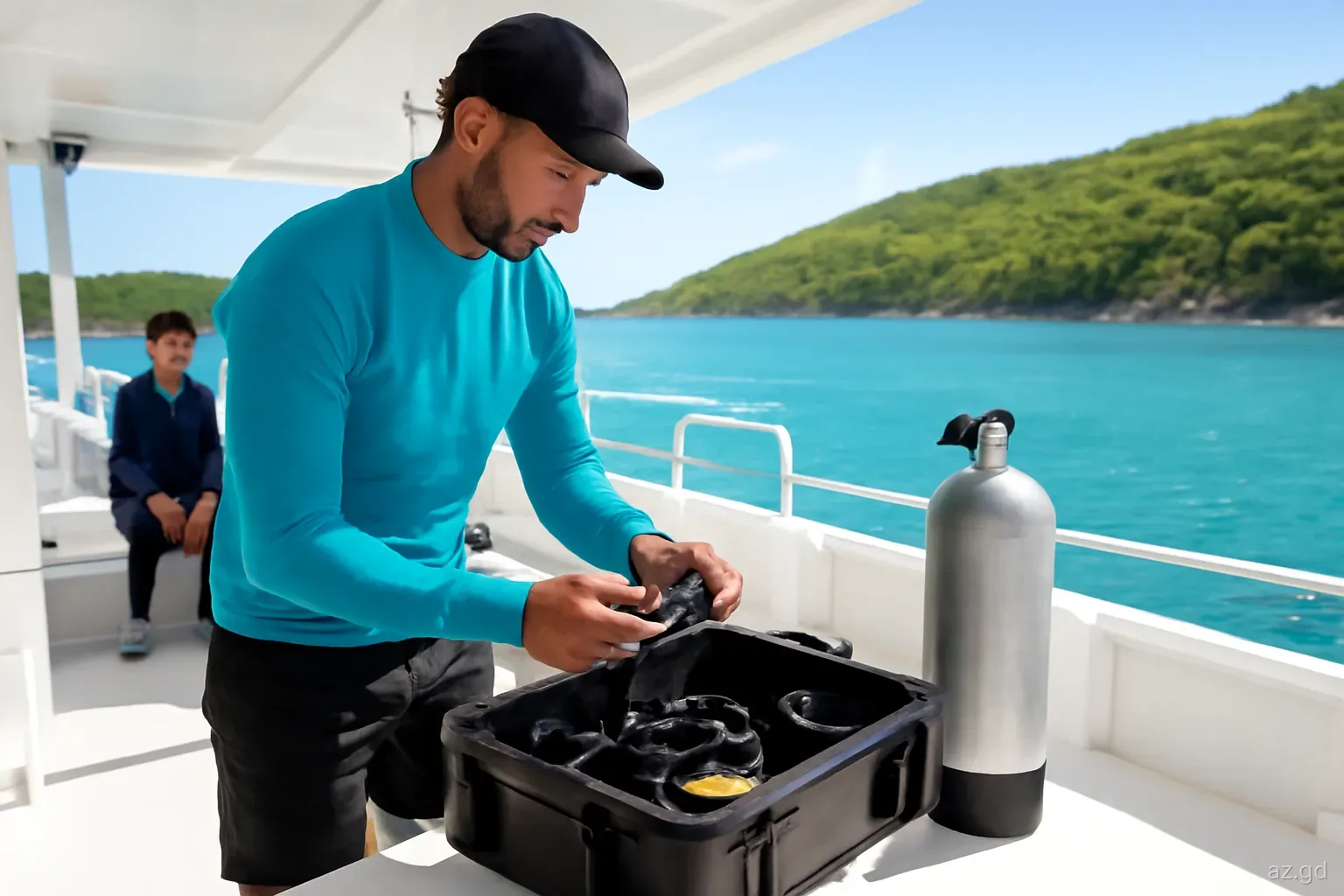
Grenada has a good diving safety record, with experienced local guides and operators who know their sites intimately. But it is a small island state with limited specialist medical facilities, strong currents on some sites, and an active underwater volcano offshore. The difference between a minor scare and a serious incident often comes down to decisions made before anyone gets wet.
This checklist covers what to sort out at home, how to judge an operator on the dock, what happens in an emergency, and the rules that apply in Grenada's marine protected areas. Nothing here replaces your training or your guide's briefing; it fills in the local details that training courses do not cover.
The points are grouped in the order you meet them: preparation at home, the morning on the dock, the dive itself, and the gap before your flight home. Use it as a list to tick off rather than a lecture.
Before you leave home
Most of the important safety decisions happen weeks before the first dive.
- Dive accident insurance. Buy cover specifically for scuba, including hyperbaric treatment and air evacuation to another island or home. Many general travel policies exclude diving beyond 30 metres or exclude it altogether; read the depth limit.
- Medical fitness. Complete the diver medical questionnaire honestly. If any answer is yes, get a doctor's sign-off before travelling rather than trying to find one in Grenada.
- Certification and logbook. Pack your physical card or a verifiable digital card and a logbook, plus your nitrox card if you plan to use enriched air.
- Refresher if rusty. If you have not dived for a year or more, plan a refresher session on day one. Every operator offers one.
- Your own essentials. A well-fitting mask, a dive computer you know how to read, and a surface marker buoy with a reel or spool. These are the three items most worth bringing even if you hire everything else.
Judging a dive operator on the dock
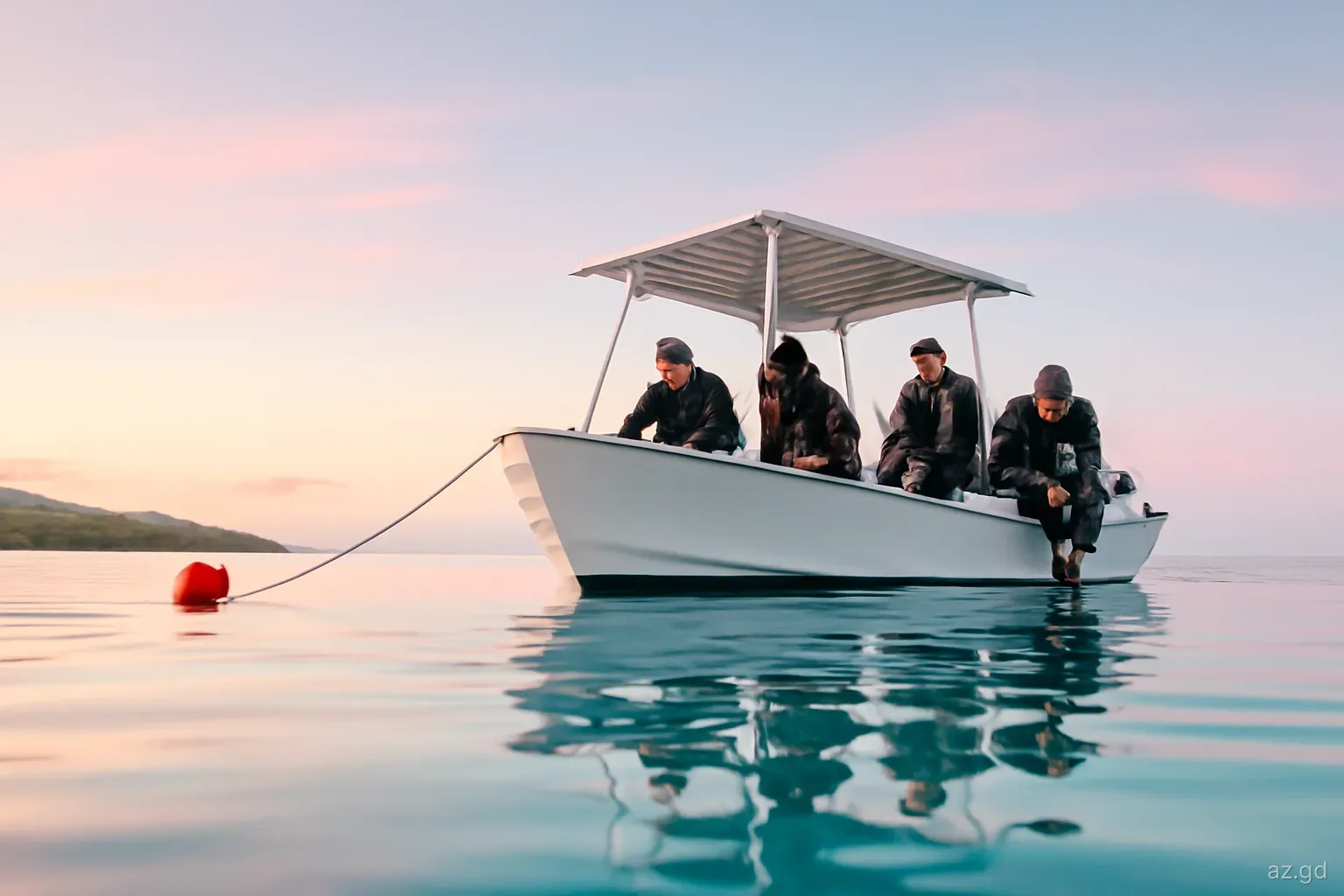
Look at the boat. Emergency oxygen with enough supply for a full transfer, a first-aid kit, a working radio, life jackets and shade. Ask where the oxygen is kept; a good crew will show you without hesitation.
Listen to the briefing. It should cover the site layout, maximum depth, expected current, turn pressure, entry and exit, what to do if separated, and hand signals. A two-line briefing on a deep or current-swept site is a warning.
Ask about group size. Six to eight divers per guide is common on reef dives; smaller groups are better on deep wrecks and in current.
Check the equipment. Regulators should breathe smoothly, gauges and computers should read correctly, and BCDs should hold air. Nitrox fills should be analysed in front of you and logged.
Watch how they handle conditions. An operator who changes a site because the current is too strong is doing the job properly. One who pushes ahead to keep a schedule is not.
Local affiliations. Affiliation with an agency such as PADI or SSI and proper business registration with the local authorities do not guarantee quality, but they mean the business is accountable. Recent reviews from divers of your experience level are useful too.
If something goes wrong: emergencies and the chamber
For any emergency on land, dial 911 for police, fire and ambulance. At sea, boats call the Grenada Coast Guard on VHF channel 16; dive boats carry radios for exactly this reason. The main hospital is the General Hospital in St George's, and Carriacou is served by the Princess Royal Hospital, which was badly damaged by Hurricane Beryl in 2024, so serious cases there are transferred to the main island.
Grenada's first hyperbaric chamber was installed in 2017 at St Augustine's Medical Services in St George's, with an emergency dive protocol set up alongside it. Availability of any small chamber depends on staffing, maintenance and the treating physician, and divers have been flown to Barbados for treatment. This is why evacuation cover matters: you do not want to be negotiating the cost of an air ambulance while a friend is being given oxygen on the dock.
If decompression illness is suspected, the first aid is the same everywhere: lay the diver down, give the highest concentration of oxygen available, keep them hydrated if conscious, and call for help. Contact your dive insurance provider's emergency line as early as possible; they coordinate treatment and transport. Symptoms such as joint pain, numbness, unusual tiredness or dizziness after diving should never be dismissed as sunburn or a hangover.
Local hazards to know about
Kick 'em Jenny. An active submarine volcano lies off Grenada's north coast on the way to Carriacou. The National Disaster Management Agency sets an alert level and an exclusion zone around it, 1.5 kilometres at the yellow level with a wider 5-kilometre precaution advised for mariners, and larger at higher levels. Gas release can reduce water density and endanger boats, so dive and boat trips stay well clear. Check the current alert level if you are travelling by sea to Carriacou.
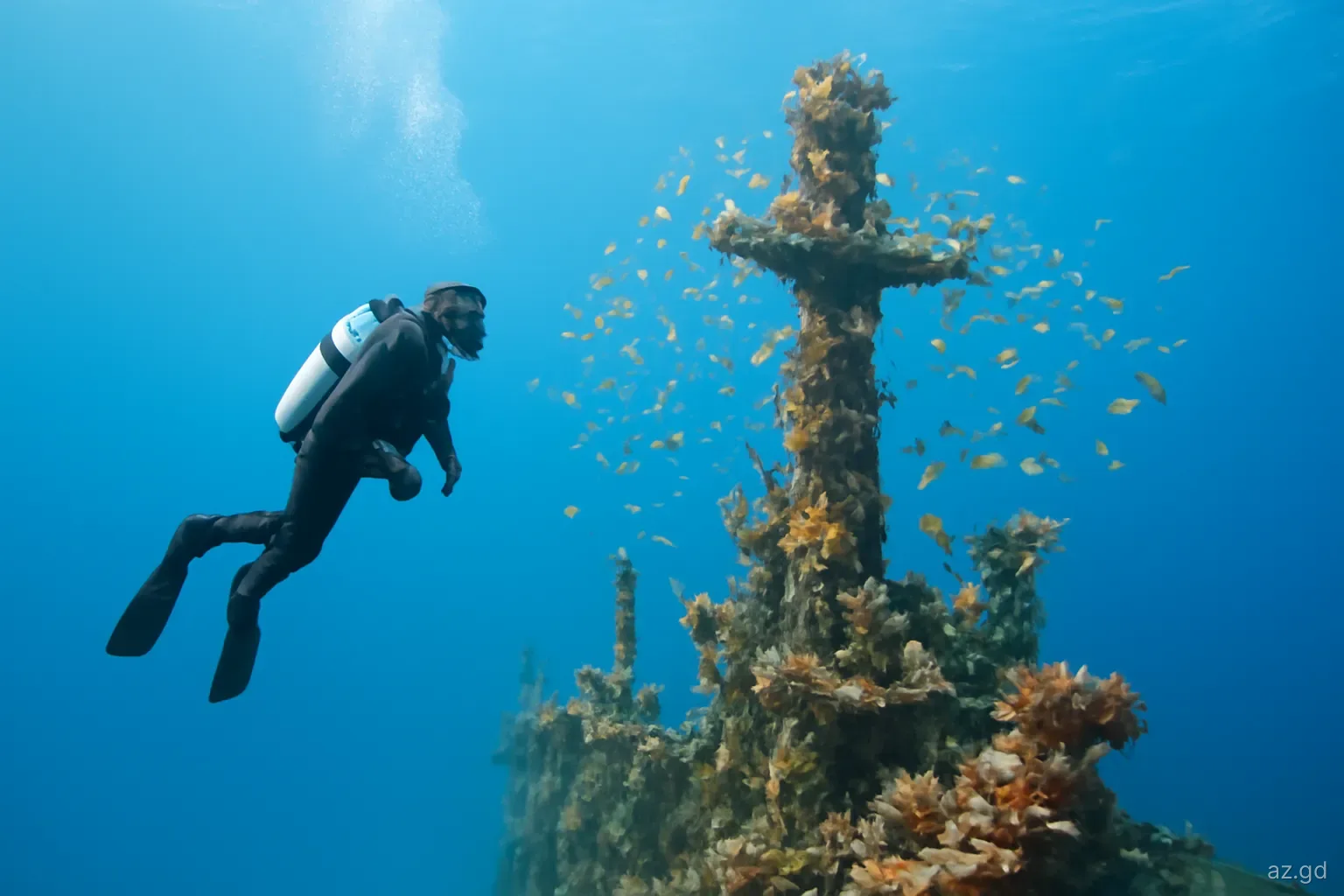
Currents. Drift dives are common, particularly on the Bianca C, Atlantic-side wrecks and Carriacou's Sisters Rocks. Stay with the guide, carry a marker and know your ascent procedure.
Boat traffic. Water taxis, fishing boats and yachts cross many sites. Always ascend under a marker or along the boat's line, and listen for engines before surfacing.
Marine life. Lionfish, fire coral, sea urchins and the occasional scorpionfish cause most injuries. Keep hands off the reef and wrecks.
Marine park rules and fees, in order
Several dive areas, including Molinere-Beausejour on the main island and the Sandy Island Oyster Bed area in Carriacou, are marine protected areas managed under the Fisheries Division. The rules are similar across both.
- Confirm with your operator which of the day's sites are inside a protected area, and which fees are included in the price.
- For Molinere-Beausejour, an entry fee per person per visit has applied since May 2025, collected through the Grenada Tourism Authority portal or by operators; it was scheduled to rise in October 2026 and again in October 2027.
- Carry cash for Carriacou, where park staff may collect fees directly.
- Do not touch, collect, feed or chase anything. Spearfishing and fishing are prohibited or restricted inside the reserves.
- Private boats use moorings, not anchors, inside the protected areas.
- Report damaged moorings, ghost nets or injured animals to your operator, who can pass them to the park managers.
Flying after diving from Grenada
International flights from Maurice Bishop International Airport are the last part of most dive trips, and they are where people cut corners. The standard recommendation is a minimum surface interval of 12 hours after a single no-decompression dive and 18 hours after repetitive dives or multiple days of diving. Longer is better, especially after deep wrecks.
Plan the trip backwards from the flight: if you fly out at midday, your last dive should be no later than the morning of the day before, and ideally a shallow one. The short inter-island flight between Grenada and Carriacou flies low but still involves a pressure change, so many divers prefer the ferry after diving in Carriacou.
A non-diving final day is rarely wasted in Grenada. It is the obvious time for the Grand Etang forest, a spice estate, the market in St George's or simply the beach, and it gives your body time to off-gas before a long flight in a pressurised cabin.
Frequently asked questions
Is there a recompression chamber in Grenada?
A hyperbaric chamber was installed at St Augustine's Medical Services in St George's in 2017. Whether it can treat a given case depends on staffing and maintenance at the time, and some divers have been evacuated to Barbados. Dive insurance with evacuation cover is the reliable safeguard.
What number do you call in an emergency in Grenada?
Dial 911 for police, fire and ambulance. At sea, the Grenada Coast Guard monitors VHF channel 16, which dive boats use to call for help. Also contact your dive insurance emergency line as soon as possible, since it arranges treatment and any evacuation.
Do you need dive insurance to dive in Grenada?
It is not a legal requirement for recreational divers, and some operators do not ask for it. It is strongly recommended because specialist treatment or an air ambulance to another island can cost many thousands of US dollars, which ordinary travel insurance may not cover for diving.
Is it safe to dive near Kick 'em Jenny?
No recreational diving takes place at the volcano, whose summit is far below diving depths. The safety concern is for vessels crossing the area, which must respect the exclusion zone set by the National Disaster Management Agency. Boat operators route around it.
How do you know a dive operator is reputable?
Look for a clear and thorough briefing, emergency oxygen on board, analysed nitrox, well-maintained equipment, sensible group sizes and a willingness to change plans for conditions. Affiliation with a training agency and proper local registration help, and recent reviews from divers of similar experience give a useful picture.