High on Richmond Hill, a short drive inland from central St George's, Fort Frederick looks down on the capital from an angle few visitors expect. From its upper walls you can see the Carenage, Fort George on its headland, the hills of the interior, and on a clear day the south coast as far as Point Salines. It is the best viewpoint in the St George's area that you can reach without a hike.
The fort is also a lesson in eighteenth-century warfare. Its guns point mainly inland, the opposite of what you would expect from a coastal fort, and it formed the centrepiece of a ring of hilltop defences. This guide explains why, what else survives on Richmond Hill, and how to plan a visit.
The fort that faces the wrong way
In July 1779 a French force under the Comte d'Estaing landed on Grenada and took the island from the British, not by bombarding the harbour, but by storming the high ground above it. The lesson was obvious: whoever held the hills held St George's. The French began building Fort Frederick on Richmond Hill that same year to guard against an attack from the landward side, which is why the main batteries face the interior rather than the sea.
The work was not finished when the Treaty of Versailles returned Grenada to Britain in 1783, and the British completed it and added further works along the ridge. Its nickname, the backwards fort, comes from that inland-facing design, and guides enjoy pointing out the irony that it was never seriously tested by the attack it was built to repel.
The choice of site also reflects the island's geography. Richmond Hill sits on the ridge that runs inland from St George's towards the mountains, overlooking the valleys an army would use to approach the town from the east and south. Guns here could cover those routes and, at longer range, the harbour itself, so a garrison on the hill could hold out even if the town below fell. It was a sound plan on paper; in practice, disease killed far more soldiers in Caribbean garrisons than enemy fire ever did.
The other forts on the ridge
Fort Matthew. An extensive complex a short walk from Fort Frederick. It is more ruined, with extensive vaulted chambers and walls partly overgrown, and is worth a look if it is open and safe to enter.
Fort Lucas and Fort Adolphus. Smaller works that completed the defensive line. They survive in varying condition, and not all are easily accessible or open to the public.
The prison. Richmond Hill Prison, still in use, occupies part of the ridge. It held political detainees under the revolutionary government and, after 1983, those convicted over the October killings. Do not photograph the prison or its staff.
A designed system. Together with Fort George in town, these forts form the St George Fortified System, on UNESCO's World Heritage Tentative List. Seeing them in sequence shows how harbour and hill defences were meant to support each other.
Richmond Hill in 1983
During the crisis of October 1983, Fort Frederick served as a command post for the People's Revolutionary Army, and troops sent from here retook Fort Rupert, now Fort George, on 19 October, when Maurice Bishop and others were executed. When US and Caribbean forces landed on 25 October, aircraft attacked targets around the forts.
On the first day of the intervention, US Navy aircraft mistakenly bombed the mental hospital that stood on Richmond Hill near the forts, killing 18 people, 17 of them patients. It was the single deadliest incident for Grenadian civilians in the fighting. There is no large memorial on the hill, so it is worth knowing the story before you walk the ramparts, and being sensitive if local people raise it.
How to visit
Fort Frederick is easy to reach and does not take long, so it fits into a half day around St George's.
- Getting there. A taxi from the Carenage or the cruise terminal takes around ten to fifteen minutes; agree the fare and waiting time first. Some island tours include the fort. The road up is steep and winding, and walking from town is a hot, demanding climb best left to keen walkers early in the day.
- Entry. A small entrance fee has been charged, listed in recent years at around US$2 (about EC$5). Fees and hours change, so confirm locally and carry EC dollars in small notes.
- Timing. Late afternoon brings softer light over St George's and cooler air. Mornings are also good, before cruise passengers arrive on tours.
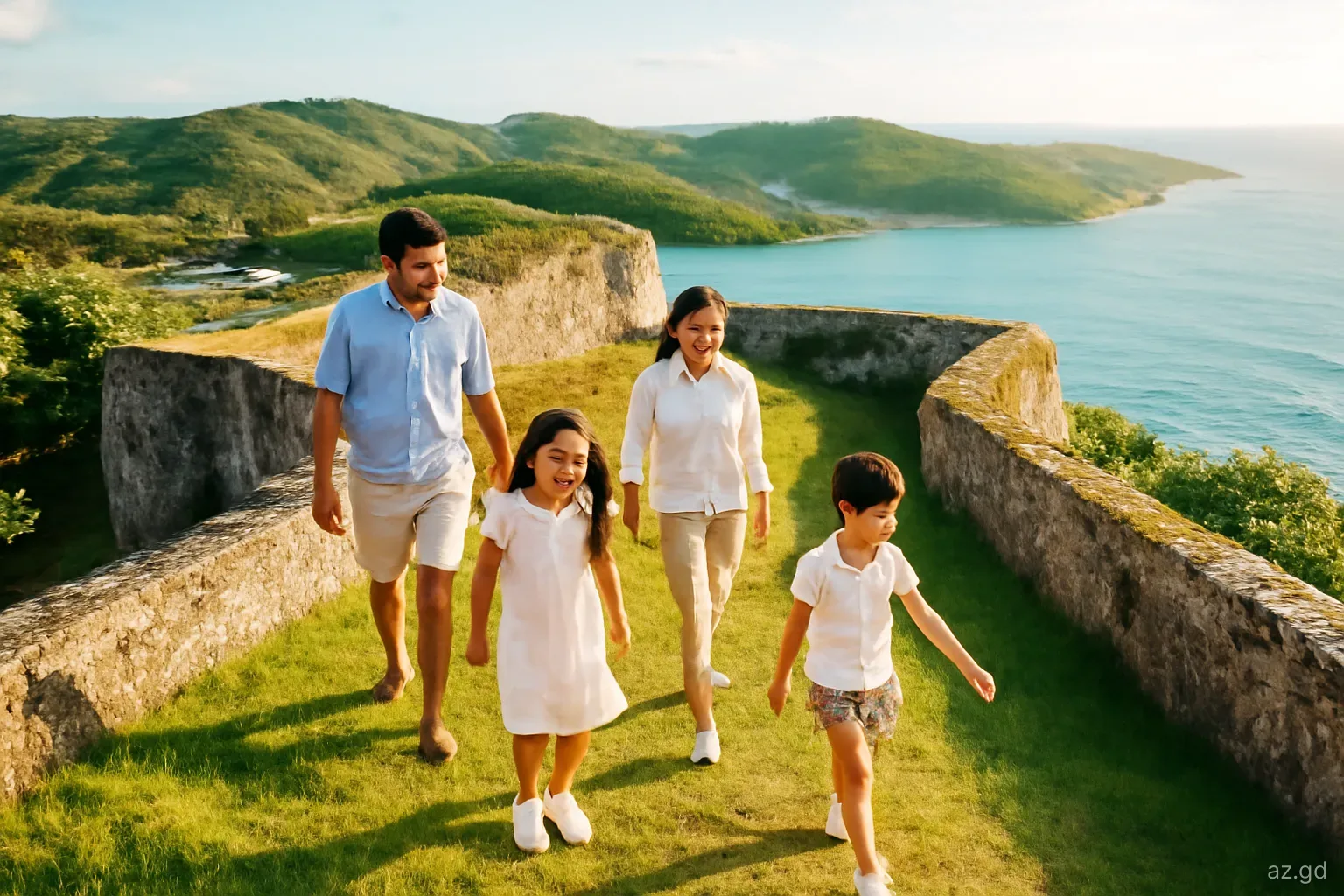
- On site. Allow 30 to 60 minutes. Paths and ramparts are uneven and there are steep drops without rails in places, so keep children close.
- Facilities. Expect few. Bring water, a hat and sun cream; there is little shade on the upper walls.
Reading the stonework
The Richmond Hill forts reward a slow walk. Look for the difference between the dressed stone of corners and gateways, which needed skilled masons, and the rougher rubble fill of the walls, much of it laid by enslaved labourers hired from estates or owned by the colonial government. Vaulted chambers under the ramparts served as magazines, barracks and cisterns; rainwater collection was essential on a hilltop with no spring.
Gun embrasures show where cannon once stood, and their angles reveal what the builders feared: approaches up the valleys and ridges from the interior, not ships in the bay. The French surveyors who planned the works understood St George's geography far better than the British garrison they had defeated in 1779. After the Napoleonic Wars the forts lost their military purpose, and over the following two centuries parts were turned to other uses, including the prison and the hospital, while others slowly decayed.
Common mistakes
Visitors to Richmond Hill tend to slip up in the same ways:
- Mixing up the forts. Fort George is the harbour fort in town; Fort Frederick is the hilltop fort. Taxi drivers know both, but say Richmond Hill to be clear.
- Skipping Fort Matthew. It is less polished but atmospheric, and many visitors never realise it is next door.
- Going in heavy rain. Stone ramparts become slippery, views close in, and vaulted rooms can flood. Choose a drier spell.
- Pointing cameras at the prison. Prison staff take this seriously.
- Leaving it too late. Opening hours are limited and can end mid-afternoon. Arriving near closing time leaves no time for Fort Matthew.
- Expecting a museum. There are few interpretive panels. Read up beforehand or go with a guide who knows the history.
Combining Richmond Hill with nearby sites
From the forts it is a short drive down to the Grenada National Museum on Young Street and the churches of Church Street, so the classic half-day loop is Fort Frederick first, while the light is clear, then the museum (check it has reopened) and Fort George on foot. Annandale Falls and the Grand Etang Forest Reserve lie further up the same general direction inland, so a full-day itinerary can continue into the interior.
For a quieter visit, combine the forts with lunch on the Carenage, where the waterfront restaurants look straight up at Fort George. Photographers who want the classic shot of the Carenage from above should know that Fort Frederick gives a wider panorama, while the walls of Fort George give a closer, more detailed view of the harbour and its boats.
Frequently asked questions
Why do Fort Frederick's guns face inland?
Because the French took Grenada in 1779 by attacking from the hills rather than the sea. They built Fort Frederick to defend St George's against a similar landward assault, so its main batteries point towards the interior.
How much does it cost to visit Fort Frederick?
A small fee has been charged, listed in recent years at about US$2 or EC$5 per person. Prices and opening times change, so confirm on arrival and carry small EC dollar notes.
How do you get to Fort Frederick from St George's?
Take a taxi from the Carenage or cruise terminal, roughly ten to fifteen minutes, or join an island tour. Walking up Richmond Hill is possible but steep and hot, so start early if you do.
Is Fort Matthew open to the public?
Fort Matthew, next to Fort Frederick, has often been accessible, but it is more ruined and its condition varies. Check locally before entering and take care in the vaulted rooms and around unguarded edges.
What happened at Richmond Hill in 1983?
Fort Frederick was a command post for the revolutionary army in October 1983. During the intervention, US aircraft mistakenly bombed the mental hospital on Richmond Hill, killing 18 people, mostly patients.
Is Fort Frederick suitable for children?
Yes, with supervision. Children usually enjoy the cannon and ramparts, but there are steep drops without railings and uneven surfaces. Bring water and sun protection, and avoid visiting in heavy rain.