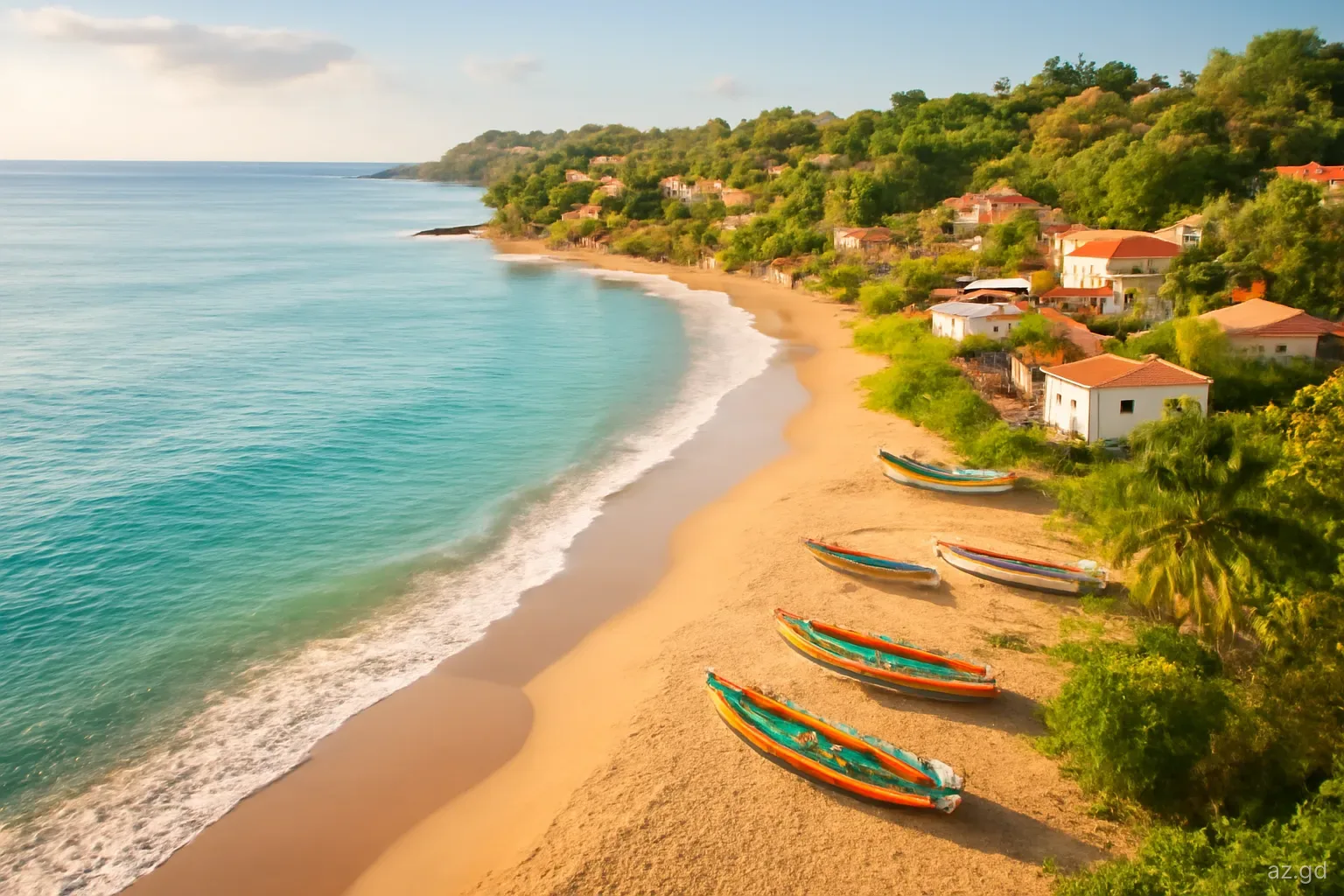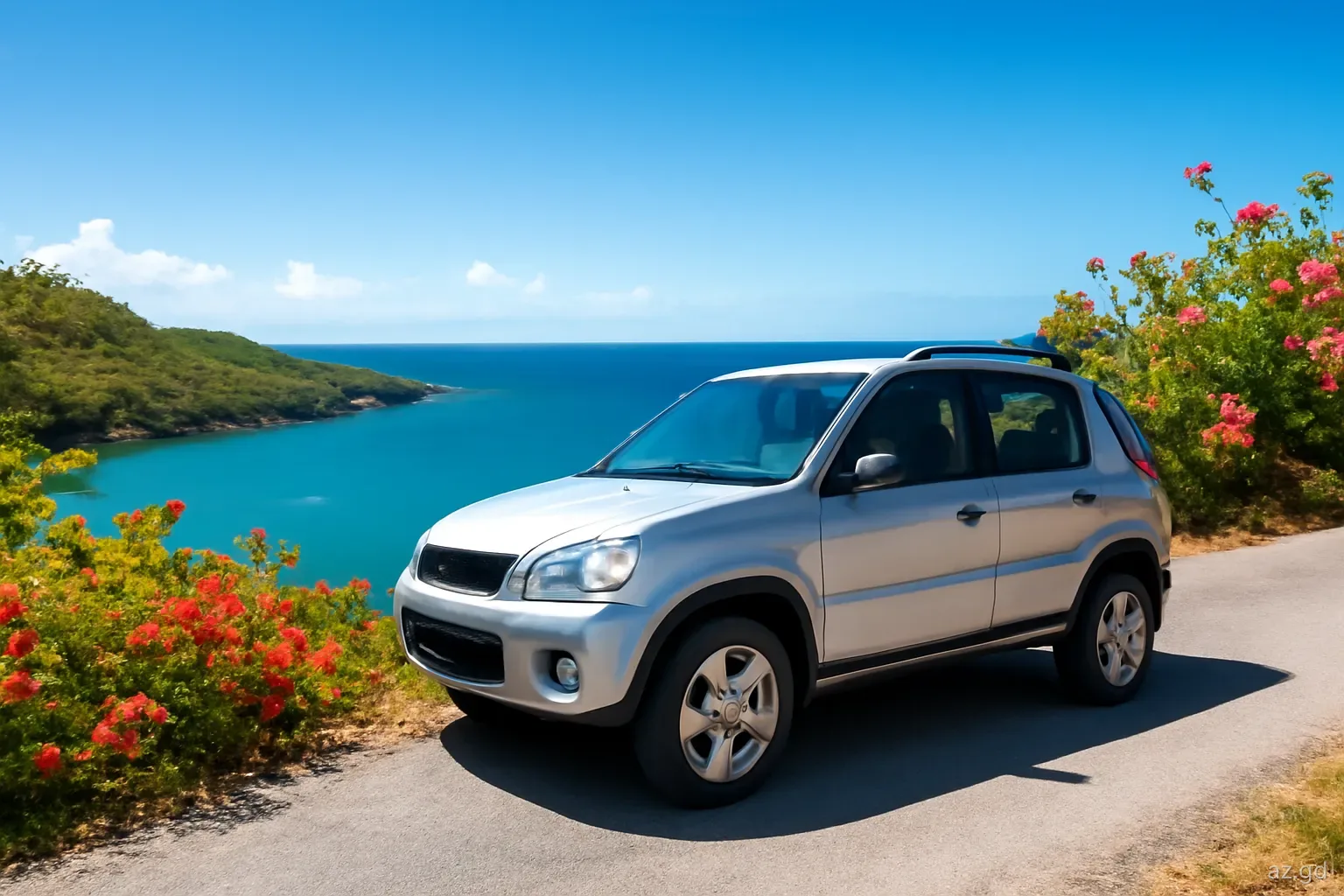
There is no single best way to get around Grenada. A couple staying on Grand Anse Beach for a week of swimming and dinners nearby might not need a car at all, while a family in a hillside villa above Westerhall will struggle without one. Budget travellers can reach almost anywhere on route buses for a few EC dollars, and first-time visitors who want to see the island without driving on the left often find a guided tour the most relaxing option.
The right choice depends on where you stay, what you plan to do and how comfortable you are on narrow, steep roads. This guide compares the four main options and suggests combinations that work for different kinds of trip.
The four options compared
Route buses. The cheapest way to travel, with fares of a few EC dollars set by the government. Frequent on the main corridors during the day, especially between St George's and Grand Anse, but thin in the evenings, on Sundays and in rural areas. Best for confident, flexible travellers with light bags.
Taxis. Convenient and relaxed, with drivers who know the island and can double as guides. Fares are agreed in advance, and short trips around the south-west are reasonable, but costs add up quickly for longer journeys or frequent use. Ideal for airport transfers, evenings out and occasional trips.
Hire cars. Freedom to explore at your own pace, and good value for families or groups making several trips. Rates have commonly been in the region of US$50–75 a day, plus the temporary driving permit, insurance extras and fuel. Driving is demanding, especially at night and in the mountains.
Guided tours. Island tours by taxi, minibus or specialist operator take care of the logistics and add commentary. They suit first-time visitors and those who would rather not drive. Less flexible than a car and more expensive per day than a bus, but efficient.
Where you stay makes the biggest difference
Grand Anse, Morne Rouge and the area around the airport and True Blue are the easiest bases without a car. Hotels, restaurants, supermarkets and beaches are within walking distance or a short Zone 1 bus ride, and taxis are plentiful. St George's is a short bus or water taxi ride away.
Lance aux Epines and the nearby south-coast peninsulas are quieter and more spread out. Some areas are walkable, but many guests use taxis for evenings out and a hire car for exploring. Bus services are less frequent than on the main Grand Anse corridor.
Villas in the hills, on the south-east peninsulas such as Westerhall and Egmont, or in rural parishes are best with a car. Steep roads, limited bus services and the lack of taxis waiting nearby make daily life without one awkward. A four-wheel-drive is often recommended for steep driveways.
In Carriacou, minibuses and taxis serve the main roads, and many visitors hire a car or scooter for a few days. Hillsborough, Tyrrel Bay and Paradise Beach are the main hubs.
Rough costs to compare
All figures are broad indications and change over time. Confirm current rates locally. At the fixed rate, EC$2.70 equals US$1.
- Route bus: a few EC dollars per trip on short routes, more for longer journeys to the north or east.
- Taxi: short trips around the south-west commonly in the region of US$15–30 per car; more for longer distances, late at night and for waiting time.
- Taxi island tour: priced per vehicle for a half or full day, depending on the itinerary and group size; entrance fees are usually extra.
- Hire car: commonly around US$50–75 per day, with lower daily rates for longer rentals; add the temporary permit, insurance options and fuel.
- Guided tour: priced per person by operators, including transport and sometimes entrance fees and lunch.
- Water taxi: modest fares per person for the Carenage to Grand Anse crossing; private trips priced per boat.
Combinations that work
Beach-based holiday in Grand Anse. Walk and use Zone 1 buses for short trips, take taxis for evenings, and book one or two island tours to see Grand Etang and the north. No car needed.
Active week of exploring. Hire a car for three or four days in the middle of your stay for road trips, hikes and beaches, and use taxis for airport transfers.
Family in a hillside villa. Hire a car, ideally a compact four-wheel-drive, for the whole stay. Use taxis for nights out so nobody has to drive after dinner.
Budget traveller. Use route buses for almost everything, combine them with walking, and allow for the occasional taxi when buses stop in the evening.
Cruise passengers. Walk around St George's, take a bus, taxi or water taxi to Grand Anse, or book a half-day tour with a licensed driver.
When to choose a tour instead of driving
Some of Grenada's highlights are hard to enjoy fully behind the wheel. Driving the Grand Etang road demands concentration, leaving little attention for the rainforest views. Hikes to Seven Sisters waterfalls or Mount Qua Qua are best done with a guide who knows the trail and conditions. Spice and chocolate estates, rum distilleries and the fishing towns of the west coast all have stories that a good guide brings to life.
A guided tour also removes the stress of navigating unfamiliar roads, finding parking and timing your return before dark. For visitors with only a few days, a well-planned tour can cover more ground than a self-drive day.
Choose licensed operators and agree the itinerary, duration and price beforehand. Ask whether entrance fees and lunch are included, and how many people will be in the group.
Children, older travellers and limited mobility
Route buses are cramped, with high steps and fold-down seats, so they can be difficult for anyone with limited mobility, young children in car seats or travellers with heavy bags. Taxis, particularly the larger minivans, are much easier: drivers help with luggage and can stop close to the door.
Families with young children should think about car seats. Most rental companies can supply them on request, but taxis and buses generally do not. If you need one for taxi trips, bring your own or choose a driver who can provide one.
For travellers with limited mobility, the steep streets of St George's and the uneven paths at waterfalls and forts can be challenging. A taxi or private tour that can drop you close to each sight, combined with a stay in the flatter Grand Anse area, is usually the most comfortable approach. Ask tour operators specifically about walking distances, steps and terrain before booking.
Common mistakes when choosing transport
Hiring a car for the whole stay when it is not needed. If you are staying in Grand Anse and plan mostly beach days, a car may sit unused. Hire one for a few days instead.
Relying on buses in the evening. Services drop sharply after dark. Plan for taxis at night.
Underestimating mountain roads. Drives that look short on the map take longer and are more tiring than expected. Factor this into your choice.
Not booking in peak season. Hire cars and popular tours can sell out at Christmas, Easter and Carnival. Book ahead.
Forgetting about the last ferry or flight. If you are splitting your stay with Carriacou, factor in the ferry or domestic flight schedule. Missing it can cost a night and change your transport plans on both islands.
Frequently asked questions
Do you need a car in Grenada?
Not if you are staying in Grand Anse or near St George's and mainly plan beach days. Buses, taxis and tours cover most needs. If you are staying in a hillside villa or want to explore the island independently, a hire car is very useful.
What is the cheapest way to get around Grenada?
Route buses are by far the cheapest option, with government-set fares of a few EC dollars per trip. They run frequently on main routes during the day, but services thin out in the evenings and on Sundays.
Is it better to take tours or hire a car in Grenada?
It depends on your confidence and plans. Tours suit first-time visitors and those who prefer not to drive mountain roads. A hire car offers flexibility for repeated trips and families. Many visitors combine a tour or two with a few days of car hire.
Can you get around Carriacou without a car?
Yes. Minibuses and taxis serve the main roads between Hillsborough, Tyrrel Bay and other villages, and water taxis run to the nearby islands. Many visitors still hire a car for a day or two to explore at their own pace.
How do you get from Grand Anse to St George's?
Take a Zone 1 route bus, which runs frequently during the day for a few EC dollars, a taxi for about ten to twenty minutes, or a water taxi across the bay from Grand Anse Beach to the Carenage.