Grenada is a small island, but nobody who has driven it would call it easy. The main island rises from sea level to over 800 metres at Mount St Catherine within a few kilometres, and the roads follow the contours: narrow, steep, full of blind bends and lined in many places by deep concrete drains rather than verges. Add route buses that stop without warning, pedestrians walking in the road where there is no pavement, and sudden tropical downpours, and the first hour behind the wheel can be tense.
With some preparation, though, driving is the best way to explore. These are the twelve things that most often surprise visitors, in roughly the order people discover them.
The road itself
1. Traffic keeps to the left. Grenada drives on the left and most cars are right-hand drive. The difficult moments are pulling out of a junction, entering a roundabout, where you give way to traffic from the right, and setting off after a stop, when habit can take you to the wrong side. A note on the dashboard sounds silly and helps.
2. Roads are narrow, and edges are drains. Many roads are barely wide enough for two cars to pass, and instead of a verge there is often a deep, open concrete drain. Dropping a wheel into one is the most common accident for visitors, usually when pulling over for an oncoming bus. Slow right down and pass with care rather than edging towards the side.
3. Hills are steeper than you think. Some roads and many driveways are extremely steep. Use a low gear when going down rather than riding the brakes, and approach the crest of a hill slowly, because you often cannot see what is on the other side.
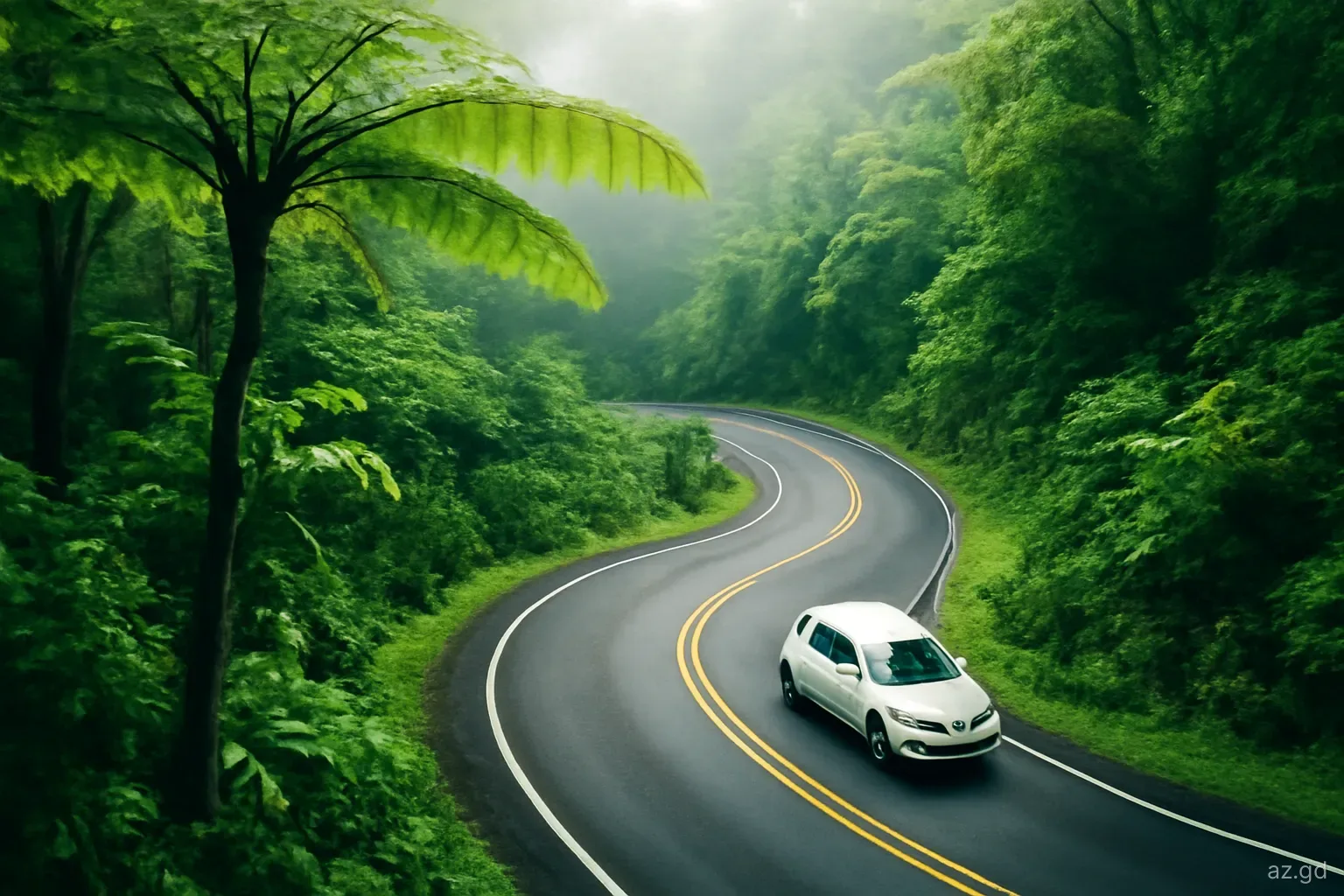
4. Hairpins and blind bends are everywhere. The Grand Etang road and the routes through the hills in St John and St Mark are long sequences of tight bends. Keep well to the left, slow down before the bend rather than in it, and be ready for a vehicle coming the other way in the middle of the road.
Other road users
5. The horn is a greeting and a warning. Grenadian drivers use a short tap of the horn to say hello, to thank someone or, most importantly, to warn of their approach before a blind bend. Do the same. A long angry blast is rare and considered rude.
6. Route buses stop anywhere. Minibuses pull in suddenly to collect or drop passengers, sometimes partially blocking the road. Leave a good gap behind a bus and do not overtake unless you can see well ahead. Buses also overtake quickly; let them go.
7. Pedestrians and animals share the road. In villages and on rural roads without pavements, people walk in the road, children walk to and from school, and dogs, goats, chickens and the occasional cow wander across. Slow down in villages, especially around schools and churches when they empty.
8. Headlight flashes can mean different things. A flash of the headlights from an oncoming driver may mean "go ahead", "coming through, wait" or a warning of something ahead. Do not assume; make eye contact if you can and proceed cautiously.
9. Rain changes everything
Heavy tropical showers can arrive with little warning, especially in the rainy season from June to December, and the interior around Grand Etang gets far more rain than the dry south-west. Roads become slippery quickly, particularly where oil has built up after dry weeks, and visibility can drop to a few metres in a downpour. Slow down, turn on your headlights and, if the rain is very heavy, pull over somewhere safe and wait; showers often pass in ten or fifteen minutes.
After prolonged rain, look out for small landslides, fallen branches and stones on mountain roads, and for water running across the road at dips and at river crossings. Potholes fill with water and become invisible. If a stretch of road is flooded and you cannot see the surface, do not drive through it.
During a tropical storm or hurricane warning, stay off the roads unless you have to travel. The national disaster management agency, NaDMA, issues guidance, and roads can be closed by fallen trees and power lines.
10. Night driving needs extra care
Outside St George's, Grand Anse and a few main roads, most of Grenada is unlit at night. Darkness falls quickly, around six to half past six in the evening year-round, so even an afternoon outing can end with a drive in the dark. Combine unlit roads with open drains, pedestrians in dark clothing and oncoming vehicles with dazzling headlights, and the risks multiply.
If you are new to the island, plan longer drives so you are home before dark, at least for the first few days. When you do drive at night, use dipped headlights in villages, slow down significantly on unfamiliar roads, and watch for people walking on the edge of the road. Weekend nights, when people are returning from events or bars, call for particular caution.
For evenings out in places such as Gouyave on a Friday or the restaurants of the south coast hills, a taxi is often the more relaxing choice.
11. Speed bumps, police checks and the rules
A few practical rules and habits matter in day-to-day driving. Check the details with the rental company or the police, since rules and penalties can change.
- Speed bumps, locally known as sleeping policemen, are common in villages and near schools, and not all are painted or signed. Slow down when entering any built-up area.
- Seat belts should be worn by everyone in the car, and children should be in appropriate restraints.
- Using a hand-held phone while driving is dangerous and can lead to penalties. Use a hands-free system or stop to make calls.
- Drinking and driving is illegal and the police carry out checks, particularly around holidays and Carnival.
- Police may stop vehicles at checkpoints. Carry your home licence, the temporary driving permit and the rental agreement at all times.
- Speed limits are low and roads rarely allow high speeds anyway; follow the posted limits and the pace of local traffic in towns.
- Give way to emergency vehicles and to funeral processions, which often move slowly through villages with cars following; overtaking a procession is considered disrespectful.
12. Parking, St George's and patience
Driving in St George's is a test of patience. The capital is built around a steep, compact harbour, with narrow streets, sharp turns, one-way systems and heavy traffic on weekday mornings, at lunchtime and late afternoon. The Sendall Tunnel, linking the Carenage with the western side of town, is a narrow single-lane passage shared with pedestrians, so wait your turn and watch for people walking through.
Parking spaces in the centre are limited. Using a designated car park and walking is usually quicker than looking for a space near your destination. Never park on yellow lines, in front of driveways or bus stops, or on narrow streets where you block traffic.
Above all, take your time. Grenadian traffic moves at its own pace, and local drivers are generally courteous to visitors who drive calmly and predictably. Pull over to let a faster driver pass on a winding road; a wave of thanks will usually follow.
Frequently asked questions
Is it difficult to drive in Grenada?
It is manageable but demanding. Roads are narrow, steep and winding, with open drains along many edges, and traffic keeps to the left. Most visitors adapt within a day or two if they drive slowly, avoid night driving at first and stay alert for buses and pedestrians.
What should you do if you have a car accident in Grenada?
Make sure everyone is safe, call the police on 911 if anyone is injured or another vehicle is involved, and avoid moving the vehicles until advised. Contact your rental company straight away, take photographs and exchange details with the other driver.
Why do Grenadian drivers honk so often?
A short horn tap is a courtesy: a greeting, a thank you or a warning before a blind bend so oncoming traffic knows you are there. It is rarely aggressive. Visitors are wise to do the same on narrow mountain roads.
Is it safe to drive at night in Grenada?
It is possible, but many roads are unlit, edges have deep drains and pedestrians walk in the road. If you are new to the island, try to finish longer drives before dark, which falls around six to half past six all year.
What is the Grand Etang road like to drive?
It is a scenic but challenging mountain road through the rainforest between St George's and Grenville, with many hairpin bends, steep gradients and frequent rain. Drive slowly, use a low gear on descents and allow extra time, particularly in wet weather.