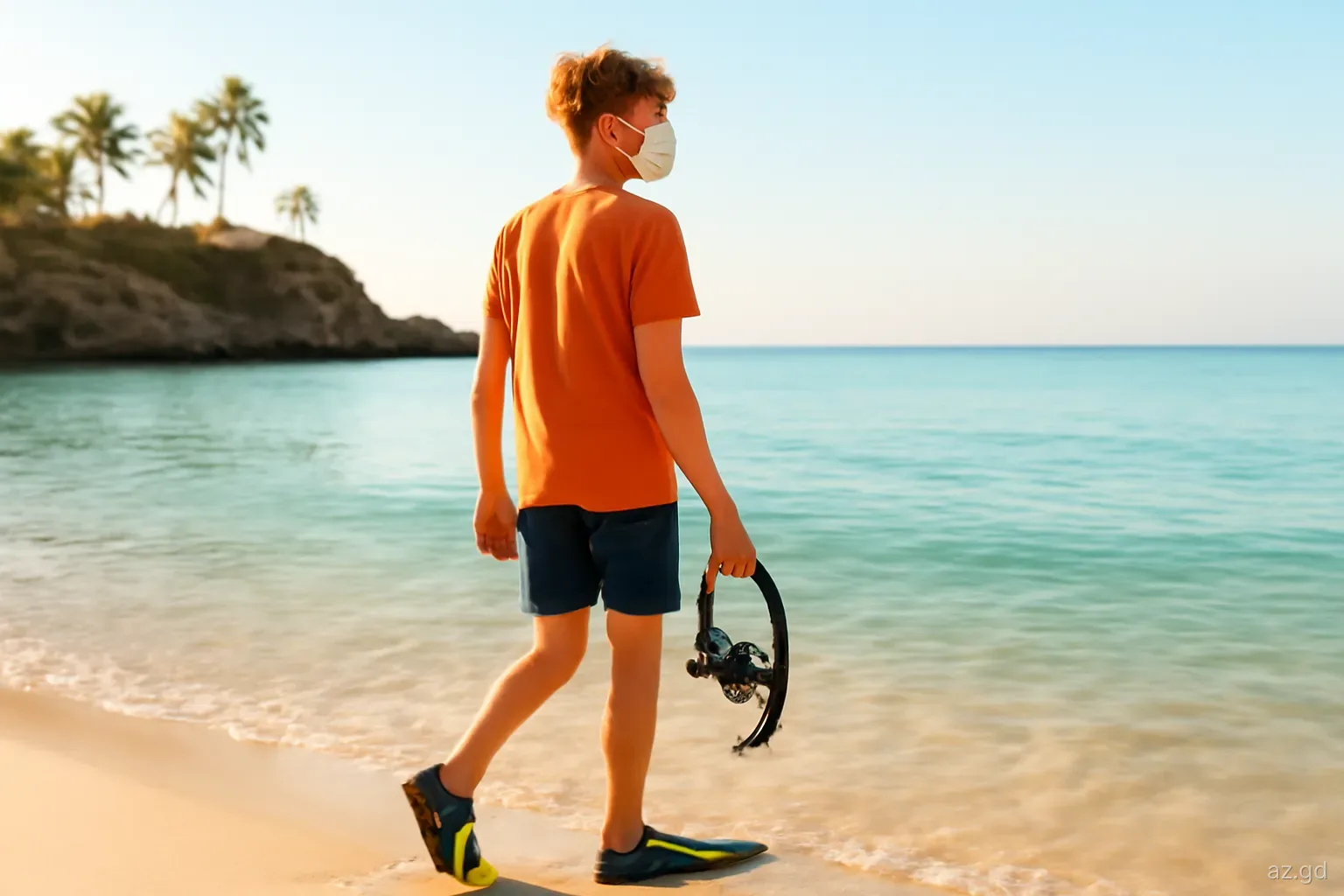
Most of Grenada's showpiece snorkelling, from the sculpture park to Flamingo Bay, is reached by boat. That leaves a common question for visitors staying near the beach without a car or a tour budget: where can you simply walk in with a mask and see something worthwhile?
The honest answer is that shore snorkelling in Grenada is good rather than spectacular, and it rewards knowing exactly which end of which beach to swim from. This page lists the spots that work from the sand on the main island and in Carriacou, what to expect at each, and the conditions and habits that keep you safe.
Main island: the south-west coast
Morne Rouge Bay (BBC Beach). The calm, curved bay just south of Grand Anse is the easiest shore snorkel near the hotels. Swim along the rocks at either end of the beach, especially the southern headland, for reef fish, sergeant majors, parrotfish and the occasional octopus. The middle of the bay is mostly sand and seagrass, which is where you may meet a turtle feeding.
Grand Anse, northern and southern ends. The long main beach is largely sand underfoot, but the rocky stretches towards the ends hold small fish and coral. Water taxis and jet skis use the bay, so stay close to the shore and visible.
Magazine Beach and Pink Gin. Near the airport on the Point Salines peninsula, these beaches face open water and can have more swell, but on calm days the rocky edges have fish life. Check the sea before going in; this coast catches the wind more than Morne Rouge.
Dragon Bay and the Molinere coast. North of St George's, the reef here is among the best on the island, but it lies inside the Molinere-Beausejour Marine Protected Area and shore access is limited. Most people visit by boat; if you reach it from land, the protected-area rules and fees apply.
Carriacou and its islets
Paradise Beach (L'Esterre Bay). A long, calm, sandy beach on Carriacou's west side with seagrass and patch reef offshore. Gentle conditions make it good for beginners and children, and turtles and rays are seen over the grass.
Anse La Roche. A secluded bay on the north-west coast reached by a walking trail through the Anse La Roche area or by water taxi. The rocky edges have good fish life, and the bay is quiet, but there are no facilities: bring water and leave nothing behind.
White Island. A tiny islet off Carriacou's south coast reached by water taxi from Hillsborough, Windward or Tyrrel Bay. The reef along the island's edge is one of the better snorkels in the whole country when the sea is calm.
Sandy Island. The sandbar island off Hillsborough sits within the Sandy Island Oyster Bed Marine Protected Area. It is reached by water taxi, and the reef on the sheltered side is snorkelled from the beach. Fees are collected for the protected area; carry some cash.
What you will see, and what you will not
Expect the common Caribbean cast: blue tangs, parrotfish, sergeant majors, French and grey angelfish, trumpetfish, squirrelfish, and on the seagrass, conch and the odd hawksbill or green turtle. Spotted eagle rays sometimes pass over the sand on the outer edges of bays. Lionfish, an invasive species, are present and should not be touched; their spines are venomous.
Much of the shallow coral along the coasts was damaged by hurricanes Ivan and Emily in 2004 and 2005, and by bleaching events since, so do not expect walls of hard coral close to shore. The livelier reef is often a little further out or deeper. If you want the best Grenada has, the boat trips to Molinere, Flamingo Bay and Carriacou's islets are worth the money.
Visibility from the shore is usually best in the dry season and on calm mornings. After heavy rain, rivers and gullies carry sediment into the bays and the water turns cloudy for a day or two. The Atlantic coast beaches on the east side are rougher and generally poor for snorkelling despite their beauty.
Night snorkelling is possible at calm spots like Morne Rouge with a good torch and a partner, and brings out octopus, lobster and sleeping parrotfish. Do it only somewhere you have already swum in daylight, and tell someone ashore your plan.
Getting to the spots and what to bring
On the main island, Morne Rouge is a walk of around 15 to 20 minutes over the hill from the southern end of Grand Anse, or a short taxi ride. Grand Anse itself is served by the minibuses running out of St George's along the main road; they stop on request and cost a few EC dollars. Magazine Beach and Pink Gin lie on the Point Salines road near the airport and are easier by taxi or hire car.
In Carriacou, Paradise Beach is reachable by bus or taxi from Hillsborough, and water taxis run from the Hillsborough jetty, Tyrrel Bay and Windward to Sandy Island and White Island. Agree the price and the return pickup time before you leave the jetty, and make sure the driver knows exactly where you are. Water taxi fares are set by negotiation and change, so ask more than one boat if the first quote seems high.
Bring your own mask that seals well, a snorkel, fins, a rash vest, drinking water and cash for small purchases or protected-area fees. Reef shoes help on rocky entries. Leave valuables at your accommodation: beaches like Anse La Roche and White Island have no lockers, no staff and no shade beyond the trees, so an unattended bag on the sand is the only security you have.
Hazards and mistakes on shore snorkels
Shore snorkelling looks easy, which is why most problems come from underestimating it.
- Sea urchins. Black long-spined urchins sit in rocky shallows. Wear fins or reef shoes when entering over rocks, and never put a hand down on the bottom to steady yourself.
- Boat traffic. Water taxis and jet skis cross Grand Anse and the bays of Carriacou. A brightly coloured cap or a small surface float makes you visible.
- Currents off headlands. Water speeds up around points. Swim out against any current so you drift back towards your entry point when tired.
- Sunburn on the back. Face-down snorkellers burn the backs of their legs and shoulders without noticing. A rash vest or a thin wetsuit top solves this.
- Swimming alone. Snorkel with a partner, tell someone ashore where you are going, and avoid deserted beaches on rough days.
- Standing on coral. A tired snorkeller who stands up breaks decades of growth in one step. If you need a rest, float on your back or head for the sand.
A simple routine for a good shore snorkel
A few minutes of preparation on the beach turns a frustrating swim into a good one.
- Pick a calm morning and check how the sea looks from the beach; whitecaps or waves breaking on the rocks mean try another day.
- Spit in your mask or use defog, rinse it, and check it seals before entering.
- Enter over sand, not rocks, and put fins on in waist-deep water.
- Swim slowly along the rocky edge or reef line, not across open sand, and keep a steady distance from the rocks so a wave cannot push you onto them.
- Turn back while you still feel fresh; the return swim is often against the breeze.
- Rinse your gear in fresh water afterwards, and take your rubbish with you.
Frequently asked questions
Can you rent snorkel gear on the beach in Grenada?
On Grand Anse and in some hotels and dive shops you can usually rent or buy masks and fins, but quality varies and supply is not guaranteed at quieter beaches. Bringing your own well-fitting mask and snorkel is the most reliable option, especially for Carriacou.
Is Morne Rouge or Grand Anse better for snorkelling?
Morne Rouge is usually better. The bay is calmer and more enclosed, and the rocky headlands at each end hold more fish within an easy swim. Grand Anse is mainly sand with more boat traffic, though its ends are worth a look on calm days.
Are there jellyfish or dangerous animals?
Small stinging jellyfish and sea lice appear occasionally, more often in warmer months. Sea urchins and fire coral cause more injuries than anything else. Lionfish are venomous but slow and easy to avoid. Sharks near snorkelling beaches are rarely seen and not a realistic concern.
Is shore snorkelling good on the Atlantic coast?
Generally not. Beaches like Bathway, Levera and La Sagesse face the trade winds and can have strong waves and currents. Bathway has a reef-sheltered swimming area, but for snorkelling, the leeward west and south-west coasts and Carriacou are far better.
Do you need a guide for White Island or Sandy Island?
Not usually, but you need a water taxi to get there and back, and it is wise to agree a pickup time before the boat leaves. Snorkel the sheltered side, stay away from boat moorings, and pay the protected-area fee when asked at Sandy Island.