For decades Grenada has been where Caribbean cruisers spend the summer. The island lies at about 12° north, near the southern edge of the Atlantic hurricane belt, and many insurers have treated it as the northern limit of acceptable cover during the season. Every June, hundreds of boats arrive to haul out, take long-term berths or anchor in the south-coast bays until November.
Grenada is not immune, though. Hurricane Ivan devastated the island in September 2004, and Hurricane Beryl struck Carriacou and Petite Martinique as a Category 4 storm in July 2024, wrecking much of the fleet in Tyrrel Bay. The question is not whether Grenada is safe, but which option reduces risk most for your boat, your insurance and your plans. This page sets out the choices honestly.
In brief, there are three broad strategies: haul out ashore in a Grenada yard, stay afloat in a marina or a sheltered hurricane hole, or move south to Trinidad, either for the whole season or when a storm threatens. Each has its own costs, its own insurance implications and its own failure modes, and many owners combine them.
Start with your insurance policy
Your insurer's terms usually decide the options before you do. Many yacht policies define a named-windstorm or hurricane box, a geographic area where the boat must not be during the season, or where cover is reduced or subject to a higher deductible. Historically, Grenada has often sat just south of these limits, which is why it became a summer base, but the lines vary between insurers and have moved after bad seasons.
Read the policy for four things: the exact latitude or area limits and dates; whether the boat must be hauled out, and if so whether tie-downs or specific cradles are required; whether being afloat in a marina or a named hurricane hole is acceptable; and whether a named storm deductible applies. After Beryl, some insurers tightened terms for the southern Caribbean, so do not assume last year's conditions still apply.
Send your insurer the name of the yard or marina and your storm plan in writing, and keep their reply. If you are leaving the boat unattended, check whether the policy requires a named caretaker or regular inspections. Several Grenada yards and independent boat-watch services offer weekly checks, ventilation and post-storm reports for absent owners, for a monthly fee.
Option 1: haul out ashore
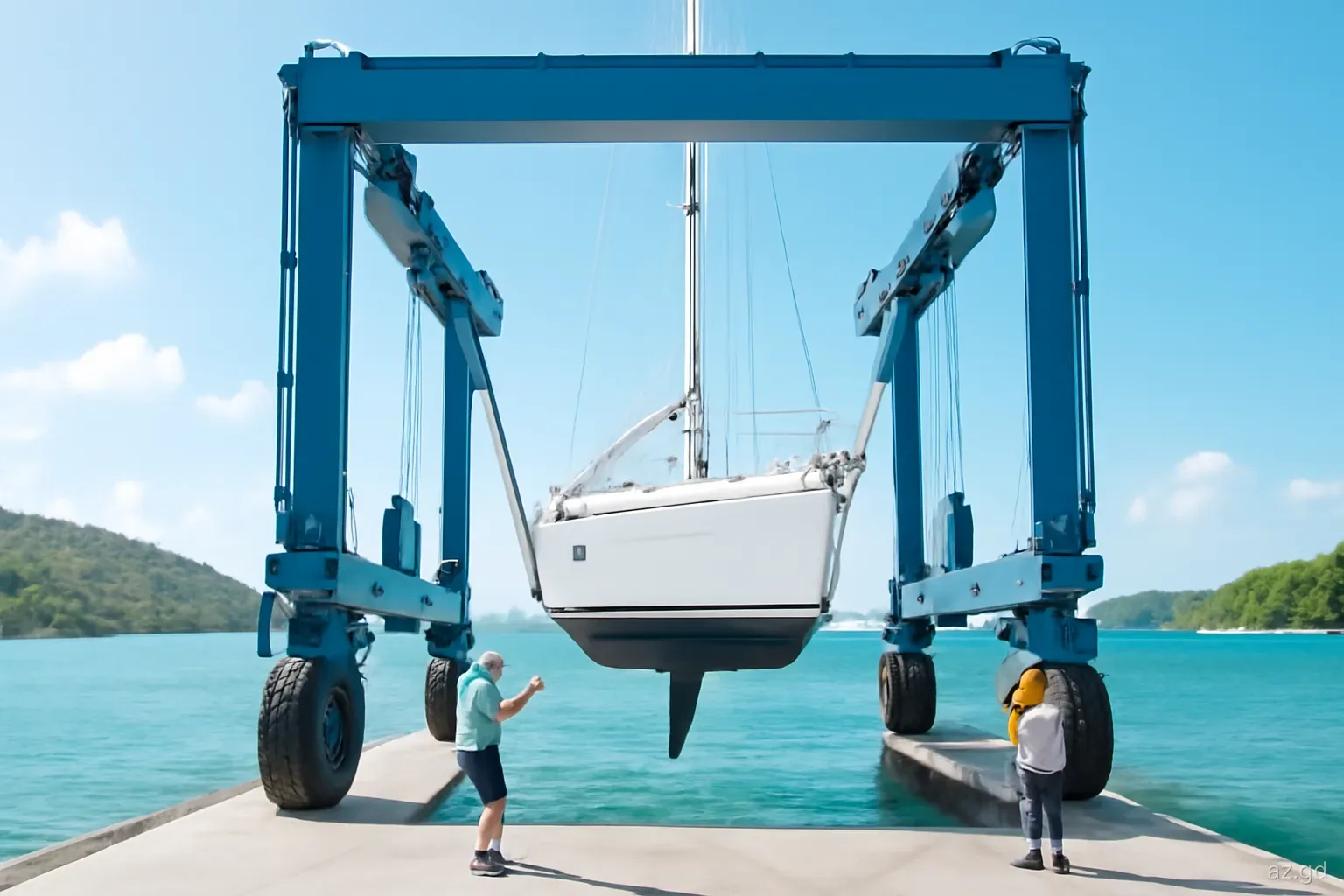
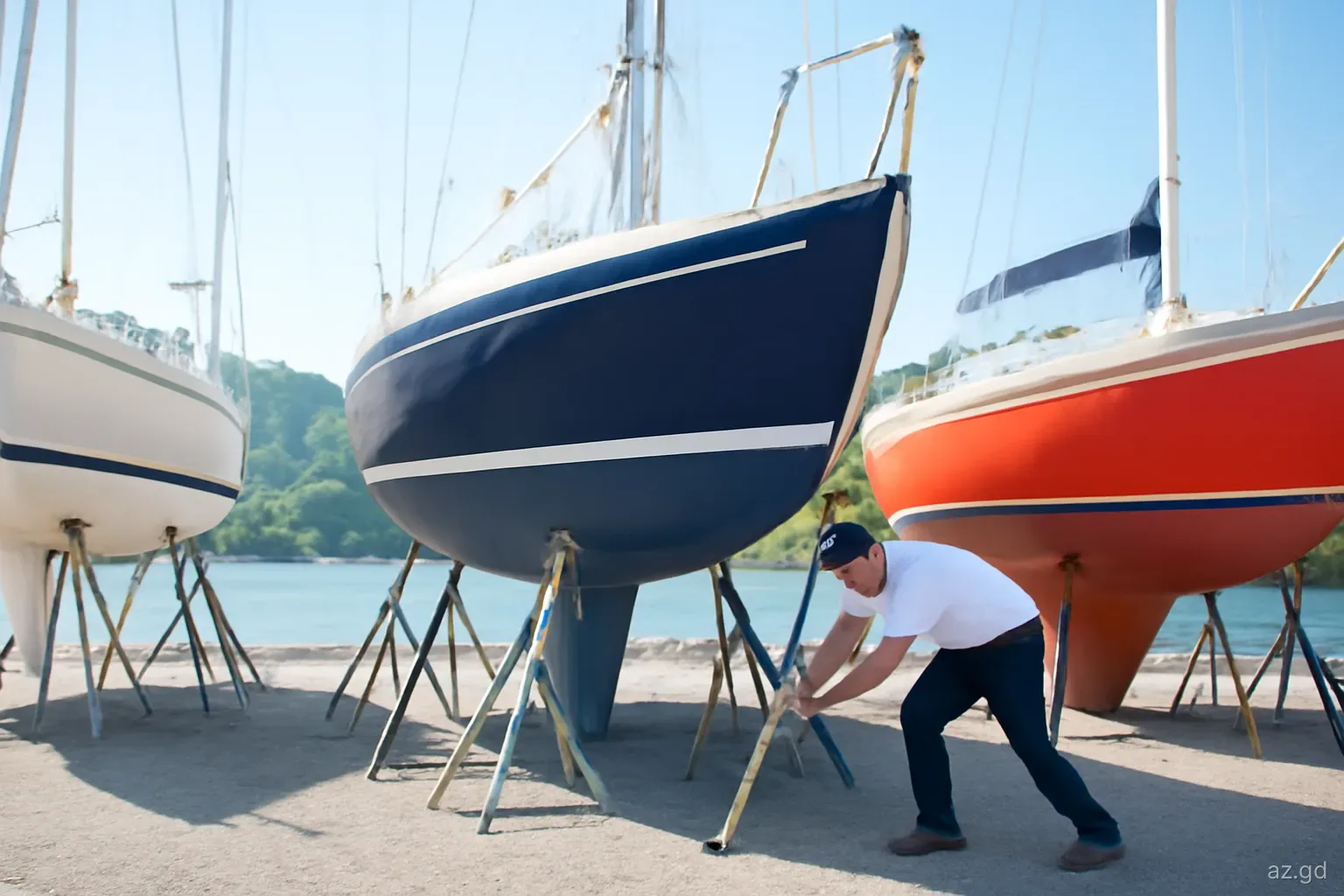
How it works. The boat is lifted out and stored on the hard on stands or cradles. Grenada's main yards, including Spice Island Marine at Prickly Bay, Grenada Marine at St David's and Clarkes Court Boatyard in Woburn Bay, offer storage with tie-downs: straps from the hull to anchors set in the ground, which help stop boats being blown over.
Advantages. Many insurers prefer it, the boat cannot drag or be hit by others at anchor, and you can fly home for the summer. Yards often combine storage with antifouling and maintenance.
Drawbacks. A direct hit can still topple boats, as Beryl did in Carriacou, where monohulls on the hard were thrown down. Storage costs add up over five or six months, and yard space for hurricane season books out early.
What to ask. How boats are supported and strapped, whether masts are removed or left up, how the yard spaces boats, and what happens if a neighbouring boat falls.
Option 2: stay afloat in a marina or a hurricane hole
Marinas. Berths in sheltered marinas such as those in the south-coast bays and the St George's lagoon are popular. Each marina has its own storm plan, and some require boats to leave, double up lines or haul out when a hurricane threatens. Get the plan in writing.
Hurricane holes. Port Egmont, the inner parts of Clarkes Court and Woburn bays, and the mangroves of Tyrrel Bay in Carriacou are traditional storm shelters. In a hole, boats lie to several anchors and lines into the mangroves, ideally with the crew aboard or nearby.
The crowding problem. When a storm approaches, every boat in the area heads for the same few holes. Late arrivals get poor spots, and in a severe storm other boats dragging into yours is the biggest danger. Beryl showed how a crowded mangrove shelter can turn into a tangle of damaged boats.
Who suits this option. Liveaboards who will be present, who can move the boat early, and whose insurers accept it.
Option 3: go south to Trinidad
Trinidad lies about 80 nautical miles south of Grenada, at around 10° north, generally regarded as below the main hurricane track. Chaguaramas, on its north-west peninsula, is a large yachting centre with several boatyards and marinas, and many cruisers either spend the whole season there or run south when a storm threatens Grenada.
The overnight passage is straightforward in settled weather but crosses an area where security incidents against yachts have been reported in the past; cruisers often travel in company and keep informed through local nets and reporting services. Trinidad has its own clearance procedures and fees, and leaving at the last minute before a storm, with the sea already building, is a poor plan. If Trinidad is your storm option, decide your trigger early: for example, a named system forecast to pass within a set distance of Grenada within 72 hours.
Preparing the boat when a storm threatens
Whatever option you choose, the preparation is similar, and it takes longer than people expect. Start as soon as a system is forecast to approach, not when the warning is issued.
- Follow the National Hurricane Center, the Grenada Meteorological Service and the National Disaster Management Agency, and listen to the cruisers' net for local arrangements.
- Remove headsails, mainsails, biminis, dodgers and solar panels or anything else that catches wind.
- Lash the boom, secure halyards away from the mast, and remove or lash down the dinghy and outboard.
- For a boat afloat, set extra anchors or double all mooring lines, add chafe protection at every fairlead, and check that cleats are sound.
- Close seacocks except cockpit drains, charge batteries, and make sure bilge pumps work on battery power.
- Photograph the boat inside and out and store copies of documents and insurance details off the boat.
- If you are leaving, give the yard or marina your contacts, keys and instructions in writing.
- Decide where you will shelter ashore; staying aboard during a major hurricane is extremely dangerous.
Lessons Grenada has learned the hard way
Ivan and Beryl left practical lessons for anyone keeping a boat here in the season.
- Hurricane Ivan in 2004 was the first major hurricane to hit Grenada since Janet in 1955. Half a century without a direct hit had bred complacency.
- Storms can arrive early. Beryl reached Carriacou on 1 July, weeks before most crews expect real risk.
- Boats ashore are not safe by default. Strapping, stand spacing and the condition of neighbouring boats matter.
- Mangrove shelters work best with few boats. Crowded holes amplify damage.
- Recovery takes time: after a hit, yards, hauling equipment, insurance surveyors and spare parts are all in short supply for months.
- Shore infrastructure suffers too. After Beryl, Carriacou's hospital, airport, water and power were all disrupted, so crews who stayed aboard faced a long wait for help and supplies.
- Paperwork matters. Owners with photographs, an inventory, the yard contract and the insurer's written approval of their storm plan had far smoother claims than those without.
Frequently asked questions
Is Grenada outside the hurricane belt?
Not entirely. Grenada lies near the southern edge of the Atlantic hurricane belt and is hit less often than islands further north, but Hurricane Ivan in 2004 and Hurricane Beryl in 2024 caused severe damage. Treat it as lower risk, not no risk.
When is hurricane season in Grenada?
Officially from 1 June to 30 November, with the highest risk usually from August to October. Beryl in early July 2024 showed that powerful storms can arrive early, so preparation should start at the beginning of the season.
Is it better to haul out or stay in the water?
It depends on your insurer, whether you will be present and which yard or shelter you can use. Hauling out with tie-downs is preferred by many insurers and suits owners flying home. Staying afloat in a hole suits liveaboards who can tend the boat. Neither is risk-free in a direct hit.
How far is Trinidad from Grenada by boat?
Roughly 80 nautical miles from Grenada's south coast to Chaguaramas, usually sailed overnight in 12 to 16 hours depending on the boat and conditions. Trinidad is generally considered below the main hurricane track, which is why many cruisers spend the season there.
Do you need to book hurricane-season storage early?
Yes. Yard storage with tie-downs and long-term summer berths in sheltered marinas fill early, often months ahead. Contact yards in the spring, confirm what is included, and get the storm plan and contract in writing before you commit.