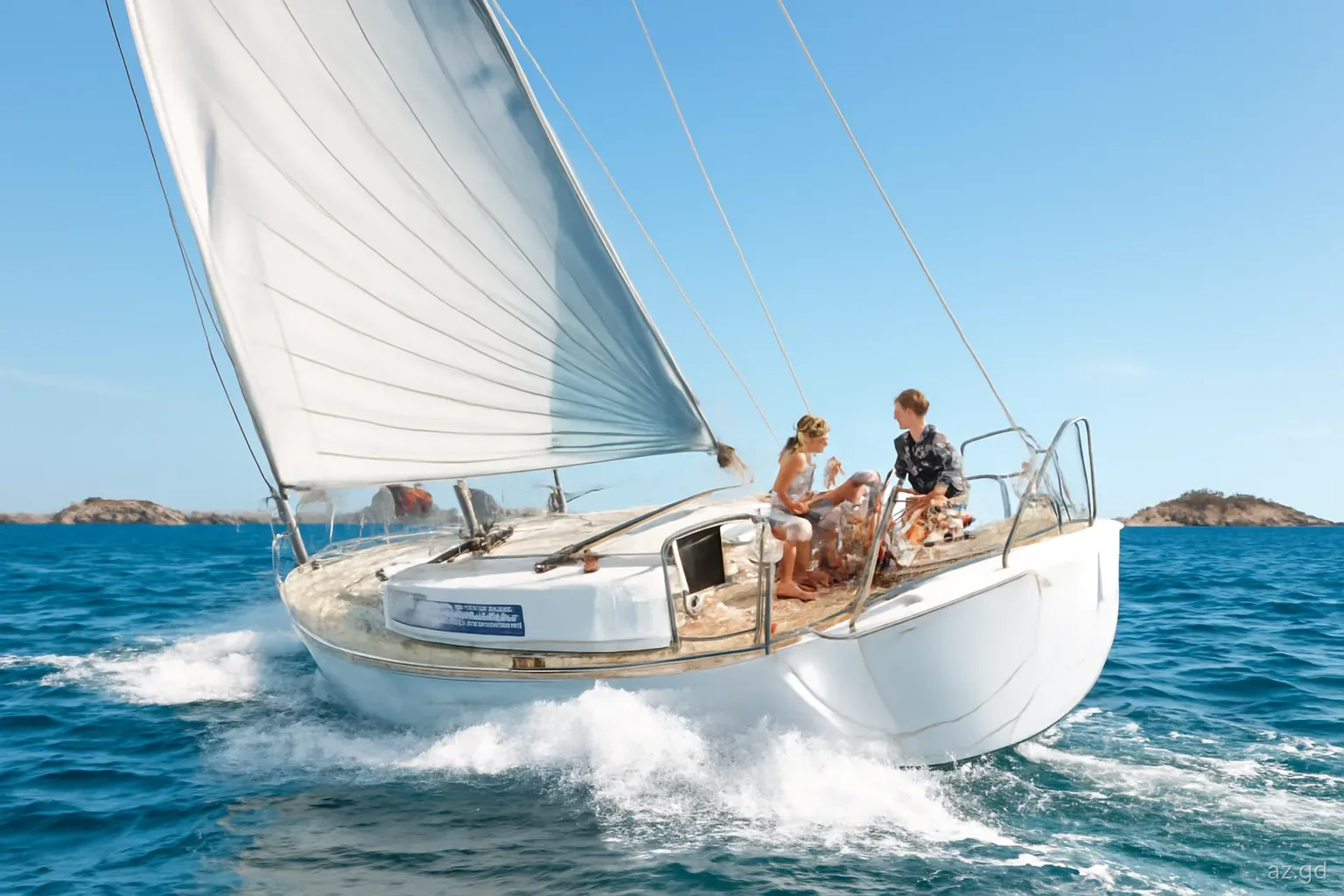
Grenada is the southern gateway to one of the best cruising grounds in the Caribbean. A week from a Grenada base takes you north through Carriacou and Petite Martinique into the St Vincent Grenadines, with short day sails between anchorages, reliable trade winds and some of the clearest water in the region. Because the island lies south of the main hurricane track, charter firms operate here for longer in the year than many northern bases.
The first decision is how much sailing you want to do yourself. This page explains the main types of charter, the qualifications operators expect, the seasons, a realistic one-week route, and the paperwork that comes with crossing between two countries.
One point shapes every Grenada charter: the islands most people want to reach, the Tobago Cays, Mayreau and Bequia, lie in a different country. The route north is also mostly upwind and the return downwind, so the hardest sailing comes at the start of the week. Good planning accepts both facts rather than fighting them.
Bareboat, skippered or crewed
Bareboat. You charter the yacht alone and sail it yourself. It is the cheapest way to have a boat for a week, but the charter company must be satisfied that at least one person aboard, and ideally two, can handle the boat, navigate, anchor and manage the dinghy safely.
Skippered. A bareboat with a professional skipper added for all or part of the trip. The skipper handles navigation, anchoring and local knowledge, and you can sail as much as you like. A good middle ground for less experienced sailors or for the passages north of Grenada, which are more open than island-hopping in the Grenadines.
Crewed. A fully staffed yacht, typically with a captain and a cook or host, all meals and an itinerary shaped around you. The most expensive and least effort, popular with families and groups who want to swim, snorkel and eat well rather than handle lines.
By the cabin. Some operators sell individual cabins on crewed boats sailing set routes. Suitable for couples or solo travellers who do not want to charter a whole yacht.
Day sails. If you have only a day, catamaran trips from Grand Anse and St George's run along the west coast to the sculpture park and nearby bays, and sunset sails are common. They require no experience at all.
What operators expect for a bareboat
There is no single legal licence required to charter in Grenada, but charter companies set their own standards and insurers back them up.
- A sailing résumé showing that the skipper has handled a boat of similar size, with anchoring and night experience a plus.
- A recognised certificate helps and is sometimes required: an RYA Day Skipper or higher, an International Certificate of Competence, or an ASA or US Sailing bareboat certificate.
- A competent second crew member is often expected, so the skipper is not the only person who can bring the boat in.
- A VHF operator's certificate is useful and may be requested.
- A thorough handover briefing at the base before departure is standard; take it seriously and ask about the boat's quirks.
- If the company doubts your experience, it may require a skipper for the first day or for the whole trip.
Seasons and conditions
The main charter season runs from December to May, when the trade winds blow steadily from the east, often 15 to 20 knots and stronger in December and January, and rain is limited. This is also the most expensive period, with Christmas, New Year and Easter at peak rates.
From June to November, winds are lighter and more variable, the weather wetter and warmer, and prices lower. It is hurricane season, and while Grenada and the southern Grenadines are hit less often than islands further north, charter contracts include provisions for storms, and companies may restrict routes or recall boats if a system threatens. Read the cancellation and storm terms before you book.
Sea state matters more than the wind speed itself. The open stretch between Grenada and Carriacou, which passes the Kick 'em Jenny exclusion zone, can be lumpy in the strong trades. Many charterers plan a longer first day to get through it, or start from a Carriacou pick-up.
A realistic one-week route from Grenada
This loop is typical. Distances are short in the Grenadines, but the first leg is long, so allow time for weather.
- Day 1: Handover and provisioning at the base, then a short sail to a south-coast or west-coast anchorage to settle in.
- Day 2: The longest leg, north along the west coast and across to Tyrrel Bay in Carriacou, around 30 to 40 nautical miles depending on the start, staying clear of the volcano zone.
- Day 3: Clear out of Grenada at Tyrrel Bay, sail the short distance to Union Island and clear into St Vincent and the Grenadines at Clifton.
- Day 4: The Tobago Cays Marine Park for turtles and snorkelling, picking up a park mooring and paying the park fee.
- Day 5: Mayreau or Canouan, or further north to Bequia if the crew is keen.
- Day 6: Work back south, clear out of St Vincent and the Grenadines at Union Island and back into Grenada in Carriacou, perhaps stopping at Sandy Island.
- Day 7: Return to Grenada, a downwind passage that is usually easier than the trip north, and hand the boat back.
Choosing a company, a boat and provisions
Several international charter companies and smaller local operators keep boats in Grenada, mostly at Port Louis in St George's and on the south coast. Compare the age of the fleet, what equipment comes as standard (dinghy and outboard size, watermaker, solar, snorkelling gear), the quality of the handover, and how the company handles breakdowns once you are in the Grenadines, far from base.
For a family or group of friends, a catamaran is the usual choice: more living space, shallower draft for anchoring close to beaches, and a level ride. Monohulls are cheaper, sail better upwind on the first leg north and suit crews who want a more traditional sailing experience.
Most companies offer provisioning packages delivered to the boat. Alternatively, the supermarkets in St George's and on the south coast stock everything you need; fresh fruit, vegetables and fish are cheaper and better at markets. Buy bottled water and drinks in bulk before leaving Grenada, since shops in the smaller Grenadines islands are expensive and limited.
Clearance, fees and costs to budget for
Two countries. Grenada and St Vincent and the Grenadines are separate states. Each crossing means clearing out of one and into the other, with fees on both sides. Charter companies usually guide you through the paperwork and may prepare documents in advance.
Park fees. The Tobago Cays and Grenada's protected areas charge per person and for moorings. Keep cash in EC dollars, which both countries use.
Charter price. Bareboat rates depend on yacht size, age and season, from a few thousand US dollars a week for a mid-sized monohull in low season to five figures for a large catamaran at peak times. Crewed charters cost considerably more.
Extras. Expect a security deposit or damage waiver, provisioning, fuel, water, marina nights, skipper or cook fees and gratuities for crew. Ask what is included before comparing quotes.
Frequently asked questions
Do you need a licence to charter a yacht in Grenada?
Grenada has no single mandatory licence for bareboat charterers, but charter companies require proof of experience and often a recognised certificate such as RYA Day Skipper, an ICC or an ASA bareboat qualification. If they are not satisfied, they will require a skipper.
Can you charter one way from Grenada?
Some operators offer one-way charters between Grenada and bases further north, such as St Vincent or St Lucia, for an extra fee. It saves the upwind return but means a longer, more exposed route. Ask operators which one-way options they currently run.
Is the sail from Grenada to the Grenadines difficult?
The first leg, from Grenada across to Carriacou, is the most demanding: open water, trade winds forward of the beam and a westward current. After Carriacou, distances are short. Competent sailors manage it comfortably; less experienced crews often add a skipper for this stretch.
When is the best time to charter from Grenada?
December to May offers steady trade winds and drier weather, with highest prices around the holidays. Late spring is often a good balance of conditions and cost. Summer and autumn bring lighter winds and lower rates but fall within hurricane season.
Do you have to clear customs to visit the Tobago Cays?
Yes. The Tobago Cays belong to St Vincent and the Grenadines, so you clear out of Grenada and into St Vincent and the Grenadines, usually at Clifton on Union Island, before visiting, and reverse the process on the way back.