Grenada's traditional sweets are built from what grows on the island: coconut, cane sugar and molasses, tamarind, guava, ginger and spice. They were made at home and sold by village vendors long before imported confectionery filled the shops, and many are still sold in small bags or paper twists at markets, school gates, bus stops and corner shops.
They are also easy to overlook. Few appear in restaurants, they are often unlabelled, and names such as toolum or sugar cake mean nothing to most visitors. Yet they are among the most distinctive and affordable tastes of the island, and several travel well as gifts.
This guide covers the main sweets and snacks, from toolum to sweet bread, plus a few savoury bites, with notes on where to find them, how they keep and what to know before buying.
Coconut sweets
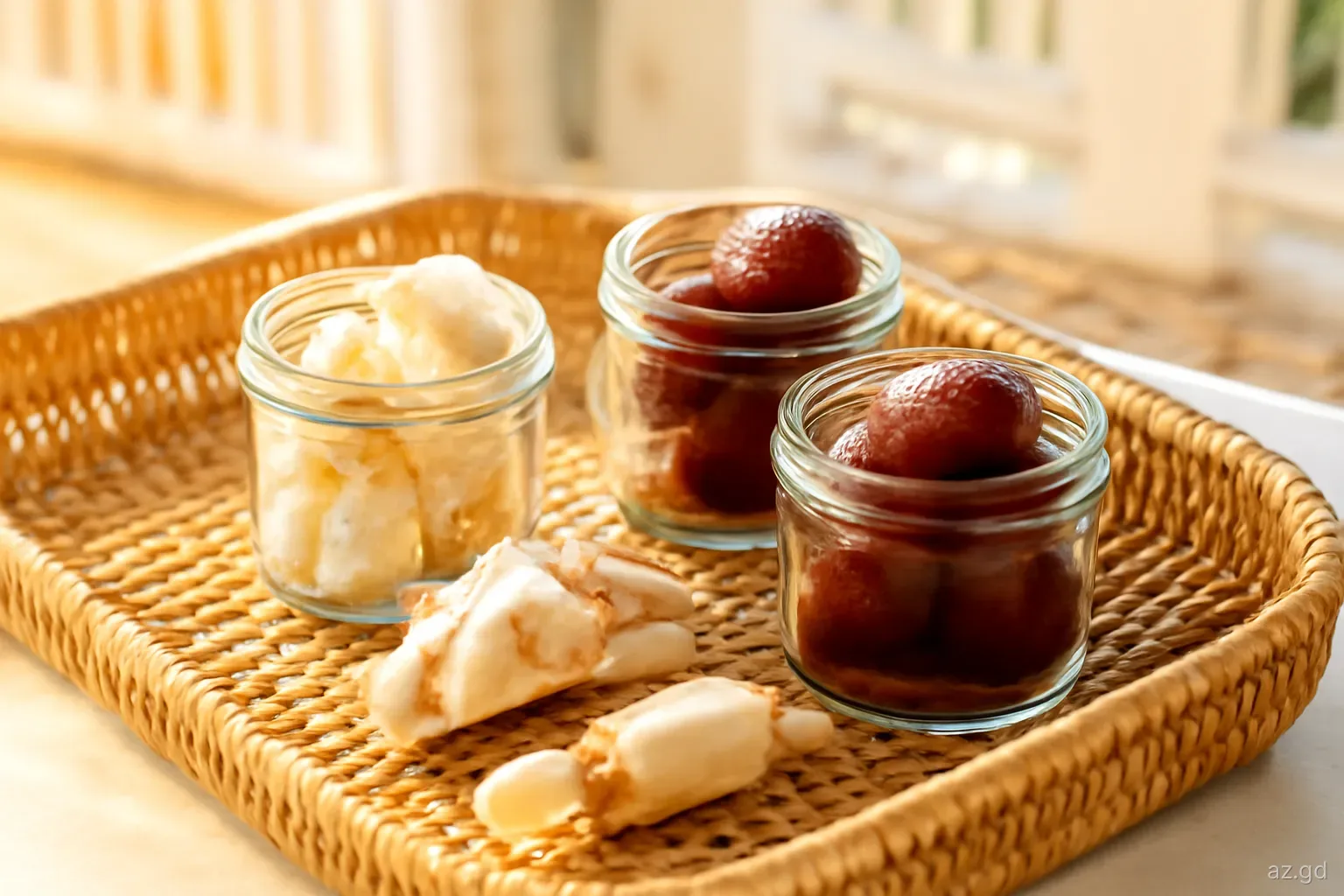
Sugar cake. Grated or finely shredded coconut boiled with sugar until thick, then dropped in small mounds to set. Often coloured pink or left natural. Chewy, very sweet and one of the most common village sweets.
Coconut drops. Small chunks or dice of coconut cooked with brown sugar, ginger and spice, then set in rough mounds. Firmer and more textured than sugar cake, with a warm ginger flavour.
Toolum. A dark, chewy sweet made from grated coconut cooked with molasses or dark sugar and spices such as ginger and nutmeg, rolled into balls. Strongly associated with Grenada and older traditions; less common than it once was, so it is worth buying when you see it.
Coconut fudge and tablets. Fudge-like squares, sometimes flavoured with nutmeg or vanilla, made by home cooks and sold in small packs.
How to judge them. Fresh coconut sweets smell of coconut and spice and are moist, not dry and crumbly. They keep for a few days at room temperature; humidity makes them sticky.
Fruit and spice sweets
Tamarind balls. Tamarind pulp mixed with sugar, sometimes a little pepper, rolled into balls and coated in more sugar. Sour, sweet and sticky; some versions are hot. Watch for seeds left inside.
Guava cheese. A firm, dark, sliceable paste of guava pulp cooked down with sugar, cut into squares and dusted with sugar. Popular at Christmas but available at other times.
Nutmeg sweets and jams. Nutmeg jelly, jam and syrup made from the fleshy outer fruit of the nutmeg are Grenadian specialities, along with candied nutmeg pieces. They are covered in more detail in our spices section.
Candied fruit and preserves. Golden apple, papaya, ginger and citrus peel are candied or preserved by home cooks, especially for Christmas baking.
Ice cream flavours. Local ice cream makers produce flavours such as soursop, guava, coconut, nutmeg and rum and raisin. Homemade ice cream, churned with a hand freezer at family gatherings, is a traditional Sunday treat.
Breads, cakes and Christmas baking
Sweet bread is the everyday cake of Grenada: a dense, lightly sweet loaf made with grated coconut, flour, sugar, butter, spices and often raisins or candied peel. It is sold by the slice or loaf in bakeries and shops, and many families bake it at home. It is eaten with cheese or butter, or with a cup of cocoa tea.
Christmas brings its own baking. Black cake, a dark, rich fruit cake made with dried fruit soaked for weeks in rum and wine, is the centrepiece in many homes and is given as gifts. Sponge cakes, ginger-flavoured bakes and coconut tarts also appear, and sorrel and ginger drinks are made at the same time.
Bakeries in St George's, Grenville and the country towns sell coconut tarts or turnovers, currant rolls and other small pastries that make an easy snack. Prices are low, typically a few EC dollars per item, though they vary and should be checked on the day. These are best eaten fresh, ideally on the day of baking.
Savoury snacks to try alongside
Snack culture in Grenada is not only sweet. These savoury bites are common at bus stops, schools, events and beach bars:
- Accra. Saltfish fritters made from flaked salted cod in a seasoned batter, fried until crisp. A breakfast and snack staple.
- Fish cakes. Similar to accra, sometimes made with fresh fish, often sold at events and rum shops.
- Kurma. An Indian-origin snack of fried dough sticks coated in sugar, sometimes flavoured with ginger. Crunchy and sold in small bags.
- Plantain and breadfruit chips. Thin, crisp slices, sold in packets made by local producers.
- Roasted peanuts and channa. Sold in twists at bus stops, cricket matches and events.
- Corn on the cob. Roasted or boiled corn sold at street events, festivals and beaches.
Where to buy, and carrying them home
Traditional sweets are sold at Market Square in St George's, especially on Saturdays, at the Grenville market, at craft and spice stalls near the cruise terminal, at roadside stands and in small corner shops. Vendors at school gates sell sweets in the afternoon. Supermarkets stock packaged versions made by small local producers, often with labels showing the maker and a date, which is useful if you are buying gifts.
For travel, choose packaged, sealed products with a production date. Toolum, sugar cake and coconut drops keep for a few days; guava cheese and tamarind balls last longer if kept dry. Wrap them well so they do not stick together in the heat, and pack them in hand luggage if possible rather than leaving them in a hot car or checked bag.
Sweets and confectionery are generally allowed into the United States, United Kingdom, Canada and the European Union for personal use, but rules on foods containing meat or dairy and on fresh produce are stricter. Declare food items if your destination asks, and check the official guidance of the country concerned before travelling.
Making sugar cake at home
Sugar cake is one of the easiest Grenadian sweets to make in a holiday kitchen, and dry coconuts are sold at every market. A basic method:
- Crack a dry coconut, remove the flesh and grate it finely; one coconut gives roughly two cups.
- Put about a cup and a half of sugar in a heavy pot with a little water, and a few drops of food colouring if you want the traditional pink.
- Add the grated coconut, a pinch of salt and a little grated ginger or nutmeg, and stir over medium heat.
- Keep stirring as the mixture thickens and starts to pull away from the sides of the pot, usually 15–25 minutes. Do not leave it, as sugar burns quickly.
- Drop spoonfuls onto a greased tray or banana leaf and leave to cool and set. Store in a sealed tin and eat within a few days.
Things to know before buying
Most Grenadian sweets are simple homemade products sold informally, often without ingredient lists, so a few practical points help:
- They are very sweet. Buy small quantities first; sugar cake and tamarind balls are intense.
- Check tamarind balls for seeds. Bite carefully.
- Ask about pepper. Some tamarind balls contain hot pepper. Ask if you want to avoid heat.
- Buy fresh. Ask the vendor when items were made. Coconut sweets taste best within a day or two.
- Carry small notes. Vendors often sell items for a few EC dollars and may not have change for large bills.
- Keep away from ants. Store sweets in sealed containers in holiday accommodation; ants find sugar quickly in the tropics.
- Ask about nuts and allergens. Homemade sweets rarely carry ingredient lists. Peanuts, dairy and wheat are common, so ask the maker if you have an allergy.
Frequently asked questions
What is toolum?
Toolum is a traditional Grenadian sweet made from grated coconut cooked with molasses or dark sugar and spices such as ginger, then rolled into chewy balls. It is less common than it once was but can still be found at markets, village shops and from home cooks.
What is the difference between sugar cake and coconut drops?
Sugar cake is made from finely grated coconut boiled with sugar and set into soft, chewy mounds, often coloured pink. Coconut drops use diced coconut cooked with brown sugar and ginger, giving a chunkier, firmer and spicier sweet.
Where can visitors buy Grenadian sweets?
Market Square in St George's, the Grenville market, craft stalls near the cruise terminal, roadside vendors and corner shops all sell traditional sweets. Supermarkets stock packaged versions from local producers, which are convenient for gifts because they are sealed and dated.
What is Grenadian sweet bread?
Sweet bread is a dense, lightly sweet loaf made with grated coconut, flour, sugar, butter and spices, often with raisins or candied peel. It is sold in bakeries and shops and eaten with cheese, butter or a cup of cocoa tea.
Can Grenadian sweets be taken home?
Generally yes for personal use, as sweets and confectionery are usually permitted by major destination countries. Choose sealed, dated products, pack them well to cope with heat, and declare food items if required. Check your destination country's official guidance before travelling.