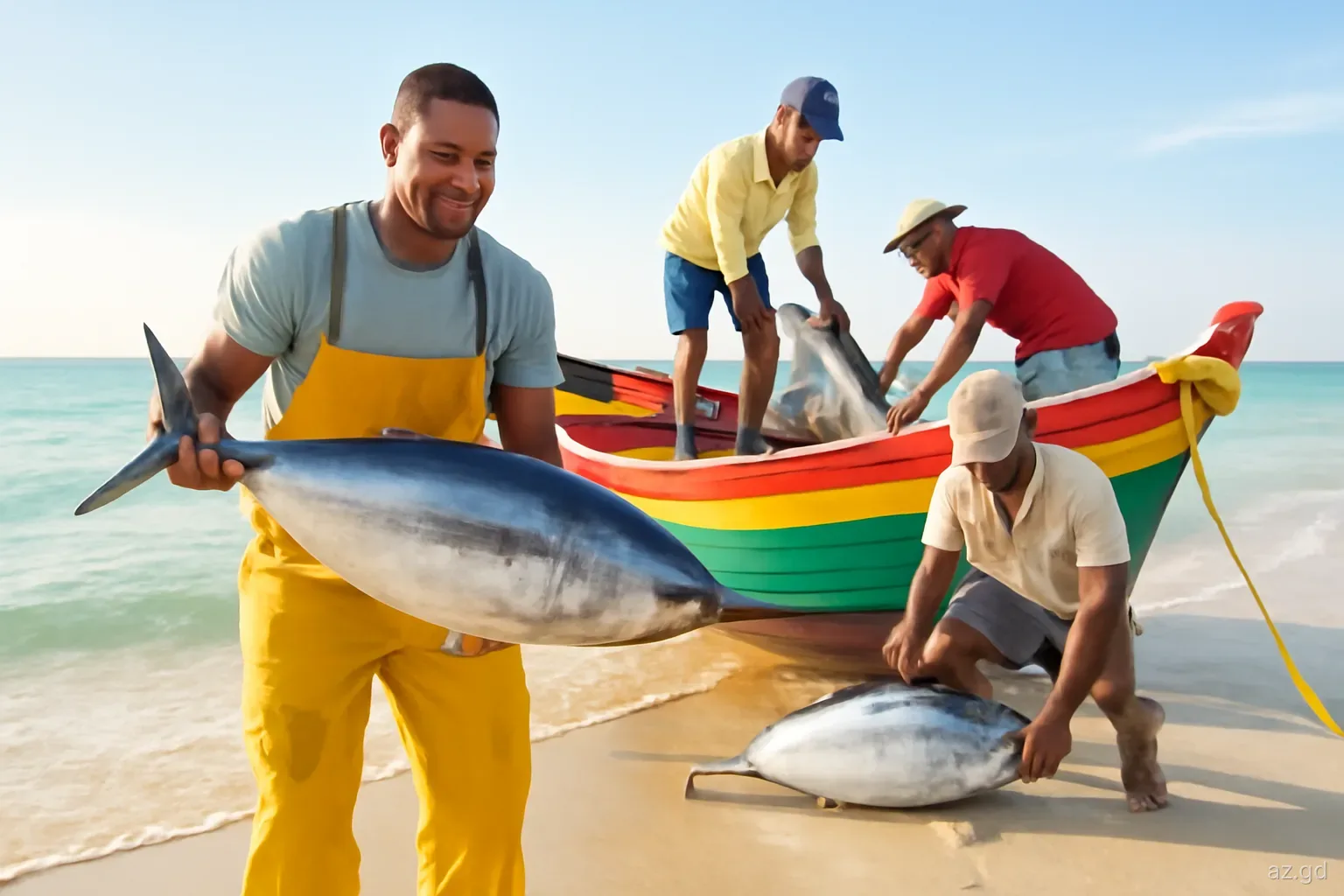
Grenada eats a great deal of fish, and much of it reaches the table within hours of landing. The everyday catch of tuna, mahi mahi, kingfish, jacks and snapper is fried, stewed, grilled and made into broth across the island. Alongside it sit dishes that are more particular to Grenada and its neighbours: curried lambi, tiny titiri made into fritters, sea eggs scooped from urchins, and lobster in season.
Some of these are seasonal, some are protected by closed seasons, and some go by names that mean nothing outside the Caribbean. A plate described as "dolphin" is a fish, not a mammal; "lambi" is conch; and "titiri" are fish no bigger than a fingernail.
This guide explains the main seafood dishes, how they are cooked, when they are available and what to check before ordering.
The everyday catch and how it is cooked
Grenada's fishing fleet is made up largely of small open boats working from beaches and jetties around the island, with Gouyave on the west coast the best-known fishing town. Pelagic fish such as yellowfin tuna, mahi mahi (called "dolphin" locally), kingfish and wahoo are caught offshore, while jacks, snapper, grouper and other reef fish are landed closer in. Jacks, a small oily fish caught in large numbers off the west coast, are a staple in many homes.
At home and in local eateries fish is most often seasoned with lime, garlic, chive, thyme and pepper, then fried, grilled or cooked in a tomato-based sauce called stew or "creole" style. Fish broth, a light soup of fish heads or pieces with dumplings, provisions and herbs, is a popular lunch and is considered restorative. Saltfish (dried salted cod, imported) is a separate tradition, eaten at breakfast with bakes or made into accra fritters.
Whole fried fish is common, so expect bones; ask for a fillet if you prefer. Fish is usually sold by the pound at landing sites and markets, with prices that change daily with the catch.
Self-caterers can buy direct. The fish market on Melville Street in St George's, the market in Gouyave and landing beaches around the island sell fish as boats come in, usually from early morning, and vendors will scale, gut and cut it for you if asked. Arrive early for the best choice; by midday the popular fish have often gone. Look for clear eyes, red gills and firm flesh, and keep fish cold on the way home — a cool bag with ice is worth carrying in a hire car.
Lambi: Grenada's conch
What it is. Lambi is the local name for queen conch, the large sea snail with a pink-lipped shell. The firm white meat is removed from the shell, cleaned and trimmed.
Tenderising. Conch is very tough unless prepared well. Cooks pound it with a mallet or the back of a pot, slice it thinly, or pressure-cook it. Undercooked or badly prepared lambi is like chewing rubber.
How it is served. The classic dishes are curried lambi and stewed lambi, served with rice, provisions or in a roti. Lambi souse, made with lime and cucumber, and lambi fritters also appear. Grilled lambi is sometimes served at beach events.
Where it comes from. Conch is collected by divers, and piles of empty shells are a common sight at fishing villages. Carriacou and the Grenadines have strong conch traditions.
A sustainability note. Queen conch has been overfished in many parts of the Caribbean and is regulated in international trade. Ordering lambi in Grenada is legal and normal, but there are minimum size and other fisheries rules; buy from reputable sellers.
Titiri: the tiny-fish season
Titiri are tiny, almost transparent juvenile fish that run in shoals at river mouths and along the shore at certain times of year, particularly during the rainy months. They are caught with fine nets or cloth and sold by the cup or the bag. The runs are irregular and short, so titiri is a seasonal treat that appears with little warning; news that "titiri are running" spreads quickly through coastal villages.
The best-known dish is titiri accra, or titiri bakes: the fish are mixed whole into a seasoned flour batter with chive, thyme, onion and pepper, then fried by the spoonful into crisp fritters. Titiri can also be stewed or cooked with eggs. Gouyave and other coastal communities are known for it, but it can be found wherever a run comes in.
Because titiri is seasonal and informal, it is rarely on restaurant menus. The way to try it is to ask in coastal villages during the rainy season, watch for vendors frying fritters at roadside stands, or ask a local cook to let you know when it arrives.
Lobster and sea eggs: check the closed season
Grenada protects several species with closed seasons, set by the ministry responsible for fisheries and announced each year. Dates have been consistent in recent years but can change, so confirm locally:
- Lobster. Spiny lobster has a closed season, in recent years from 1 May to 31 August. During that period lobster should not be caught or sold fresh. A restaurant offering lobster then should be using legally stored frozen stock, declared to the fisheries authorities at the start of the closed season; if in doubt, choose something else.
- Size limits. Undersized lobsters and egg-bearing females are protected year-round. Responsible restaurants will not serve them.
- Sea eggs. Sea eggs are the roe of the white sea urchin, a prized delicacy eaten raw, steamed or fried. The urchins have a closed season, in recent years from 1 April to 31 August, and in some years harvesting has been restricted further to let stocks recover. When the season opens, sea eggs sell quickly, often in small containers from fishermen.
- Turtles. Turtles also have a closed season, and leatherbacks are protected all year. Turtle meat is not something visitors should seek out.
Crab, crayfish and other specialities
Crab. Land crabs and sea crabs are cooked with callaloo, curried, or used in soups. Crab and callaloo is a traditional coastal dish, and crab is sometimes added to oil down.
Crayfish. In Grenada "crayfish" usually means freshwater prawns caught in rivers. They are curried or stewed and are something of a country delicacy, though catches are smaller than in the past.
Octopus (sea cat). Octopus is known locally as sea cat and is stewed or curried. It needs long cooking or tenderising, like lambi.
Fish cakes and accra. Saltfish or fresh-fish fritters are a common snack at breakfast, at bus stops and at beach bars.
Smoked and salted fish. Smoked herring and salted fish of various kinds are used to season dishes such as oil down and buljol, a cold saltfish salad with tomato, onion and pepper.
Ordering seafood: what to check
A few points help avoid disappointment or a bad meal:
- "Dolphin" is mahi mahi. It is a fish, not the marine mammal.
- Ask what came in today. Fresh fish varies daily; the special of the day is often the best choice.
- Expect bones in whole fish. Ask for fillet if you want an easy meal.
- Check the season. Avoid fresh lobster between May and August and sea eggs during their closed season.
- Be careful with large reef predators. Ciguatera, a toxin that builds up in some large reef fish such as barracuda, is uncommon but possible in the Caribbean. Local fishermen know which species and areas to avoid.
- Mind the pepper. Seafood stews and curries can be hot; ask for pepper sauce on the side.
Frequently asked questions
What is lambi in Grenada?
Lambi is the Grenadian and wider Caribbean name for queen conch, a large sea snail. Its firm white meat is tenderised and served curried, stewed, in roti, as souse or in fritters. Well-prepared lambi is tender; poorly prepared lambi is very chewy.
When is lobster season in Grenada?
In recent years the lobster closed season has run from 1 May to 31 August, with lobster available fresh from September to April. The ministry responsible for fisheries announces dates each year, so confirm locally. Undersized and egg-bearing lobsters are protected at all times.
What are sea eggs?
Sea eggs are the roe of the white sea urchin, eaten raw, steamed or fried. They have a closed season, in recent years from 1 April to 31 August, and harvesting is sometimes restricted further. When available, they are sold in small containers by fishermen and vendors.
What is titiri?
Titiri are tiny juvenile fish that run in shoals near river mouths and along the coast at certain times, mostly in the rainy season. They are usually mixed into batter and fried as fritters called titiri accra or bakes. Because runs are irregular, titiri is a seasonal treat.
Is it safe to eat fish in Grenada?
Yes. Fish is generally very fresh and widely eaten. As anywhere in the Caribbean, there is a small risk of ciguatera from certain large reef fish, so follow local advice. Buy from busy vendors and eat cooked fish promptly in the heat.