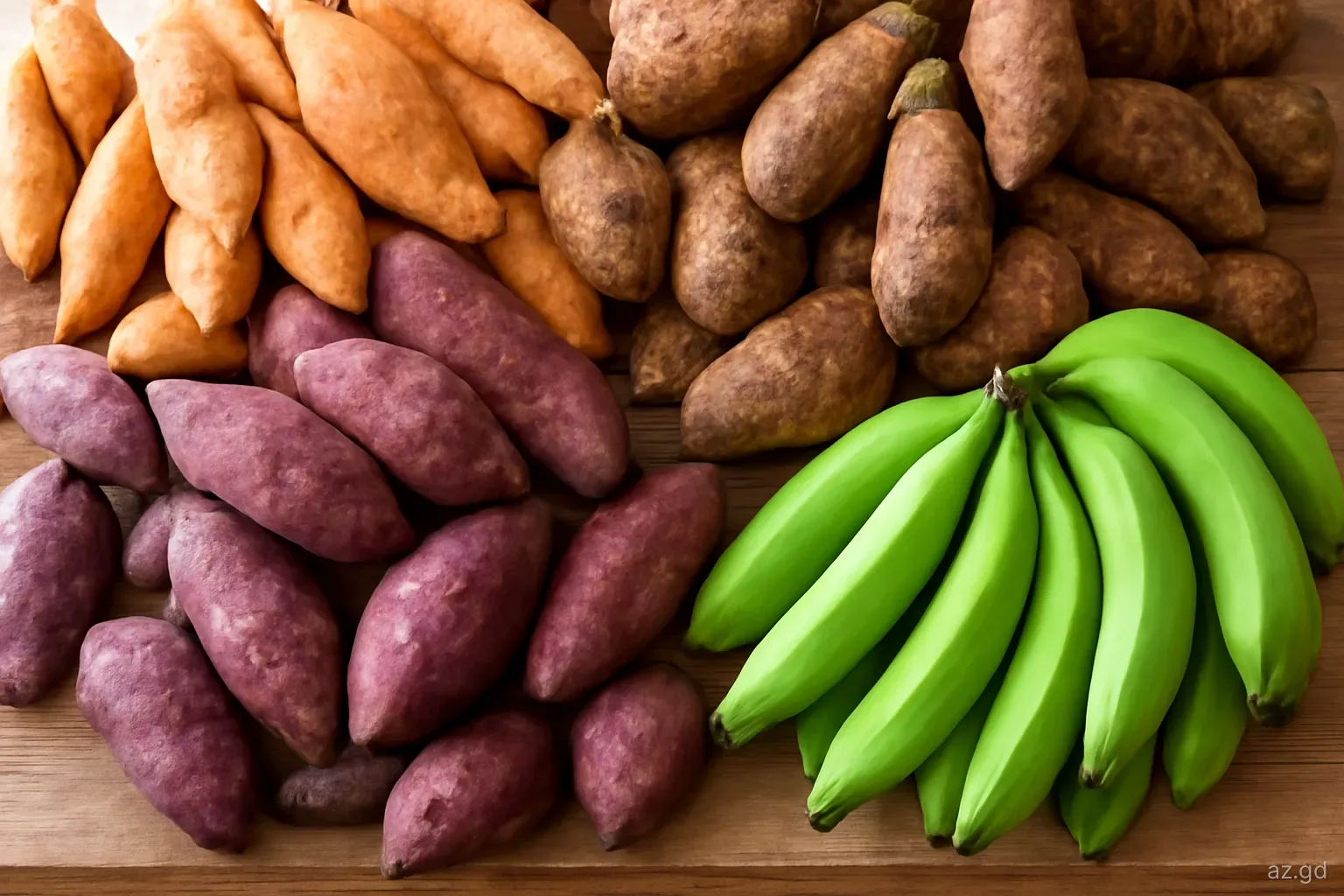
In Grenada the word "provision", or "ground provision", covers the starchy foods that fill most traditional plates: root crops such as dasheen, yam, tannia, eddoe, sweet potato and cassava, plus green bananas (called green fig) and plantain. Breadfruit, which grows on a tree, is counted alongside them in everyday cooking.
A plate of boiled provisions with saltfish, stewed meat or fish is the backbone of home cooking, and provisions appear in oil down, soups, broths and Sunday lunches. For visitors they can look like a pile of anonymous brown roots; for anyone self-catering they are cheap, filling and locally grown, unlike the imported rice and flour that fill supermarket shelves.
This guide identifies the main provisions, explains how they are cooked and eaten, and covers buying, storing and the few safety points that matter.
A field guide to the main provisions
Dasheen. A type of taro with a large, hairy, brown corm. The flesh is dense and slightly purple-flecked when cooked, with a nutty flavour. Its young leaves are callaloo. Raw dasheen can irritate skin and mouth, so it must be peeled carefully and cooked through.
Eddoe and tannia. Smaller relatives of dasheen. Eddoes are small, hairy, rounded corms with a slippery texture when boiled; tannia (from a different plant) has a firmer, slightly earthy flesh and is often used in soups.
Yam. Several kinds are grown, from white to yellow-fleshed, with rough bark-like skins. Yam is dry and fluffy when boiled and holds its shape in soups.
Sweet potato. Local sweet potatoes are usually white- or pale yellow-fleshed and less sweet than the orange varieties common in North America.
Cassava. Long, waxy, brown-skinned roots with white flesh. Used boiled, in soups and for traditional products such as cassava bread and farine.
Green fig and plantain. Green bananas boiled in their skins or peeled are a cheap, everyday starch. Plantain is eaten green (boiled) or ripe (fried).
Breadfruit. Large green fruit from a tall tree, eaten when mature but not ripe. Roasted, boiled, fried or used as the base of oil down.
How provisions are cooked
The simplest method is boiling. Provisions are peeled, cut into large pieces and boiled in salted water until tender, then served plain alongside saltfish, stewed chicken, fish or a vegetable stew. A mixed plate might include dasheen, yam, sweet potato and green fig together, giving different textures. Some cooks add a little coconut milk or butter to the water.
Breadfruit is often roasted whole over an open fire or on coals until the skin is charred, then the flesh is scooped out and eaten with butter, saltfish or stew. Roast breadfruit is common at outdoor gatherings and sold by some roadside cooks. Fried breadfruit chips or wedges are another favourite.
Provisions are also the bulk of soups and broths: Saturday soups thick with dumplings, yam, dasheen and green fig, and fish broths with provisions and herbs. In oil down they cook in coconut milk alongside the breadfruit. Leftover provisions are fried the next day, or mashed and shaped into cakes.
The plates you will see
A typical home meal might be "provision and saltfish": boiled provisions with saltfish cooked in a light sauce of tomato, onion, sweet pepper and herbs. "Stew chicken and provision" is another everyday plate. Sunday lunch usually adds rice and peas, macaroni pie, salad and callaloo.
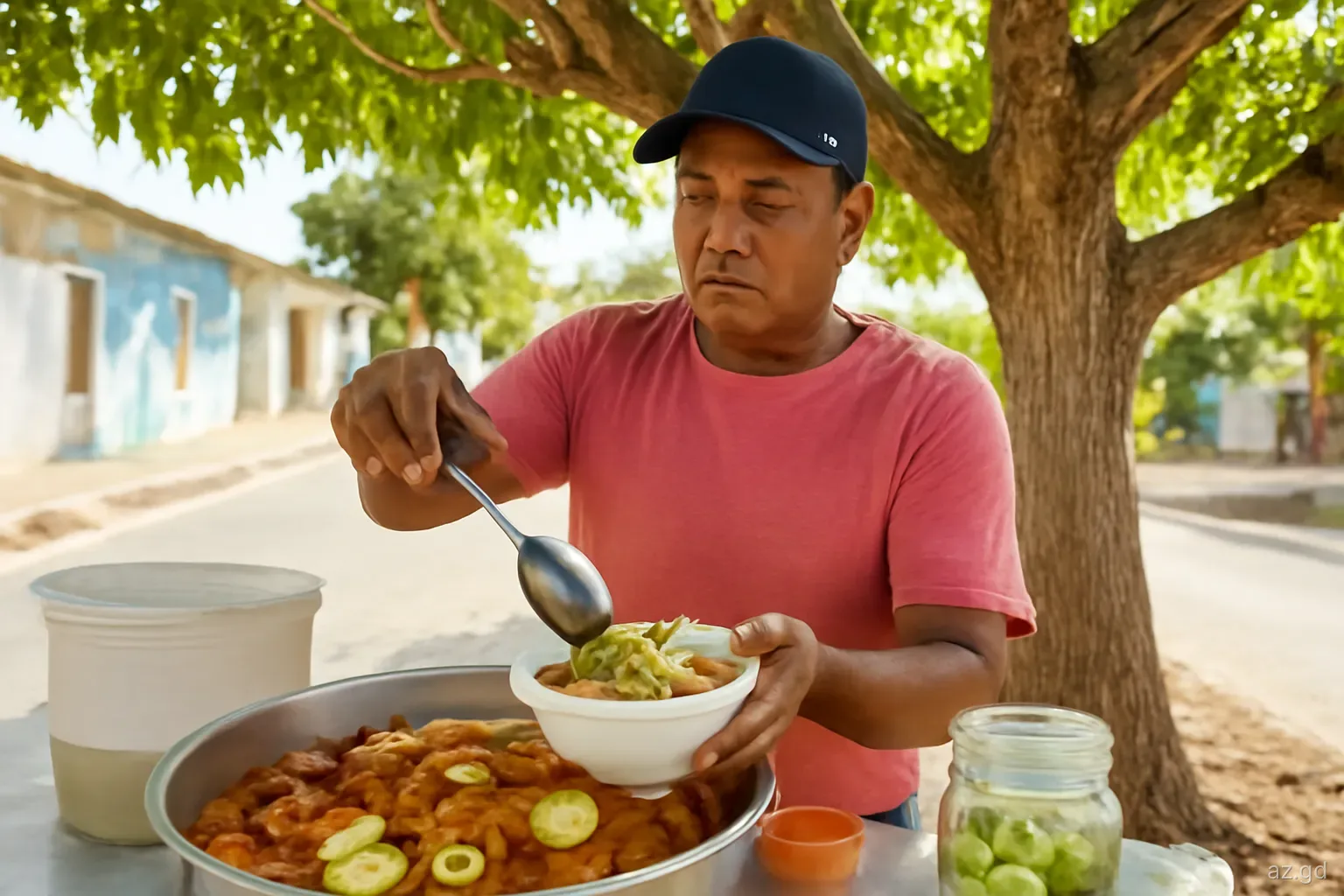
Breakfast is often a separate tradition built around bakes: small rounds of dough that are either fried (fried bakes) or cooked in a pot or oven (roast bakes). Bakes are eaten with saltfish, buljol (cold saltfish salad), smoked herring, eggs or cheese, and often with a cup of cocoa tea. Many small shops and roadside stands sell bakes and saltfish in the morning to people heading to work.
Provisions also anchor festive and ceremonial food. Wakes, harvest festivals at churches and village saraca feasts, especially on Carriacou, traditionally include large pots of provisions alongside stewed meat, peas and rice, cooked by neighbours who share the work. Visitors invited to such occasions will usually be served a full plate and are expected to accept it.
Local restaurants and cookshops that serve "local food" or a "local plate" usually include a selection of provisions. If you are offered "provision" as a side instead of rice or fries, it is worth choosing it at least once. Portions are generous and provisions are filling; a plate of them at lunch is often enough for the day.
Where provisions are grown, and why buying local matters
Most provisions eaten in Grenada are grown on small farms and family plots, often on steep hillsides in St Andrew, St David, St John and St Mark, where root crops are grown among nutmeg, cocoa and bananas. Many farmers sell through middlemen who bring produce to Market Square and the town markets, while others sell from roadside tables near their land. The Grenada Marketing and National Importing Board and the Ministry of Agriculture both have roles in getting local produce to buyers.
Grenada imports a large share of its food, including much of its rice, flour and processed goods, so local provisions are one of the most direct ways to support farmers and keep money on the island. They are also often cheaper than imported starches when in season, though dry spells, storms and pests push prices up.
On Carriacou, with its drier climate, traditional farming leaned more towards corn and pigeon peas than root crops, and many provisions are shipped across from Grenada. Prices there are usually a little higher as a result.
Buying, storing and preparing provisions
Provisions are sold at Market Square in St George's, the Grenville market, roadside stalls and supermarkets. A few practical steps:
- Choose firm roots with no soft spots, mould or cracks. Break off a tiny piece of yam or cassava at the end if the vendor allows: the flesh should be white or cream and clean.
- Ask the vendor how they cook it. Different varieties of yam and sweet potato behave differently, and vendors know which ones boil well.
- Store provisions in a cool, dry, ventilated place rather than a refrigerator, and use them within a week. Breadfruit and green fig ripen quickly in the heat; cook them within a day or two.
- Peel dasheen, eddoe and tannia with care. Their raw juice can make hands itch; oil your hands or wear thin gloves, and rinse the peeled pieces.
- Oil your hands or knife before peeling green figs. The sap stains skin and clothes dark brown and is hard to remove.
- Boil provisions until a knife slides in easily, then drain promptly so they do not become waterlogged.
Safety points and common mistakes
Provisions are safe staples when handled properly, but a few points matter:
- Cassava must be cooked. Cassava contains compounds that release cyanide if eaten raw, especially bitter varieties. Always peel, cook thoroughly and discard the cooking water. Sweet cassava sold for boiling is safe when properly cooked.
- Dasheen and eddoe irritate if undercooked. Like callaloo, they contain calcium oxalate crystals. Cook until completely soft.
- Breadfruit should be mature but not ripe. A soft, yellow, sweet-smelling breadfruit is overripe for savoury cooking; it can be used in sweet puddings instead.
- Do not mistake ornamental plants for food crops. Some garden plants resemble dasheen or cassava. Buy from vendors rather than foraging.
- Allow time. Yam and dasheen can take 30–40 minutes to boil, longer for large pieces. Plan meals accordingly.
- Do not refrigerate whole roots. Cold storage makes yam and sweet potato hard-centred and spoils their texture. Keep them in a cool, airy cupboard instead.
Frequently asked questions
What are ground provisions?
Ground provisions are starchy root crops and similar staples, including dasheen, yam, tannia, eddoe, sweet potato and cassava, along with green bananas, plantain and breadfruit. They are boiled, roasted or fried and served with fish, meat or saltfish across Grenada and the wider Caribbean.
What is the difference between dasheen and tannia?
Both are corms from related plants in the aroid family. Dasheen is larger with dense, nutty flesh and edible leaves used for callaloo. Tannia comes from a different species, has firmer, earthier flesh and is often used in soups. Both must be cooked thoroughly.
Why is a green banana called a fig in Grenada?
In Grenada and some neighbouring islands, "fig" is a traditional name for banana, especially green bananas used for cooking. The usage dates back generations and has nothing to do with the Mediterranean fig fruit. Ripe sweet bananas may also be called figs.
Is cassava safe to eat?
Yes, when properly prepared. Raw cassava contains natural compounds that can release cyanide. Peeling, cooking thoroughly and discarding the cooking water makes it safe. Sweet cassava varieties sold for boiling are low in these compounds but should still be cooked fully.
Where can visitors try provisions?
Local restaurants and cookshops serving a "local plate" usually include provisions with fish, chicken or saltfish. Hotel Grenadian buffets often feature them, and roadside cooks sell roast breadfruit. Asking for provisions instead of rice or fries is the easiest way to try them.