Grenville is the town that serves Grenada's largest parish, and it feels nothing like the capital. There is no cruise terminal, no hotel strip and few souvenir stalls; instead there are farmers selling produce, school uniforms everywhere at three o'clock, and minibuses queuing to cross the mountains to St George's. For anyone curious about how most Grenadians outside the south actually live, it is the place to go.
Locals still call the town La Baye, its old French name, and it carries the nickname Rainbow City. Its role is practical: market, courts, police, schools, banks and shops for a parish of roughly 26,500 people (2011 census). This profile covers what is there, how to get in and out, and what is worth seeing around it.
Grenville also gives a useful sense of scale. The Atlantic side is greener, wetter and more agricultural than the tourist south, and the town is where that rural economy comes to trade. A morning here, paired with Grand Etang or the northern estates, shows a side of Grenada that beach-based visitors rarely see.
Where Grenville is and how it fits the parish
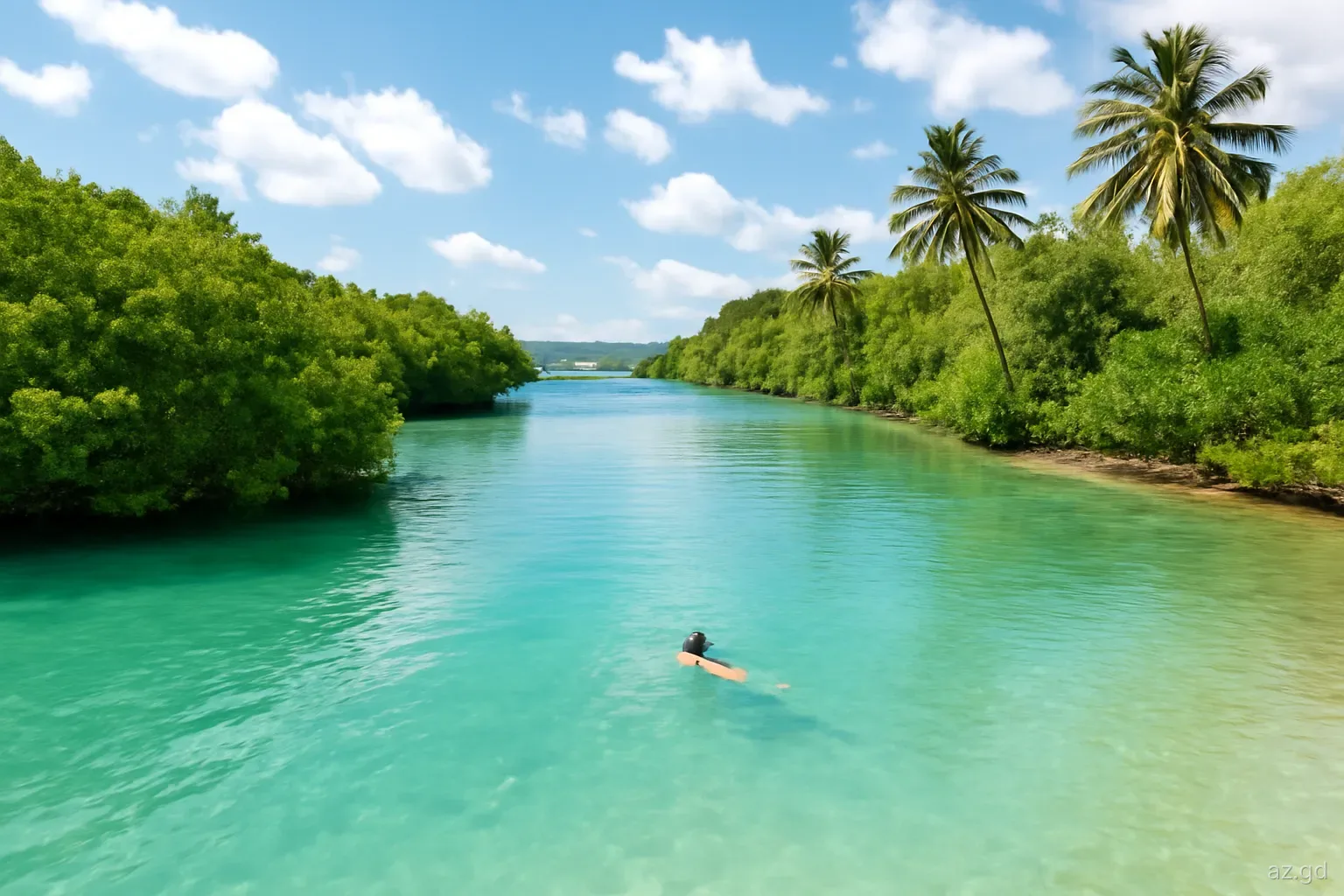
Grenville sits on Grenville Bay, about halfway up the east coast. The town was renamed by the British after George Grenville, the prime minister of the 1760s, and has been the parish capital since the 1790s, taking over from the village of Marquis further south. The bay is protected by reefs, which is why it became a port for shipping cocoa and nutmeg in the days when produce left the windward coast by sea.
St Andrew itself covers about 99 square kilometres, close to a third of the main island. It runs from the coast up into the central mountains around Grand Etang and includes villages such as Paradise, Birch Grove, Grand Bras, Marquis, Dunfermline, Telescope and Tivoli. Most of those villages are farming communities, growing bananas, cocoa, nutmeg, vegetables and fruit on steep, well-watered slopes.
Because of that size and distance, Grenville works as a second capital for the east. Residents of the parish can see a magistrate, pay bills, bank, shop and attend secondary school without travelling to St George's, a journey that can take an hour or more by bus.
What you find in town
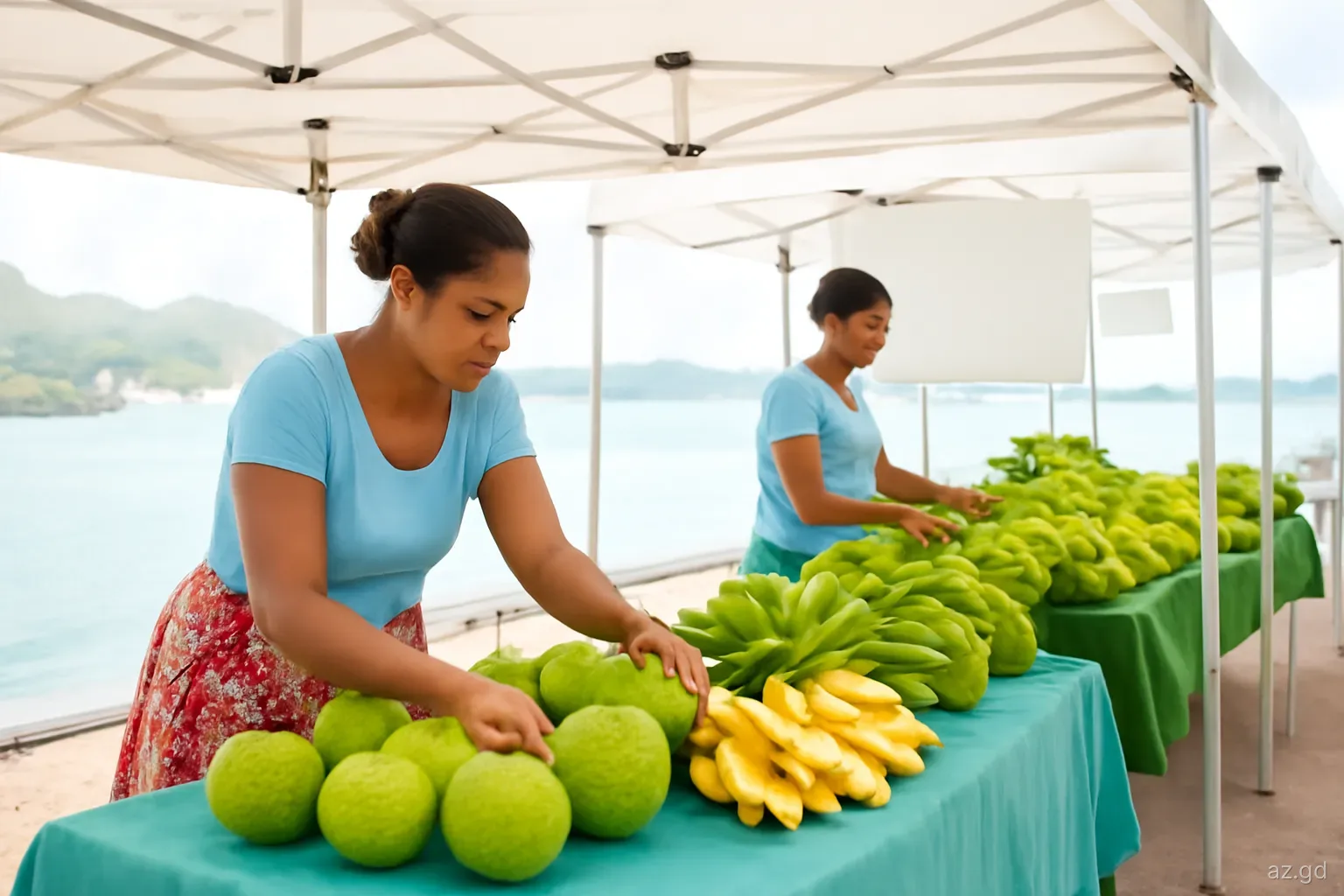
The market. The covered marketplace sells fruit, vegetables, ground provisions, meat and some crafts. It operates daily, but Saturday is the traditional market day and by far the busiest, with vendors arriving from across the parish.
The bus terminal. Minibuses for St George's and the villages leave from the terminal on Sendal Street. Buses go when they are full rather than to a strict timetable, so mornings and late afternoons are the easiest times to travel.
Shops and banks. Supermarkets, hardware stores, pharmacies, clothing shops and branches of the main banks line the central streets. Practical errands are simpler here than in St George's, with less traffic and shorter queues.
Public services. Grenville has a magistrate's court on Ben Jones Street, a police station, a fish market and government offices serving the parish.
Schools. Several secondary schools are based in or near the town, including Grenville Secondary School, St Andrew's Anglican Secondary School and St Joseph's Convent Grenville, so the streets fill with students at the start and end of each school day.
Pearls and the town's edges
Just north of Grenville is Pearls, site of Grenada's first airport. Pearls Airport handled the country's flights until Point Salines (now Maurice Bishop International) opened in the south in the mid-1980s. The runway is no longer in aviation use, and abandoned aircraft from the early 1980s have sat on the site for decades, slowly rusting. The open land around the strip is now used informally by the community.
Pearls is also an important Amerindian archaeological area, one of the largest known on the island, where pottery fragments and other remains have been found. There is little on the ground for a casual visitor to interpret, so it is better understood through the collections in the National Museum in St George's, if it has reopened.
Further north, beside the road, is Progress Park, one of the biggest playing fields in Grenada and a home for cricket and football in the parish. Dunfermline, a short distance beyond, is known as the birthplace of Sir Eric Gairy, the country's first prime minister.
Worth a stop around St Andrew
Grenville is a good base for exploring the eastern side of the island. These places are reachable in a short drive or bus ride; check road conditions after heavy rain.
- Grand Etang. The forest reserve and crater lake on the road over the mountains to St George's, with short trails and a visitor centre. The road is steep and winding.
- Mount Carmel and Marquis waterfalls area. South of Grenville near Marquis, among the tallest falls on the island. Go with a local guide, as access paths change.
- Birch Grove and the central valleys. Farming villages with views across cocoa and nutmeg slopes, quiet roads and small rum shops.
- The Atlantic shoreline. Bays such as those around Marquis and Soubise have rough water and strong currents; admire them rather than swimming unless locals confirm it is safe.
- Lake Antoine and River Antoine. Just over the border in St Patrick, about twenty to thirty minutes north by road.
Before you go: what to check
Grenville rewards a weekday or Saturday visit far more than a Sunday one. A little planning avoids a wasted trip.
- Time your visit. Saturday morning for the market; weekdays for banks and offices. On Sundays the town is largely closed.
- Last buses back. Minibuses to St George's thin out in the evening. Ask the driver or conductor when the last one leaves before you settle in.
- The mountain road. The route over Grand Etang is steep with sharp bends; the coastal road via St David is longer but gentler. Both can be affected by landslides after heavy rain.
- Cash. Many market vendors and small shops take cash only. Banks have ATMs in town, but queues build on paydays and Fridays.
- Festivals. The Rainbow City Festival is held in Grenville around the start of August. Dates vary, so confirm with organisers if you want to attend.
A town shaped by history
Grenville's most dramatic moment came in March 1795, at the start of the rebellion led by Julien Fédon, a planter of mixed French and African descent inspired by the French Revolution. Fédon's forces attacked La Baye, as the town was then called, and killed a number of British residents before retreating to the mountains. The uprising lasted more than a year and devastated estates across the island before British troops crushed it in 1796.
In the following centuries, the town grew as the export point for the produce of the windward valleys. Cocoa and nutmeg came down from the estates and smallholdings to be processed and shipped, and the cooperative and private buyers that handled the crops kept Grenville busy. Many of its older commercial buildings date from that trading era.
In the twentieth century, St Andrew became the political base of Eric Gairy, who rose through the trade union movement of the early 1950s and later led Grenada to independence in 1974. Hurricane Ivan in 2004 and Hurricane Emily the following year damaged much of the town and its farmland, and recovery reshaped parts of the centre. Today Grenville is a town of practical commerce with a long memory.
Frequently asked questions
How far is Grenville from St George's?
Roughly 25 to 30 kilometres by road, but the drive takes 45 minutes to over an hour depending on the route. The central road crosses the mountains past Grand Etang; the alternative follows the south-east coast through St David.
Why is Grenville called La Baye?
La Baye was the town's name under French rule, referring to the bay it sits on. The British renamed it Grenville after a prime minister, but many Grenadians, especially in the parish, still use the older name in everyday speech.
Can you still see the planes at Pearls Airport?
Abandoned aircraft have remained at the old Pearls runway for decades, though their condition keeps deteriorating. The site is not a managed attraction, so respect any closures, avoid climbing on wrecks and ask locally before wandering around.
Is Grenville worth visiting as a tourist?
It is worth a few hours if you are interested in everyday Grenadian life, markets and the east coast. It has few attractions in the conventional sense, but it pairs well with Grand Etang, waterfalls or the northern estates in a day.
What is the Rainbow City Festival?
It is a community festival in Grenville named after the town's nickname, with cultural shows, food, music and street events. It usually takes place around the start of August, close to Emancipation, but confirm the year's dates before travelling.
Are there places to stay in Grenville?
Accommodation is limited compared with the south-west, mostly small guesthouses and apartments in and around St Andrew. Most visitors base themselves near Grand Anse and visit Grenville on a day trip, but quieter rural stays exist for those who want them.