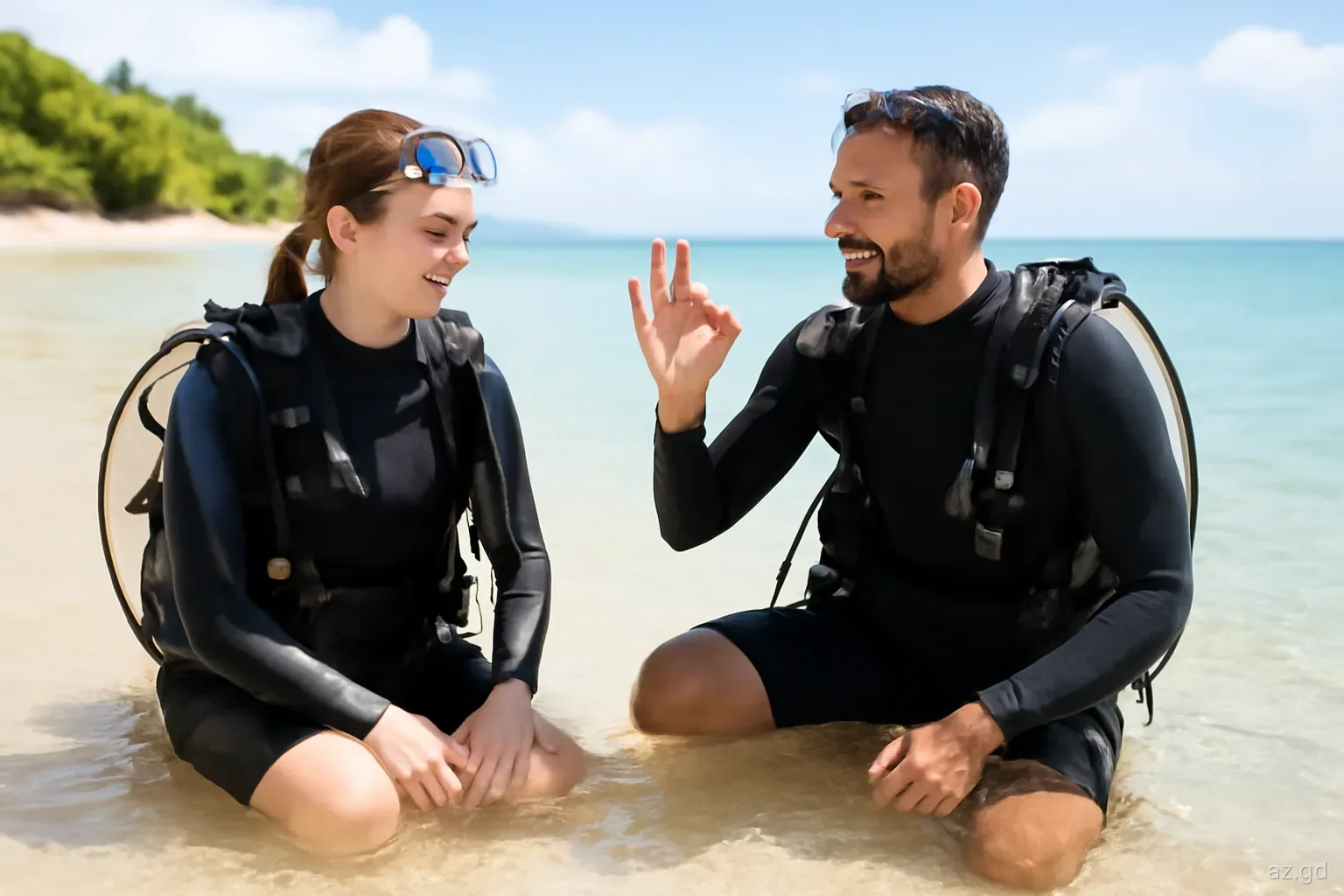
Grenada is a good place to learn to dive for reasons that have nothing to do with marketing. The water stays between roughly 26 and 29°C all year, the sheltered bays of the south-west coast give calm shallow training areas a short boat ride from the shops, and once you qualify the island has easy reefs and a shallow wreck to practise on before anything demanding.
Most dive shops on the island teach through PADI or SSI, and both certifications are recognised worldwide. What varies is how the course is structured, how many days it takes and what is included in the price. Getting those details right before you arrive saves both money and holiday time.
This page covers the courses on offer, how long each takes, what to budget, the medical questionnaire that stops more students than anything else, and how to judge a dive school before you hand over a deposit. Prices are given as ranges because shops set their own and change them each season.
The main options, from a single try-dive to full certification
Try-dive (Discover Scuba Diving or equivalent). A half-day introduction with a short briefing, skills practice in a pool or shallow water, then one supervised dive to a maximum of 12 metres with an instructor beside you. It does not certify you, but it tells you whether you like breathing underwater before you commit to a course. Many shops will credit the first dive towards an Open Water course if you continue soon after.
Scuba Diver (a partial certification). Roughly half an Open Water course. It lets you dive to 12 metres, but only under the direct supervision of a professional. Useful when time is very short, though most people find it worth doing the full course.
Open Water Diver. The standard entry-level certification: knowledge development, confined-water skills and four open-water training dives. Once qualified you can dive to 18 metres with a buddy of similar level, anywhere in the world.
Advanced Open Water. Five adventure dives, usually including a deep dive and navigation, plus three of your choice (wreck, night, peak performance buoyancy and so on). It qualifies you to 30 metres and is the course to take if you want the deeper wrecks off Grenada later.
Specialties. Enriched air (nitrox), wreck diver and deep diver are the most popular here, for obvious reasons. Rescue Diver is offered too, and is often called the most useful course a recreational diver can take.
How many days to set aside
An Open Water course normally takes three to four days in Grenada. Plan around two days of theory and pool or shallow-water sessions, then two days of open-water dives, typically two dives per day. Rough weather or an ear problem can stretch that by a day, so do not book the course to finish the day before you fly home.
The biggest time saver is eLearning. Both PADI and SSI let you complete the theory online at home, so in Grenada you only do the practical part. That can cut the in-water course to two or three days and frees your holiday for diving rather than classroom videos. Bring proof that you have finished the online part; shops cannot start you on open-water dives without it.
Leave a gap before flying. The standard guidance is at least 12 hours after a single dive and 18 hours after multiple dives or multiple days of diving. Many shops simply recommend a full day off before an early flight out of Maurice Bishop International Airport.
What it costs, and what to ask is included
Prices are set by each shop and change with the season and what is bundled in, so treat these as ranges to compare quotes against rather than fixed figures. All are in US dollars, which is how most dive shops price; at the fixed rate EC$2.70 equals US$1.
- Try-dive: roughly US$100–170, depending on whether it includes a pool session and a second dive.
- Open Water course: roughly US$450–650. Check whether the price includes the eLearning or manual, certification fee, equipment hire and the boat dives.
- Advanced Open Water: roughly US$350–500.
- Fun dives once certified: two-tank boat trips commonly fall around US$100–160, with discounts for packages of six or ten dives.
- Extras that catch people out: marine park fees for dives inside protected areas, nitrox fills, wetsuit hire, and the cost of the online theory if bought separately.
- Taxes and card fees: ask whether quoted prices include VAT and whether paying by card adds a surcharge.
After you qualify: sensible first dives in Grenada
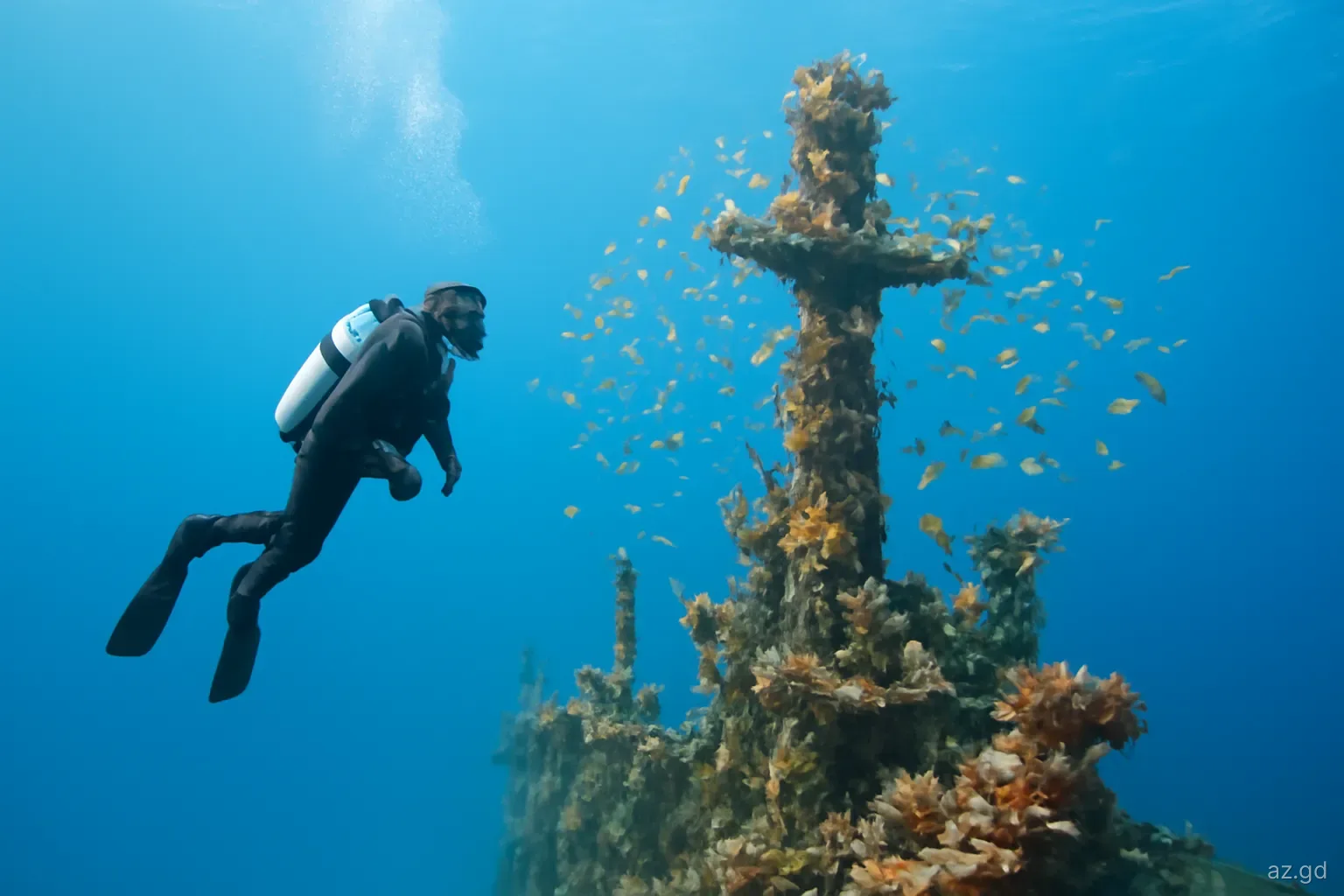
New divers in Grenada are lucky in what lies within their 18-metre limit. The Veronica L, a small freighter sitting upright in about 15 metres off Grand Anse, is the classic first wreck: shallow, usually calm, and full of soft corals, sponges and small creatures. It shows you what wreck diving is like without depth or current pressure.
The Underwater Sculpture Park and the reefs along Molinere Point and Dragon Bay are other gentle choices, with sloping reef that lets you pick your depth. Flamingo Bay, in the same protected area, is often named among the richest reef dives on the west coast and is usually done as an easy drift along the slope. Expect to pay the protected-area entry fee for dives in this reserve.
Hold back on the deeper wrecks. The Shakem, the Hema 1, the King Mitch and the Bianca C all sit around 30 metres or deeper and often in current. They are for later, after Advanced Open Water and a dozen or more dives of experience. Spending a week building confidence on shallow sites, then adding the Advanced course, is how many visitors finish a trip with the Bianca C in their log.
The medical form: read it before you travel
Every student fills in the same questionnaire. The international diver medical questionnaire asks about heart and lung conditions, asthma, ear and sinus problems, diabetes, recent surgery, pregnancy and medications.
A single yes needs a doctor's signature. If you answer yes to any question, the shop cannot let you in the water until a physician signs the accompanying form. Getting that signature in Grenada means booking a private doctor and paying for the appointment, which can take a day.
Do it at home. Download the form, answer it honestly and, if needed, see your own doctor before you travel. Bringing a signed, recently dated form avoids losing days at the start of the course.
Age matters too. Junior certification starts at 10 years old with depth limits; try-dive programmes typically start at 10 as well. Older divers are welcome but should take the heart questions seriously.
How to choose a dive school
Most of Grenada's dive shops cluster around Grand Anse, Morne Rouge, True Blue and Prickly Bay on the main island, with a smaller group in Carriacou. Ask the same questions of each.
- What is the maximum number of students per instructor in the water? Four to one or fewer is comfortable for Open Water.
- Where are the confined-water sessions held: a pool, or a calm bay? Pools make the first skills easier for nervous students.
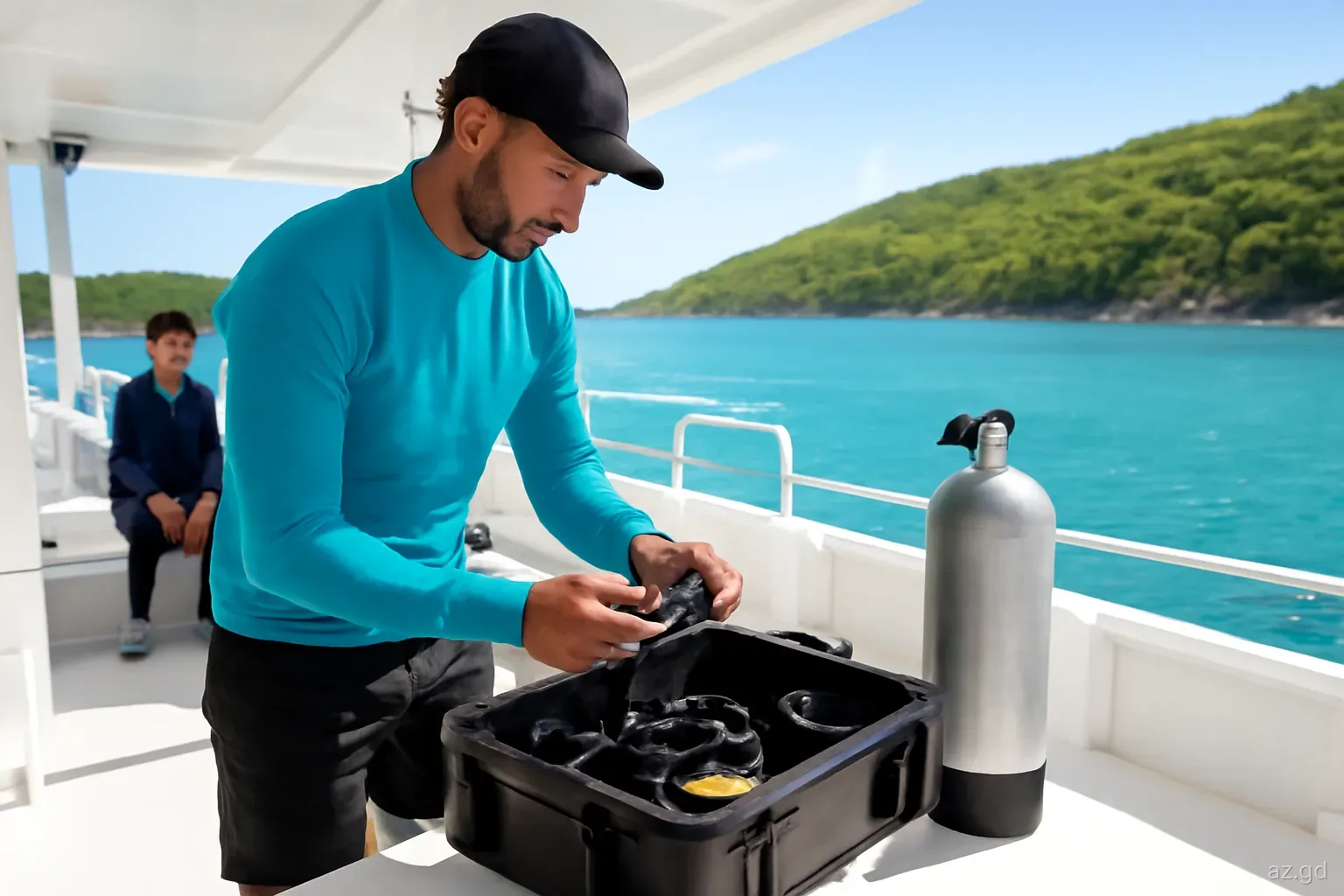
- How old is the rental equipment, and will you have the same set throughout the course?
- Is the instructor teaching the whole course, or do different staff take each day?
- What happens if you cannot finish because of weather or ear trouble? Ask about referral paperwork so another shop, at home or abroad, can complete your training.
- Is there emergency oxygen and a first-aid kit on every boat, and is the crew trained to use them?
Frequently asked questions
Can you learn to dive in Grenada if you are not a strong swimmer?
You need to be reasonably comfortable in water. The Open Water course includes a 200-metre swim, or 300 metres with mask, fins and snorkel, plus ten minutes of floating or treading water. There is no time limit on the swim, but panicking in deep water is a problem to solve before the course.
Is a try-dive enough to see the sculpture park or a wreck?
A try-dive can visit shallow sites under direct instructor supervision, and some shops take try-divers to the Underwater Sculpture Park. Wrecks deeper than 12 metres, including the Bianca C, are not possible without full certification and more experience.
Should you do the course at home or in Grenada?
Doing the theory and pool work at home, then finishing the four open-water dives in Grenada on a referral, is often the most efficient. You arrive with the dull parts done and spend your time in warm, clear water with fish rather than in a cold quarry.
Is PADI better than SSI?
For a holiday diver the difference is small. Both certifications are accepted worldwide, the skills are almost identical and both use digital learning. The quality of the individual instructor and the size of the group matter far more than the logo on the card.
What if your ears hurt on descent?
Ear pain is the most common reason students struggle. Equalise early and often, descend slowly down a line, and stop if it hurts. Do not dive with a cold or blocked sinuses. Instructors in Grenada see this daily and will slow the pace rather than force you down.
Can children learn to dive in Grenada?
Yes. Children from 10 can take the Junior Open Water course with depth limits, and some shops run bubble-maker style pool sessions for younger children. Ask about child-sized equipment and whether the instructor is experienced with young students before booking.