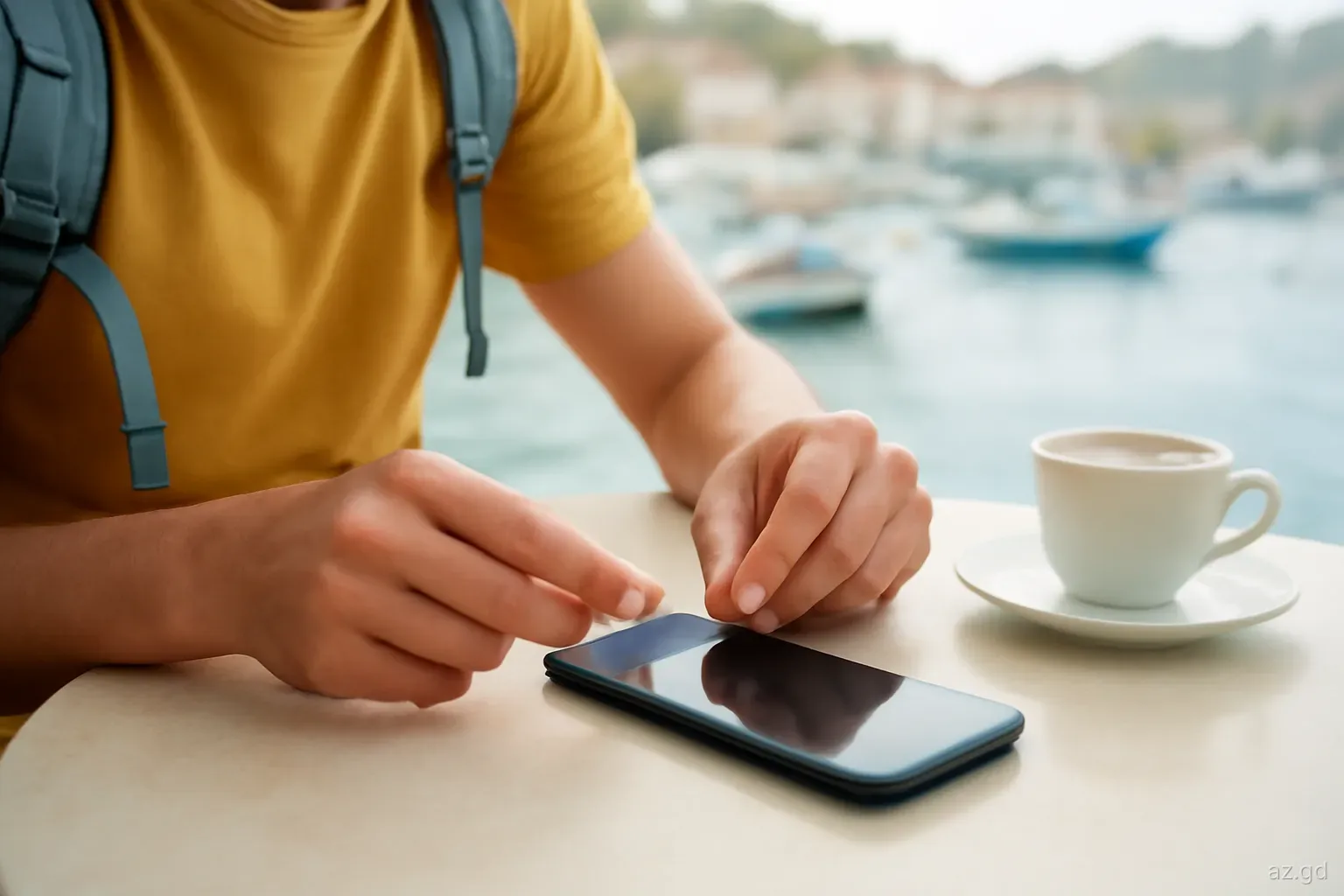
For most visitors and new residents, a local SIM or eSIM is the cheapest and simplest way to stay connected in Grenada. Roaming on a foreign SIM can be expensive, and wifi is patchy away from hotels and cafés. With a local number you can use maps, call taxis and restaurants, join the WhatsApp groups that keep island life running, and receive security codes from a local bank.
Both mobile operators, Digicel and Flow, sell prepaid SIM cards, and eSIM options are increasingly available. The process is quick if you arrive prepared. This checklist covers what to sort out before you travel, where to buy, what it costs in broad terms, and what to do if something goes wrong.
Before you travel
A few minutes of preparation at home saves time and frustration after landing.
- Check that your phone is not locked to your home carrier. A carrier-locked phone will not accept a Grenadian SIM. Ask your carrier to release the lock before departure; this can take days.
- Check whether your phone supports eSIM, and whether it can hold two lines at once (a physical SIM plus an eSIM, or two eSIMs). Dual-line phones let you keep your home number for banking codes while using local data.
- Decide how much data you need. Maps, messaging and social media use modest amounts; video calls, streaming and remote work use much more.
- Download offline maps of Grenada in your map app, so you can find your way before you have local data.
- Note down any home bank or service that sends security codes by text, and check whether they can be received by app or email instead while you are away.
Where to buy a SIM card
Operator stores. Digicel and Flow have stores in St George's and in the busy Grand Anse area, as well as in other towns such as Grenville, and on Carriacou. Staff will register the SIM, activate a plan and set up the phone for you.
Authorised agents. Many supermarkets, pharmacies and shops sell SIM cards and top-ups. They are convenient for top-ups, but for the initial SIM registration a store is often simpler.
The airport. Do not count on buying a SIM at Maurice Bishop International Airport. Sales points have operated there at times, but availability is not guaranteed. Have hotel or taxi wifi, offline maps and your accommodation details ready instead.
Through your accommodation. Some villas and guesthouses keep local SIMs for guests or can direct you to the nearest store.
What you need and what it costs
Bring your passport. SIM cards are registered to the user, and operators ask for identification when you buy one. Residents can use a Grenadian ID such as a driving permit or voter identification card. Without ID, the store may not be able to sell you a SIM.
The SIM itself is inexpensive, typically in the range of EC$10 to EC$30, and may include a small amount of credit. You then buy a data plan. Tourist and travel plans offer a set amount of data valid for up to about 30 days, and some include regional roaming across other Caribbean countries where the operator works. As an illustration, Digicel has advertised travel bundles of several gigabytes valid for 30 days for roughly EC$30 to EC$40. Plans change often, so compare current offers in store or in the apps.
Payment in stores is by cash in Eastern Caribbean dollars or by card. US dollars are widely accepted in the tourism sector but change will be given in EC dollars at a rate set by the business.
eSIM options
An eSIM is a digital SIM installed by scanning a QR code or through an app, with no physical card. Digicel offers eSIMs in Grenada, aimed partly at visitors who want to connect as soon as they land. Ask Flow about its current eSIM options. Operator eSIMs generally give you a local number, so you can make local calls and receive texts.
There are also international data-only eSIMs sold online by third-party providers that use local networks in Grenada. They can be bought and installed before departure, which is convenient, but they usually provide data only, without a local phone number, and per-gigabyte prices can be higher than local plans. Read the coverage details, validity and activation rules carefully.
Keep the QR code or installation details safe. If you delete an eSIM profile by mistake, you may need to contact the provider to reissue it.
Wifi: useful, but plan around it
Most hotels, guesthouses and holiday rentals offer wifi, and many cafés, restaurants and beach bars in the Grand Anse area, St George's and around the marinas provide it for customers. Quality varies widely: some places have fast fibre connections, others share a modest line among many guests. If you need reliable internet for work, ask your accommodation about the type of connection and recent speed tests before booking.
On public or shared wifi, use apps and websites with secure connections, and consider a reputable VPN for banking and work. Avoid logging into important accounts on shared computers.
Wifi calling, if your phone and plan support it, lets you make and receive calls over wifi when mobile signal is weak indoors. It is also useful for keeping your home number reachable while abroad, though calls may still be charged under your home plan. Check with your home provider before relying on it.
Carriacou, Petite Martinique and island hopping
A Grenadian SIM or eSIM works on Carriacou and Petite Martinique as well as on the main island, as both Digicel and Flow operate there. Signal is generally good around Hillsborough and the main settlements but can weaken at the more remote beaches and bays.
If you are travelling on to St Vincent and the Grenadines, St Lucia or other islands, check whether your plan includes regional roaming, or buy a travel bundle that covers the countries you will visit. Both operators work in several Caribbean territories, and some plans cover them at no extra cost. When sailing between Carriacou and Union Island, you may find your phone switching to a Vincentian network, which can trigger roaming charges if your plan does not include it.
Mistakes visitors make, and how to avoid them
The same problems come up again and again:
- Arriving with a locked phone. Grenadian stores cannot remove another carrier's lock. Check before you travel.
- Forgetting the passport. Bring it, or a valid local ID, to the store.
- Letting the plan lapse. When the plan expires, data may be charged from your credit at higher rates. Set a reminder to renew.
- Losing the home SIM. Tape it inside your phone case or wallet in a small envelope. You will need it again at home.
- Assuming roaming is off. If you keep your home SIM active alongside a local one, set mobile data to use the local line only, or turn off data roaming on the home line.
- Relying on mobile data only in remote places. Coverage can drop in the mountains and some coastal valleys. Download what you need beforehand.
Topping up and managing your line
Through the app. Both operators have apps where you can check your balance, buy plans and top up by card. This is the easiest way to manage a prepaid line.
Top-up vouchers. Shops, supermarkets and petrol stations across the islands sell top-up vouchers. Enter the code as instructed to add credit.
Checking your balance. Balances can be checked in the app or by dialling a short code provided by the operator when you buy the SIM.
If you are staying longer. Residents with a local address and ID can switch to a postpaid plan, which may give better value for heavy data use. Keep your number active; prepaid numbers that go unused and unfunded for long periods can be withdrawn.
Frequently asked questions
Do you need a passport to buy a SIM card in Grenada?
Yes, operators register SIM cards and ask for identification. Visitors should bring their passport to the store. Residents can usually use a local ID such as a driving permit or voter identification card.
Can you buy a SIM card at Grenada airport?
Sometimes, but it is not guaranteed. Sales points at Maurice Bishop International Airport have operated at times, but it is safer to plan on buying from a Digicel or Flow store in St George's or the Grand Anse area.
Does Grenada support eSIM?
Yes. Digicel offers eSIMs in Grenada, and third-party international data eSIMs can also be used on local networks. Check whether your phone supports eSIM and is not carrier-locked before travelling.
How much does a SIM card cost in Grenada?
The SIM itself usually costs a modest amount, roughly in the EC$10 to EC$30 range, with data plans bought separately. Prices and plans change frequently, so check current offers in store or in the operators' apps.
Will a US or UK phone work in Grenada?
Most modern smartphones work on Grenada's 4G networks, provided they are not locked to a carrier. Check with your carrier before travelling. Remember that roaming on a foreign SIM can be expensive, so a local SIM or eSIM is usually cheaper.