In a country with rainforest-covered mountains, it surprises newcomers that water can run short. Grenada's public supply depends largely on rivers and streams in the interior, which shrink sharply in the dry season from roughly January to May. In those months the water authority rations supply to some areas, and houses without storage find their taps dry for hours or days. Heavy rain brings the opposite problem: rivers turn muddy, and treatment plants struggle.
Understanding how water reaches your house, and what to check before renting or buying, makes a big difference to daily comfort. This guide covers the public supply, water quality, storage and pumps, the very different situation on Carriacou and Petite Martinique, and billing.
Who supplies water, and where it comes from
The public water supply on Grenada, Carriacou and Petite Martinique is the responsibility of the National Water and Sewerage Authority, known as NAWASA, a statutory body. On the main island, most water comes from surface sources: intakes on rivers and streams in the mountains feed treatment plants, and the treated water flows through pipelines and reservoirs to homes and businesses. Some areas, particularly in the south, also depend on wells.
This reliance on rivers is the root of the seasonal problem. When rain falls almost daily, as it often does from June to December, supply is generally plentiful. In the dry season, stream flows drop, sometimes dramatically. In 2026, for example, NAWASA reported production at some treatment plants falling well below normal, and it took a well in St David's out of service after salt water intruded and pushed salinity above drinking-water limits.
NAWASA also operates sewerage systems in parts of St George's and the Grand Anse area. Most homes elsewhere use septic tanks, which need periodic emptying by a licensed contractor.
Is the tap water safe to drink?
Treated supply. Public water supplies are treated and chlorinated, and the government states that they are treated to meet World Health Organization standards. Many residents drink tap water.
After heavy rain. Water can turn cloudy or brown when rivers are full of sediment. At those times, and when NAWASA issues advisories, boil water or use bottled water for drinking, especially for babies, older people and anyone unwell.
Storage tanks matter. Water that has sat in a dirty or uncovered tank can be less safe than water straight from the mains. Tanks should be covered, cleaned periodically and protected from mosquitoes.
Filters. Many households use a jug filter or an under-sink filter to improve taste and reduce sediment. A filter does not replace boiling during an advisory unless it is designed to remove microbes.
Visitors. If you are only staying a short time and prefer to avoid any risk of an upset stomach, bottled water is widely sold and inexpensive.
Dry-season schedules and how to cope
During dry spells, NAWASA regulates supply by opening and closing valves to share limited water between communities. Some areas receive water only at certain times of day or on certain days. Schedules are announced through official notices, local media and social media, and they change as conditions change. Higher-elevation houses and those at the end of a supply line are usually affected first, because pressure drops.
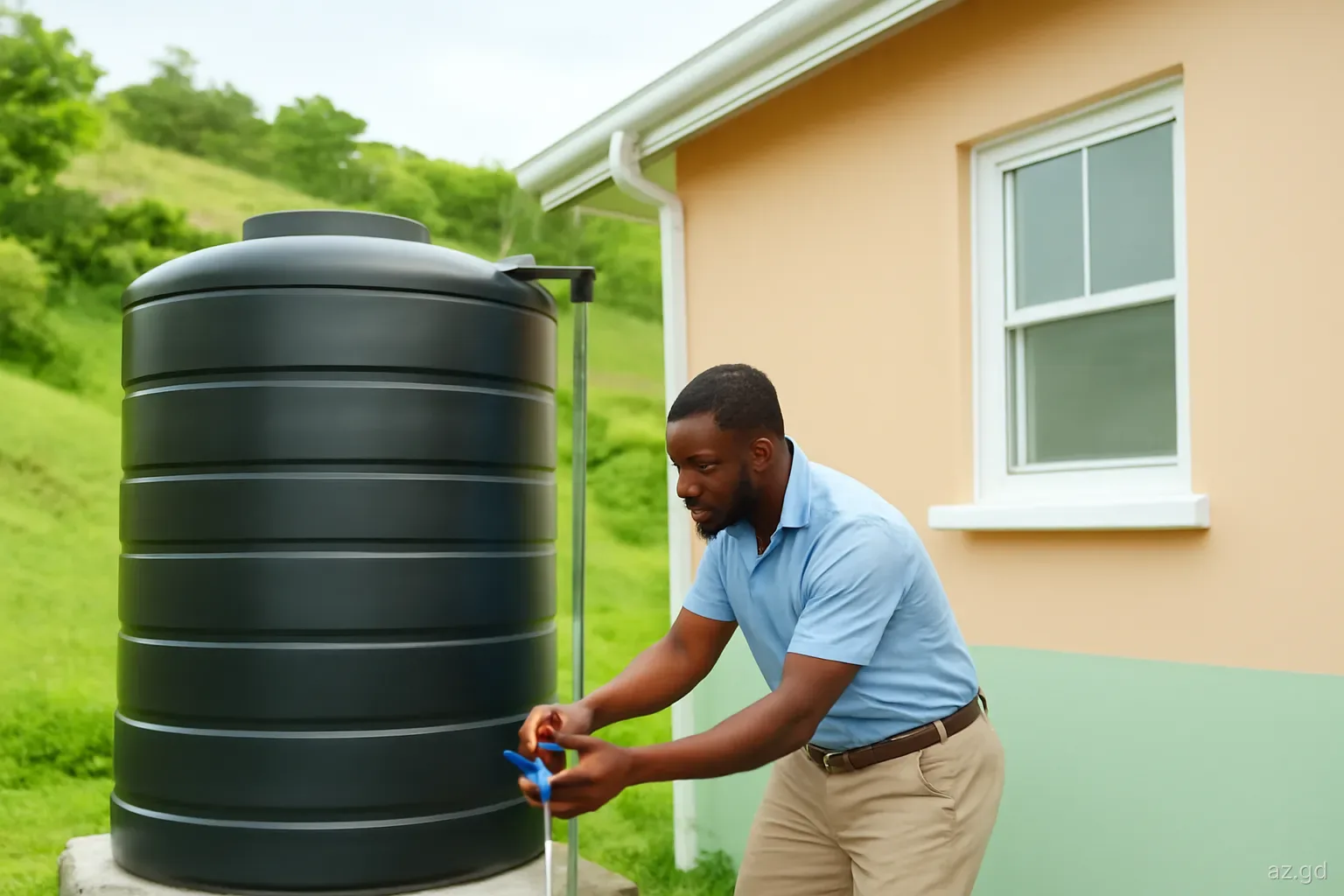
Households cope by storing water. Most houses have one or more storage tanks, commonly black or green polyethylene tanks of several hundred to a few thousand gallons, often with an electric pump to provide pressure. When the mains supply is on, the tank fills; when it is off, the house draws from the tank.
Conserving water during dry periods is expected and appreciated: shorter showers, no hosing of cars or yards, fixing leaks quickly and reusing washing water on plants. Check whether there are any official restrictions on watering gardens or filling pools.
Checklist before renting or buying a property
Water problems are much easier to spot before you move in than after. Ask and check:
- Is the property on the NAWASA supply, and does that area have regular cuts in the dry season? Ask neighbours, not only the landlord or agent.
- Is there a storage tank, how large is it, and is it covered and clean? Ask when it was last cleaned.
- Is there a pump, and does it have a pressure tank? Pumps need electricity, so ask what happens during a power cut.
- Is there a cistern or rainwater collection from the roof, and is it connected to the house plumbing?
- Is the property on a sewer line or a septic tank, and when was the septic tank last emptied?
- Turn on taps and showers to check pressure, and look under sinks for leaks.
- Ask who pays the water bill and in whose name the account is held.
Carriacou and Petite Martinique: a different picture
Carriacou and Petite Martinique are drier and lower than the main island and have no large rivers. Traditionally, households there have relied heavily on collecting rainwater from roofs into cisterns, often built beneath or beside the house. Public supply on the sister islands has depended on desalination and on limited groundwater, supplemented by trucked water at times of shortage.
Hurricane Beryl in July 2024 damaged homes, roofs and water infrastructure on both islands, and emergency water supplies, including desalination units, were part of the relief effort. Water systems have since been repaired and improved, but the islands remain more vulnerable to shortage than the main island.
If you are renting or buying on Carriacou, cistern capacity, roof catchment and the condition of gutters matter more than almost anything else. Ask how the property managed during the last dry season, and budget for buying water if needed.
Rainwater harvesting and extra storage on the main island
Even on the main island, more households now collect rainwater from their roofs as a backup to the public supply. A simple system needs clean gutters, a first-flush device that diverts the dirtiest water from the start of a shower, a screened inlet to keep out leaves and mosquitoes, and a covered tank. Rainwater is usually used for washing, flushing toilets and watering gardens; if it is to be used for drinking, it should be filtered and disinfected.
When choosing extra storage, size it to your household and to how long cuts in your area tend to last. A family of four can easily use a few hundred gallons a day, so a tank of a thousand gallons or more gives a useful buffer. Place tanks on a solid, level base, secure them against strong winds, and keep them shaded where possible, as heat encourages algae.
Before hurricane season, fill tanks and containers, check that lids are secure, and consider how you will pump water if the power goes out.
Accounts, bills and new connections
Metered supply. NAWASA supplies are metered, and bills are based on the volume used, with charges that rise for higher consumption. Sewerage charges apply where a property is connected to a sewer.
Opening an account. New customers apply to NAWASA with identification and documents showing their right to occupy the property, such as a deed, lease or landlord's letter. A deposit may be required. Ask NAWASA for the current list of requirements before you visit.
New connections. For a new building, NAWASA will assess whether a connection is possible and what it will cost, which depends on distance from the main and the work needed.
Paying. Bills can be paid at NAWASA offices and through authorised payment channels. Keep receipts.
Leaks. A sudden jump in your bill usually means a leak. Check by turning off all taps and watching whether the meter still moves.
Frequently asked questions
Can you drink tap water in Grenada?
Public water supplies are treated and many residents drink tap water. After heavy rain or when advisories are issued, boil water or use bottled water. Short-stay visitors who want to be cautious can use bottled water, which is cheap and widely available.
Why does Grenada have water shortages?
Most water on the main island comes from rivers and streams, which shrink in the dry season from about January to May. NAWASA then rations supply by area. Salt water intrusion can also affect some wells in the south.
Do houses in Grenada have water tanks?
Most do. Storage tanks, usually with an electric pump, keep the house supplied when the mains are off. Before renting or buying, check the size and condition of the tank and whether the pump works during power cuts.
How does water work on Carriacou?
Carriacou has no large rivers, so households traditionally rely on rainwater collected from roofs into cisterns, with public supply based on desalination and limited groundwater. Shortages are more common than on the main island.
Who do you contact about water problems in Grenada?
Contact the National Water and Sewerage Authority, NAWASA, to report leaks, supply problems or billing questions. Watch NAWASA notices in local media for supply schedules and advisories.