A cocoa pod hanging on a tree in St Andrew looks nothing like a chocolate bar. Between the two lie weeks of careful work: harvesting by hand, fermenting the wet beans in wooden boxes, drying them in the sun, sorting and grading, and then roasting, grinding and refining them into chocolate. Much of what makes Grenadian chocolate taste good is decided in the first stages, on the farm and at the fermentary.
Grenada's cocoa has a reputation for fine flavour, and the island is one of the few places where visitors can follow the whole chain, from the tree to a finished bar, in a single day.
This guide explains each stage of processing as it is done in Grenada, what to look for on an estate tour, and the questions worth asking.
The tree and the pod
Cocoa trees grow in the shade of taller trees on the wet, fertile hillsides of St Andrew, St Patrick, St Mark, St John and St David, often alongside nutmeg, bananas and fruit trees. Most Grenadian cocoa is of the Trinitario type, a cross between the fine-flavoured Criollo and the hardier Forastero, developed in the region over centuries.
The flowers grow directly from the trunk and main branches, and only a small fraction become pods. Pods take around five to six months to ripen, turning from green or deep red to yellow or orange depending on the variety. Trees bear through much of the year, with heavier crops in certain months, so there is usually something to see on an estate whenever you visit.
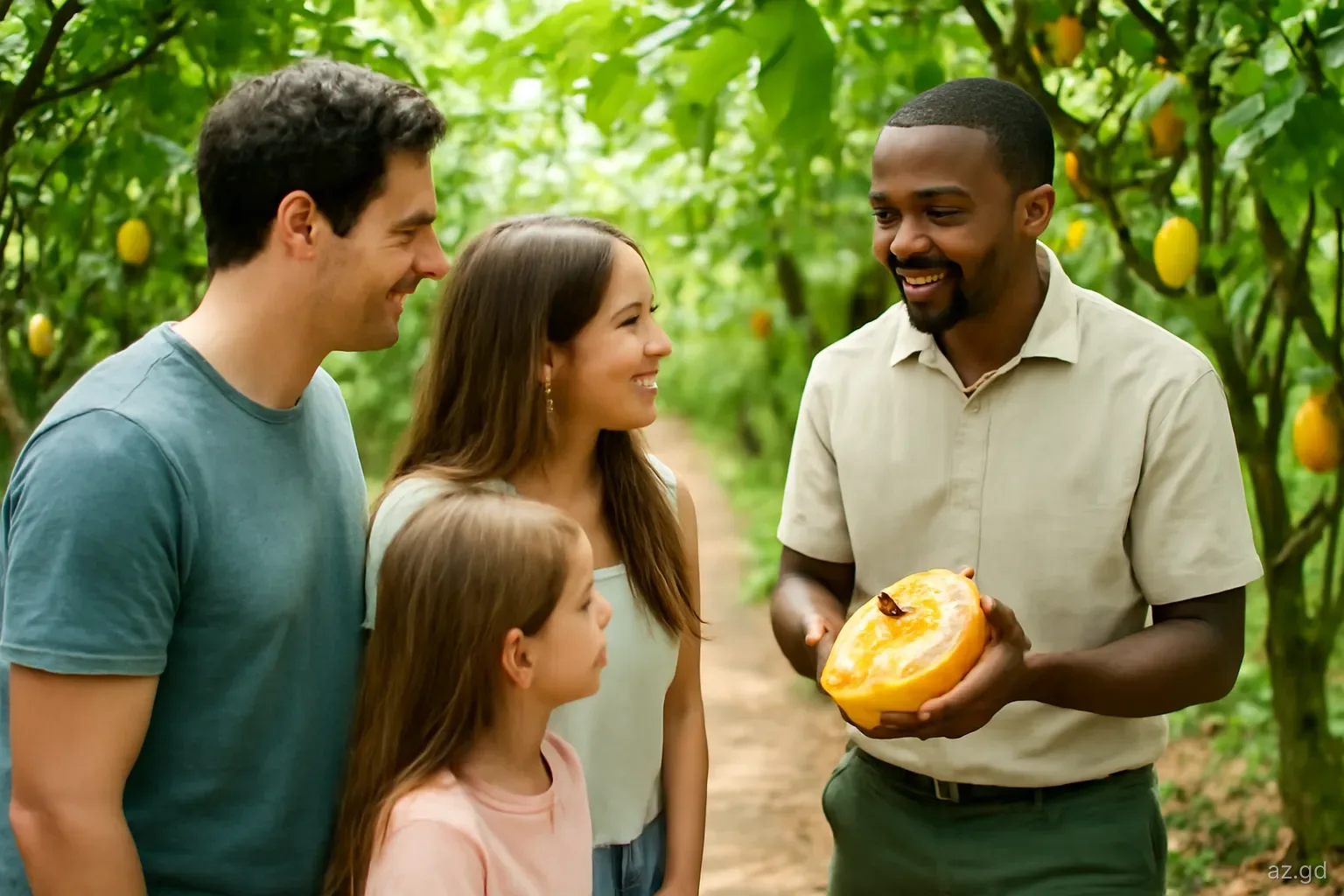
Inside each pod are some 30 to 50 seeds, the cocoa beans, surrounded by a white, sweet, slightly sour pulp. On an estate tour guides often invite visitors to suck the pulp from a fresh bean; it tastes something like lychee or citrus and is nothing like chocolate. The raw bean itself is bitter and astringent.
Harvesting and opening the pods
Harvesting is done by hand, and the care taken at this stage affects quality:
- Farmers cut ripe pods from the tree with a cutlass, or with a cocoa knife on a long pole for pods high up, taking care not to damage the flower cushions that produce future pods.
- Pods are gathered into heaps and opened within a few days, usually by cracking them with a blunt tool or cutlass.
- The wet beans and pulp are scooped out by hand, and the husks are left in the field to rot down as mulch.
- Diseased, black or unripe pods are set aside, since they spoil the flavour of the batch.
- The wet beans are carried in buckets or sacks to a fermentary, either on the estate or run by a buyer, the same day if possible.
Fermentation: where flavour begins
Fermentation is the most important stage in developing chocolate flavour. The wet beans are piled into large wooden boxes or heaps and covered, often with banana leaves or sacking. Yeasts and bacteria break down the sugary pulp, which liquefies and drains away, and the temperature rises, often to around 45–50°C.
The heat and acids kill the seed and set off chemical changes inside the bean that create the precursors of chocolate flavour and reduce bitterness. Over roughly five to eight days the beans are turned or moved between boxes to keep the process even. Under-fermented beans give flat, astringent chocolate; over-fermented beans taste off or hammy.
In Grenada fermentation has long been handled at central fermentaries run by the Grenada Cocoa Association, which buys wet beans from farmers, as well as by estates and chocolate makers who process their own. On a tour, the smell of fermentation, sharp, vinegary and fruity, is unmistakable.
Drying in the boucan
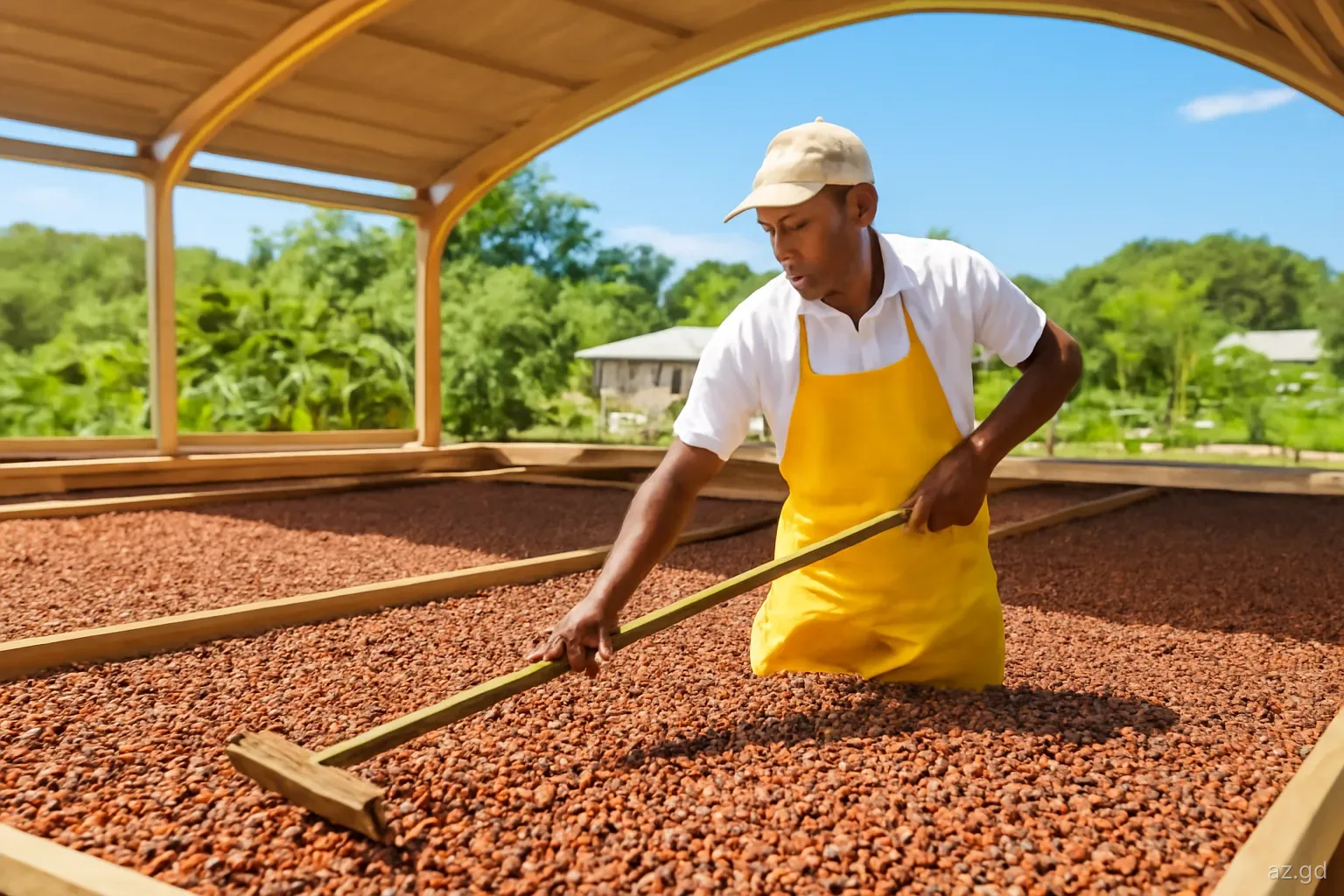
After fermentation, the beans must be dried from around 60 per cent moisture to about 7 per cent, so they can be stored and shipped without mould. Grenada's traditional method is sun drying on large wooden trays in a boucan, a drying house whose roof slides on rails. When rain approaches, the roof is rolled over the beans; when the sun returns, it is rolled back. Some estates use trays on wheels that slide under a shelter instead.
Drying takes around a week, depending on the weather, with the beans raked and turned several times a day. Workers once walked through the beans barefoot, shuffling them in a movement known as "dancing the cocoa", which also polished them. Some estates demonstrate it for visitors.
In wet weather, artificial dryers may be used, but slow sun drying is generally preferred for flavour. Properly dried beans are reddish-brown, crack cleanly and smell of chocolate. They are then bagged and rested before sale or use, which allows flavours to settle further.
Grading, export and turning beans into chocolate
Sorting and grading. Dried beans are sorted to remove flat, broken, mouldy or insect-damaged beans and debris. Samples are cut open to check fermentation, judged by the colour and texture inside.
Export. Much Grenadian cocoa has historically been exported in bags to chocolate makers abroad, who value its flavour. Grenada is recognised internationally as a producer of fine or flavour cocoa, a small premium category of world supply.
Roasting. Chocolate makers roast the beans to develop flavour, then crack them and winnow away the shells, leaving cocoa nibs.
Grinding and refining. The nibs are ground into a thick liquid called cocoa liquor or mass, mixed with sugar and sometimes extra cocoa butter or milk, then refined and conched, mixed for hours or days to smooth texture and mellow flavour.
Tempering and moulding. The chocolate is heated and cooled in a controlled way to give it a glossy finish and a clean snap, then poured into moulds, cooled and wrapped.
Cocoa farming in Grenada today
Cocoa in Grenada is grown mainly by small farmers, many working a few acres of steep hillside, alongside a handful of larger estates. Hurricane Ivan in 2004 damaged cocoa as well as nutmeg, flattening shade trees and breaking cocoa trees, and production fell sharply. Replanting and rehabilitation of farms has continued since, supported at various times by government programmes, the Grenada Cocoa Association and development partners.
The growth of on-island chocolate makers has changed the economics for some farmers. Makers who buy beans locally often pay a premium for well-fermented, well-dried cocoa, and several work directly with nearby growers. Others sell wet beans to central buyers, who handle fermentation and drying and export the dried beans.
Challenges remain: ageing farmers, the cost of labour, plant diseases, praedial larceny (theft of crops from farms) and weather extremes all affect output. Visiting estates and buying Grenadian-made chocolate is one of the more direct ways visitors support the industry.
What to ask on an estate or factory tour
Guides are usually happy to talk in detail, and the best tours become conversations. These questions get beyond the basics and tend to reveal how each estate or maker does things differently:
- Where are the beans grown, and are they from the estate or bought from local farmers?
- How long do the beans ferment, and how often are they turned?
- Is drying done in the sun, in a boucan, or with dryers in wet weather?
- How is quality checked before the beans are used or sold?
- Is the chocolate made on site, from roasting to moulding, or partly elsewhere?
- How did Hurricane Ivan in 2004 affect the farm, and has production recovered?
- Which bars are made from single-estate cocoa, and which are blends?
Frequently asked questions
What type of cocoa grows in Grenada?
Most Grenadian cocoa is Trinitario, a hybrid of the fine-flavoured Criollo and the hardier Forastero types. It is valued by chocolate makers for its complex flavour, and Grenada is recognised internationally as a producer of fine or flavour cocoa.
Why is cocoa fermented?
Fermentation breaks down the sweet pulp around the beans and triggers chemical changes inside them that create chocolate flavour precursors and reduce bitterness. Without proper fermentation, beans give flat, harsh chocolate regardless of how well they are later roasted and processed.
What does dancing the cocoa mean?
It refers to the traditional practice of workers walking barefoot through drying cocoa beans, shuffling them to turn and polish them. Some estates demonstrate it for visitors, though raking is now more common.
How long does it take to turn cocoa into chocolate?
From harvest, fermentation takes around five to eight days and drying about a week, depending on weather. Roasting, grinding, refining and tempering at the factory take several more days. The full process from pod to bar commonly takes a few weeks.
Can visitors taste raw cocoa?
Yes. On estate tours guides often offer a fresh bean to taste. The white pulp is sweet and fruity, while the raw bean is bitter. Roasted nibs and finished chocolate are usually offered at the end of the tour.