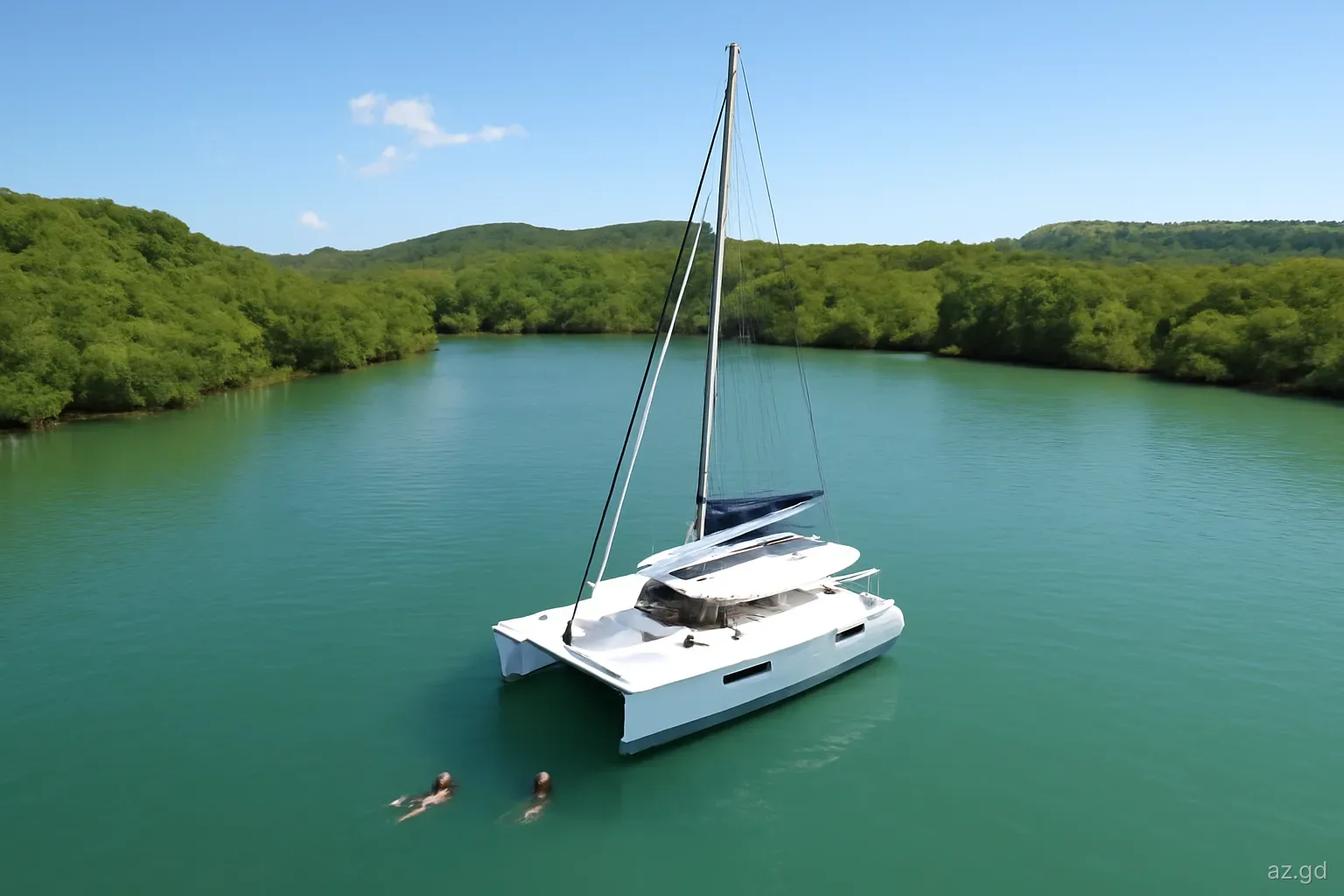
Grenada's two coasts offer very different anchoring. The leeward west coast is steep-to and largely open, with a few calm bays that roll when swell arrives from the north. The south coast is the opposite: a ragged line of deep, reef-fringed inlets that give some of the best shelter in the Windward Islands, but demand careful pilotage on the way in.
Carriacou adds a handful of excellent anchorages of its own, with Tyrrel Bay at the centre of yachting life. This guide runs bay by bay, from St George's round the south coast and across to Carriacou, with what each anchorage offers and what to watch for. Use it alongside an up-to-date cruising guide and chart; reefs and moorings change, and storms move sand.
The west coast, from Grand Anse north
Grand Anse and Morne Rouge. The long bay off Grand Anse beach has good holding in sand, room for many boats and easy access to shops and restaurants. Keep clear of the swimming zone and the water taxi traffic near the beach. Morne Rouge Bay, just south, is smaller and prettier. Both roll uncomfortably when northerly swell arrives, mostly in the winter months.
St George's. Anchoring space inside the lagoon is limited, and much of it is taken by moorings and the marinas. Yachts sometimes anchor outside off the town in settled weather, but cruise ship and cargo traffic and the wash from passing boats make it a short-stay option.
Molinere and Dragon Bay. These bays lie within the Molinere-Beausejour Marine Protected Area. Anchoring is not permitted; use the moorings provided and pay the fees. It is an excellent daytime stop for snorkelling, not an overnight anchorage for most.
Halifax Harbour. A deep, quiet bay further north, sheltered and often empty. The drawback is the island's main landfill at the head of the bay, which can send smoke and smell across the water depending on the wind.
Grand Mal and further north. Grand Mal Bay, just north of St George's, offers a sandy anchorage off a quiet beach, close to the fuel terminal. North of that, the coast past Gouyave and Victoria has few comfortable anchorages, and most boats pass straight on to Carriacou.
The south coast: Prickly Bay to Mount Hartman
Prickly Bay, at L'Anse aux Epines, is the busiest anchorage on the island, with a marina, a boatyard, a customs office and a strong cruising community ashore. It is open to the south, so a southerly swell, more frequent in summer, makes it rolly; holding is generally good in sand and mud. True Blue Bay, just west, is smaller and more exposed.
Mount Hartman Bay, the next inlet east, is one of the best-protected bays on the coast, home to Secret Harbour Marina. The entrance runs between reefs and needs good light and attention to the channel. Inside, the water is flat in almost any trade-wind condition.
Hog Island, just east again, is a favourite of long-stay cruisers: the anchorage between the island and the mainland is sheltered by reefs on the seaward side and has a relaxed weekend scene on the beach. The entrance is reef-lined and narrow; approach in daylight with the sun behind you, and do not trust old waypoints.
Further east: Clarkes Court, Woburn, Port Egmont
Clarkes Court Bay and Woburn Bay. Two connected bays reaching deep inland, with Calivigny Island at the entrance, Whisper Cove and Clarkes Court Boatyard inside, and the fishing village of Woburn at the head. Very sheltered and quiet, with good holding in most areas. The local bus to St George's runs from Woburn.
Port Egmont. A deep, almost landlocked inlet with mangroves, regarded as one of Grenada's natural hurricane holes. Few facilities ashore and a remote feel. Calm, but mosquitoes can be a nuisance near the mangroves at dusk.
Petite Calivigny Bay. Home to Le Phare Bleu marina, with a small anchorage outside. Sheltered and close to the marina's facilities.
St David's Harbour. A protected bay on the south-east corner with Grenada Marine's boatyard at its head. Quiet, with a mostly sand bottom, and a long dinghy ride or taxi from shops.
The Atlantic coast. Grenville and the east coast face the open trade winds behind extensive reefs. Yachts rarely visit, and entering Grenville requires local knowledge.
Carriacou anchorages
Tyrrel Bay is Carriacou's main anchorage: wide, sheltered from the trades, with good holding in sand and mud and enough space for many boats. Ashore you will find the boatyards, customs and immigration, a fuel dock, small supermarkets and bars. The mangrove lagoon at the north end is part of the marine protected area and has traditionally been used as a storm shelter, though Hurricane Beryl in 2024 showed its limits.
Sandy Island, off Hillsborough, sits within the Sandy Island Oyster Bed Marine Protected Area. Anchoring is restricted; pick up one of the park moorings and pay the fee to the park staff. It is a beautiful daytime stop and can be pleasant overnight in settled weather, but swell wraps around the island when the wind goes north. Hillsborough itself offers an open anchorage off the town jetty for shopping; it rolls in northerly swell.
Anse La Roche, on the north-west coast, is a lovely daytime anchorage beneath a wooded hillside with a quiet beach, best in settled weather. In the south, the waters off Saline and White Island make good lunch stops on calm days. Petite Martinique has an anchorage off its western side near the ferry dock, open to the north-west.
Anchoring etiquette and daily practicalities
The popular south-coast bays fill up in the winter season and again in hurricane season, so anchoring room becomes the main courtesy issue. Boats on all-chain rode swing differently from those on rope, and multihulls differently from monohulls; anchor well clear of others and ask a neighbour about their scope if in doubt. Late arrivals squeezing in close to the boat already there is the most common source of friction.
Many bays have a dinghy dock at a marina, bar or boatyard. Use the long painter, tie off to leave room for others, and expect a small charge at some docks. Run generators at reasonable hours, keep music low after dark, and slow your dinghy to idle near swimmers and snorkellers, who are often hard to see in a chop.
Fresh water, fuel, rubbish disposal and laundry are available through the marinas, and the morning cruisers' radio net on VHF announces services, shopping trips and local events. Joining it on the first morning in a bay is the fastest way to learn how that anchorage works.
Pitfalls and pilotage notes
Most anchoring incidents in Grenada fall into a few familiar categories.
- Reef entrances after dark. South-coast entrances are lined with reefs and marked inconsistently. Plan arrivals for daylight, ideally late morning to mid-afternoon with the sun high or behind you.
- Northerly swell on the west coast. Winter swell can make Grand Anse, Morne Rouge and Hillsborough untenable overnight. Watch the forecast and have a south-coast fallback.
- Dragging in soft mud. Some inner bays have soft mud over hard sand. Set the anchor firmly with the engine and check your position after a squall.
- Protected-area rules. Anchoring inside Molinere-Beausejour or on the Sandy Island reefs damages coral and invites a fine. Use moorings.
- Dinghy theft. It is not common, but dinghies and outboards do go missing. Lift the dinghy at night or lock it with a cable to the boat.
- Fishing pots. Fish traps with small floats are common off the coast and in channels. Keep a lookout, especially under power.
- Rubbish. Use the bins at marinas and dinghy docks; dumping garbage in bays or ashore is illegal and strains small communities.
Frequently asked questions
Is anchoring free in Grenada?
Yes, outside the marine protected areas, once your cruising permit is paid. In protected areas such as Molinere-Beausejour and the Sandy Island reefs, anchoring is replaced by moorings that carry a fee. Marinas charge for dinghy dock use in some places.
Which Grenada anchorage is calmest?
Mount Hartman Bay, Hog Island, Clarkes Court and Woburn bays and Port Egmont on the south coast are the best protected in normal trade-wind conditions. The west coast bays are calm in winds from the east but roll when northerly swell arrives.
Can you anchor off Grand Anse beach?
Yes, outside the marked swimming area and clear of water taxi lanes, with good holding in sand. It is convenient for shops and restaurants. Expect a roll in northerly swell, mostly in winter, and some wash from passing boats during the day.
Where do cruisers anchor in Carriacou?
Most anchor in Tyrrel Bay, which has shelter, good holding and services ashore. Sandy Island moorings and Anse La Roche are popular daytime stops in settled weather, and Hillsborough is used briefly for shopping.
Do you need local knowledge for the south coast reefs?
A good chart, an up-to-date cruising guide, daylight and a lookout on the bow are usually enough. If unsure, contact the marina in the bay you are entering; many will talk you in on VHF. Do not rely on old waypoints alone.
Is Halifax Harbour worth a stop?
It is sheltered and quiet, but the landfill at the head of the bay can send smoke and smell across the anchorage depending on wind direction. Some crews find it fine for a night, others move on. Check how the smoke is blowing before committing.